IRS Proposes 36% Hike for Estate Tax Closing Letters: A Deep Dive into Fee Structures and Compliance
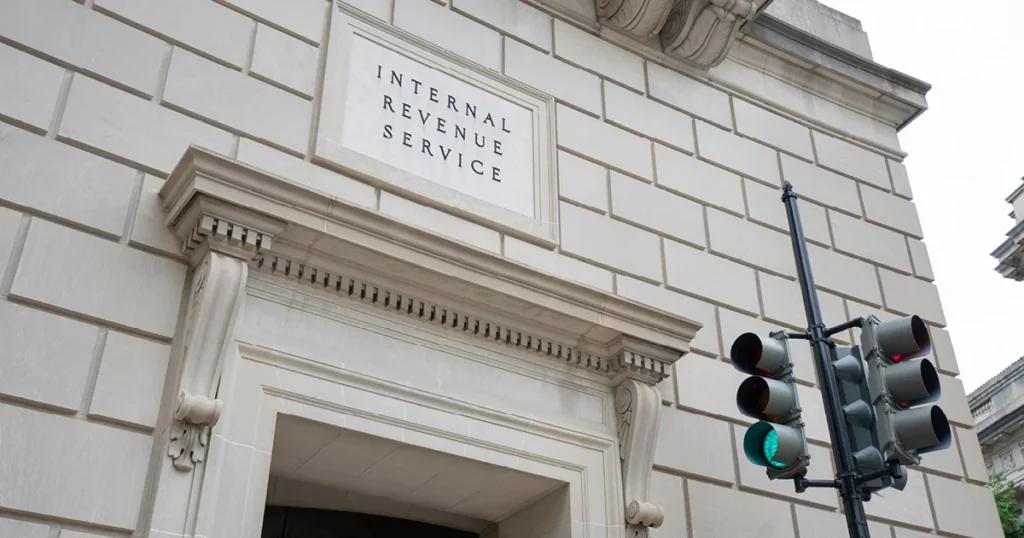
In a move that highlights the Internal Revenue Service’s ongoing commitment to the principles of cost-recovery, the agency has issued proposed regulations that would increase the user fee for an estate tax closing letter—officially designated as IRS Letter 627—from $56 to $76. This 36% price adjustment, detailed in the recently released REG-103193-26, underscores the federal government’s mandate to ensure that specialized administrative services remain self-sustaining rather than a burden on the general taxpayer.
As estates across the United States navigate the complex landscape of federal tax compliance, the estate tax closing letter remains a critical document. It serves as the IRS’s formal confirmation that an estate tax return has been accepted or that the examination process is complete, providing executors and beneficiaries with the necessary peace of mind to proceed with the distribution of assets.
The Chronology of Fee Adjustments
To understand why the IRS is proposing this increase, it is necessary to examine the agency’s recent history regarding user fees. The current fee of $56 was established only recently, on December 1, 2025. This rapid transition to a $76 fee is the result of a mandatory biennial review process conducted by the Treasury Department and the IRS.
The biennial review is a regulatory requirement designed to ensure that federal agency user fees align with the actual costs of providing specific services. During the 2025 review cycle, the IRS performed an exhaustive analysis of the resources, labor, and administrative overhead associated with processing and issuing Letter 627. The findings of this analysis revealed that the $56 fee, while sufficient at the time of its inception, no longer covers the full economic burden of the program.
According to the proposal, the IRS has determined that the full cost—encompassing both direct and indirect expenses—of the estate tax closing letter program stands at $615,593 annually. When divided by the projected volume of approximately 8,053 requests per year, the math dictates a cost-per-request of $76.
Supporting Data and the Cost-Recovery Mandate
The IRS’s justification for this fee hike is rooted in the Independent Offices Appropriations Act (IOAA) of 1952. This foundational legislation established the principle that federal agencies should, wherever possible, recover the full cost of services that provide "special benefits" to identifiable recipients.
Defining "Special Benefits"
In the context of tax administration, the IRS argues that the issuance of an estate tax closing letter is not a general service provided to every taxpayer. Rather, it is a specific service provided to authorized persons—executors, administrators, or trustees—who derive a distinct advantage from receiving official written confirmation that the IRS has concluded its review of a specific estate. Because this service confers a benefit that exceeds that which accrues to the general public, the IOAA mandates that the recipient bear the financial cost of that service.
The Fiscal Math
The IRS methodology for calculating the $76 fee is based on a transparent, albeit rigorous, accounting of the program’s expenses:
- Total Annual Program Cost: $615,593. This figure includes personnel costs for agents processing the requests, administrative overhead, IT systems maintenance required to track and generate these letters, and the costs of secure communication.
- Projected Volume: 8,053 requests. This estimate is derived from historical data regarding the number of Form 706 (United States Estate and Generation-Skipping Transfer Tax Return) filings and subsequent requests for closure.
- The Quotient: $615,593 / 8,053 = $76.44. The IRS has rounded this figure down to $76 to establish the proposed fee.
Official Responses and Regulatory Procedures
The proposal was published in the Federal Register as a formal notice of proposed rulemaking. By opening this process to public commentary, the Treasury Department and the IRS are adhering to the Administrative Procedure Act, which ensures that stakeholders, including tax practitioners, estate attorneys, and executors, have a voice in the regulatory process.
The Timeline for Implementation
The proposed regulations state that the new fee will become effective for all requests received by the IRS on or after the date 30 days following the publication of the final regulations in the Federal Register. This "30-day window" is intended to provide practitioners and taxpayers sufficient notice to adjust their expectations and budgetary planning for pending estate settlements.
Public Participation
The IRS has signaled that it will consider all timely comments submitted by the public before finalizing the fee. Furthermore, the agency has stated that a public hearing will be scheduled if any individual who submits written or electronic comments requests one in writing. This creates a mechanism for professional organizations, such as the AICPA or state bar associations, to challenge the underlying cost-accounting assumptions if they believe the fee calculation is inflated or does not reflect true efficiency gains.
Implications for Practitioners and Estates
The increase to $76, while seemingly modest in the context of high-net-worth estate planning, carries broader implications for those involved in the administration of estates.
Increased Administrative Costs
For the average estate, an additional $20 fee is unlikely to jeopardize the settlement process. However, for practitioners handling a high volume of estates, the increase adds a layer of administrative friction. It requires firms to update their billing software, client engagement letters, and internal expense tracking systems. Moreover, it necessitates that executors be fully informed of the changing fee structure to avoid confusion during the final accounting phase of an estate.
The Expectation of Service Quality
There is an implicit "service-for-fee" contract in the eyes of taxpayers. As the IRS moves toward full cost-recovery for its services, stakeholders will likely demand higher standards of efficiency. If taxpayers are paying a "full cost" fee for a closing letter, they will increasingly expect shorter turnaround times, better status tracking, and fewer administrative errors in the letters issued.
Long-Term Trends in IRS Funding
This proposal is part of a larger, long-term trend of the IRS shifting its financial structure. With the agency under consistent pressure to modernize its aging IT infrastructure and manage an increasing workload, the reliance on user fees allows the IRS to allocate its appropriated congressional budget toward core enforcement and compliance functions while offloading the costs of transactional services to the beneficiaries of those services.
Navigating the Transition
As the industry awaits the finalization of these regulations, tax professionals should take several proactive steps:
- Monitor the Federal Register: Keep a close watch on the publication date of the final rule to understand exactly when the $76 fee will come into effect.
- Adjust Client Communications: Update standard client correspondence regarding estate settlement costs to include the potential for increased user fees.
- Review Pending Requests: For estates nearing the final stage of the IRS examination process, practitioners may consider expediting pending requests for Letter 627 if they wish to pay the current $56 fee, assuming the request can be processed before the new regulations take effect.
- Engage the Process: If firms or professional bodies believe the $76 figure is based on flawed data or that the efficiency of the program could be improved to lower costs, they should utilize the public comment period to provide constructive feedback to the Treasury Department.
Conclusion
The proposal to raise the fee for an IRS Letter 627 to $76 is a technical, yet significant, adjustment that highlights the IRS’s commitment to the user-fee model of public service funding. While the increase is relatively minor, it serves as a reminder to the legal and accounting communities of the importance of keeping abreast of the IRS’s administrative developments. As the agency continues to modernize and refine its cost-recovery mechanisms, the standard for transparent and efficient tax administration remains a focal point for the future of estate planning and federal compliance.
For those who wish to provide input, the formal comment period remains open until the deadline established in the Federal Register. Whether the fee is finalized at $76 or adjusted based on public feedback, the reality for estate practitioners remains clear: administrative precision and foresight are essential to navigating the evolving landscape of federal estate tax procedures.