TechCrunch Mobility: The Shifting Gears of Autonomous Transit and the Billion-Dollar EV Hustle
Welcome back to TechCrunch Mobility, your definitive hub for the rapidly evolving future of transportation. As artificial intelligence continues to permeate every facet of our transit infrastructure, the industry finds itself at a critical inflection point. Whether it’s the regulatory crackdown on robotaxis or the high-stakes capital raises of the EV sector, the landscape is shifting in real-time.
The Unraveling of the Uber-Waymo Alliance
The autonomous vehicle (AV) sector has long been defined by strategic partnerships, but the recent quiet dissolution of the Uber-Waymo partnership in Phoenix marks a significant turning point. While the two companies continue to operate joint robotaxi services in Atlanta and Austin, the Phoenix split raises a lingering, existential question for the industry: When will these temporary marriages of convenience finally end?
More importantly, industry observers are now forced to consider how these two juggernauts will behave once they are no longer tethered by service agreements. For years, the tension between Uber and Waymo has been palpable, with executive-level barbs occasionally surfacing in public forums. As these partnerships sunset, we expect these thinly veiled critiques to evolve into direct, aggressive competition. The primary battleground will likely be regulatory policy, as both companies scramble to secure exclusive access to high-value metropolitan markets.
Federal Crackdown: NHTSA Takes Aim at AV "Edge Cases"
The most significant development on the federal stage this week came from the National Highway Traffic Safety Administration (NHTSA). Administrator Jonathan Morrison issued a sharp, unambiguous directive to autonomous vehicle developers, declaring that the recurring interference of robotaxis with first responders and law enforcement is entirely unacceptable.
The "Functional Insufficiency" Mandate
Morrison did not mince words in his communication to the industry. "Let me be clear: the inability to detect and appropriately respond to such situations represents a functional insufficiency," he stated. "Emergency scenes are not rare or extreme ‘edge cases.’ As such, NHTSA is today issuing a call to action for AV developers and operators to immediately focus their resources on fixing this issue."
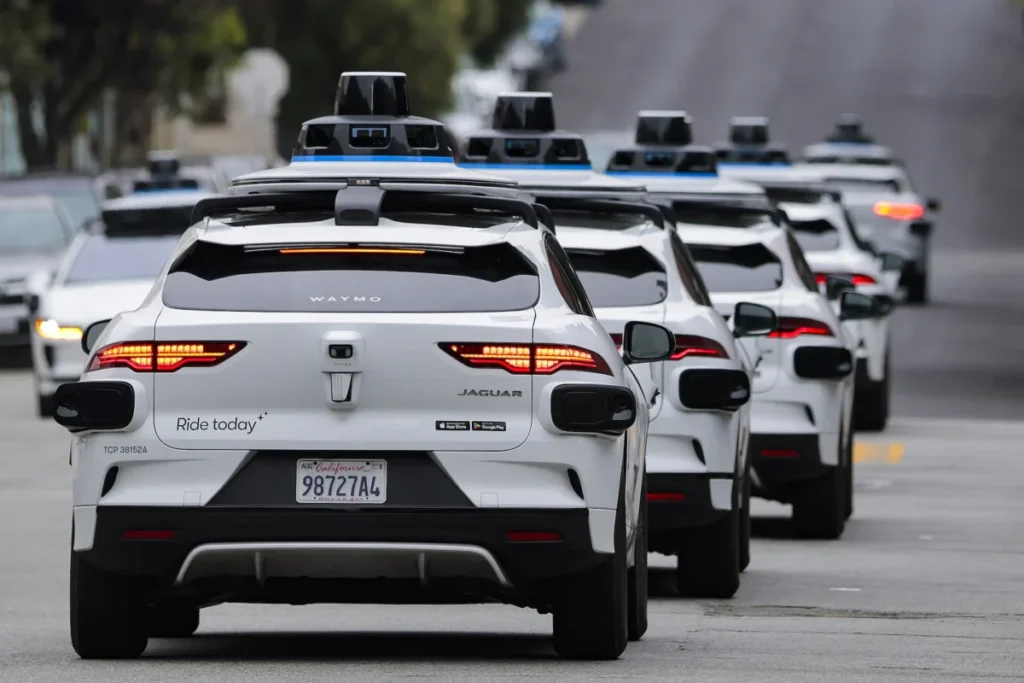
While the letter was addressed to all developers listed in the Department of Transportation’s Standing General Order, the subtext suggests a concentrated focus on Waymo. As the operator of the largest robotaxi fleet in the United States—with high-density operations in Los Angeles, Phoenix, and San Francisco—Waymo has faced the brunt of public and official scrutiny regarding its interactions with emergency services.

Chronology of Conflict
The friction between autonomous fleets and city infrastructure has been escalating for months:
- March 2026: A TechCrunch investigation highlights recurring instances of Waymo vehicles obstructing emergency response routes.
- July 4, 2026: A major fireworks event in San Francisco leads to a "traffic meltdown." Dozens of Waymo vehicles, caught in gridlock, depleted their batteries and were forced to be towed, creating a secondary obstruction for public transit and emergency responders.
- July 2026: San Francisco Supervisor Bilal Mahmood announces a formal inquiry into how AV operations impact public safety and urban transit flow during major city events.
The NHTSA has demanded that all affected developers submit comprehensive "solutions" to these operational deficiencies by the end of the month. The industry now holds its breath: will this be a symbolic warning, or will the NHTSA follow through with substantive regulatory penalties?
The Regulatory Horizon: FMVSS Revisions
Beyond the immediate crisis of first-responder interference, the federal government is quietly paving the way for a post-human-driver future. The updated 2026 Regulatory Plan and Unified Agenda contains a slate of proposed changes to the Federal Motor Vehicle Safety Standards (FMVSS).
These standards, which historically dictated the physical requirements for steering wheels, brake pedals, and mirrors, are being reimagined. For companies like Tesla and Zoox, which are designing purpose-built, autonomous-only vehicles, these updates could be the regulatory green light needed to deploy cabin-focused, wheel-less transport at scale.
The Capital Crunch: Rivian’s Billion-Dollar Bet
While policy shifts occupy the regulatory space, the financial reality of the EV sector remains capital-intensive. This week, Rivian made headlines with a massive sale of 86.25 million Class A common shares, priced at $15.50 each.
Financial Implications
The move is expected to net the company $1.32 billion in fresh capital. This comes at a precarious but opportunistic time for the automaker. Having recently launched the R2 SUV and adjusted its 2026 sales forecast upward—projecting 65,000 to 70,000 deliveries—the company is clearly in a "scale-up" phase.

However, investors should remain mindful: Rivian is not yet profitable. Scaling production of the R2 is an expensive endeavor, and this capital raise underscores the harsh reality that even the most successful EV startups require a massive, ongoing infusion of cash to bridge the gap between innovation and mass-market profitability.
Market Pulse: Deals and Acquisitions
The broader mobility ecosystem continues to see high-velocity movement in deal flow:
- Bidbus: The Los Angeles-based startup, which has digitized the used-car auction process by forcing dealerships to compete for inventory, raised $15 million in a Series A round led by Ibex Investors.
- Lyft’s International Expansion: In a move to bolster its micromobility portfolio, Lyft announced plans to acquire the bike-share business of Serveo in Spain.
- TaiSan’s Sodium-Ion Ambitions: The U.K.-based battery startup secured £4.65 million to advance its sodium-ion technology, a critical alternative to the lithium-heavy supply chain that currently dominates the EV industry.
Notable Reads and Industry Tidbits
Data Security as a Mobility Crisis
In an alarming development, AssuranceAmerica confirmed a massive data breach affecting 6.9 million drivers. The incident, which exposed driver’s license numbers, stands as the largest of its kind this year, reminding us that the "connected vehicle" era brings a massive, often overlooked, cybersecurity liability.
The eVTOL Frontier
Beta Technologies successfully completed operational flights under the joint DOT/FAA eVTOL Integration Pilot Program. Covering 275 nautical miles across Virginia and Maryland, these flights represent a major milestone in integrating electric vertical takeoff and landing aircraft into the National Airspace System.
Anti-Musk ETFs
Polarization in the tech sector has reached the financial markets. New exchange-traded funds (ETFs) have launched that explicitly exclude Tesla, allowing investors to capitalize on (or hedge against) negative sentiment surrounding Elon Musk’s public persona.
Manna Aero’s U.S. Expansion
The drone delivery sector is gaining ground in the American heartland. Manna Aero is establishing a major operational hub in Tulsa, Oklahoma, with plans to employ 1,000 people over the next few years, signaling that the "last-mile" delivery war is moving to the skies.

Implications: Where Are We Headed?
As we look toward the remainder of 2026, the intersection of mobility and AI is no longer a theoretical exercise. It is a messy, real-world collision of software and civic infrastructure.
The NHTSA’s recent mandate indicates that the "beta test" phase for robotaxis is effectively over. Regulators are moving from a position of observation to one of enforcement. Simultaneously, the capital markets are demanding that EV companies prove their long-term viability through rigorous production scaling rather than just venture-backed growth.
For the industry, the path forward is clear: success will not be defined solely by the sophistication of an algorithm or the range of a battery. It will be defined by the ability to operate within the constraints of public safety, to manage the immense capital requirements of hardware manufacturing, and to navigate a regulatory landscape that is increasingly losing its patience for "edge case" excuses.
Stay tuned to TechCrunch Mobility for further updates as these stories develop. Got a tip? Email [email protected] or contact us via Signal at kkorosec.07.
Note: For early-stage founders looking to navigate these choppy waters, I highly recommend checking out the third season of our Build Mode podcast, hosted by Isabelle Johannessen. The latest episode featuring Precursor Ventures’ Charles Hudson is a masterclass in the new realities of institutional fundraising.