The "Anti-Musk" Movement Hits Wall Street: Subversive Capital Launches Ex-Elon ETFs
In an era where personal branding and political volatility frequently collide, the financial markets are witnessing a peculiar new phenomenon: the "values-based" divestment movement aimed directly at the world’s wealthiest individual. Following a series of public controversies involving Elon Musk—ranging from his involvement with the Department of Government Efficiency (DOGE) and inflammatory commentary on X (formerly Twitter) to a widely publicized, controversial gesture during the presidential inauguration—a segment of the investing public is seeking a way to opt out of the "Musk Economy."
Enter Subversive Capital, an ETF provider known for its provocative, thematic investment vehicles. The firm has filed for two new exchange-traded funds (ETFs) that offer a surgical solution for investors who wish to participate in the growth of the S&P 500 or the Nasdaq 100 while systematically excluding any enterprise under the orbit of Elon Musk.
The Genesis of the "Ex-Elon" Strategy
For decades, index-based investing has been the bedrock of passive wealth management. By tracking the S&P 500 or the Nasdaq 100, investors have historically gained broad exposure to the engine of American innovation. However, as companies like Tesla and SpaceX have become dominant components of these indices, avoiding Musk has become mathematically difficult for the average retail investor.
The new offerings, filed under Tidal Trust I and branded under Subversive Markets Lab LLC, are specifically designed to strip the "Musk factor" out of core market indices. The ETFs—the Nasdaq-100 Ex-Elon Enterprises ETF (QQNE) and the S&P 500 Ex-Elon Enterprises ETF (SPNE)—function by replicating their parent indices while omitting specific "blacklisted" equities.
Chronology of a Controversial Pivot
The launch of these funds follows a turbulent timeline that has alienated a vocal subset of the investor base:
- The Tesla Dominance Era: For years, Tesla was a darling of the growth funds, cementing Musk’s influence in the S&P 500 and driving the portfolios of major institutional investors.
- The X Transformation: Post-acquisition of the platform formerly known as Twitter, Musk’s political engagement became increasingly polarized, leading to calls from various activist groups for divestment.
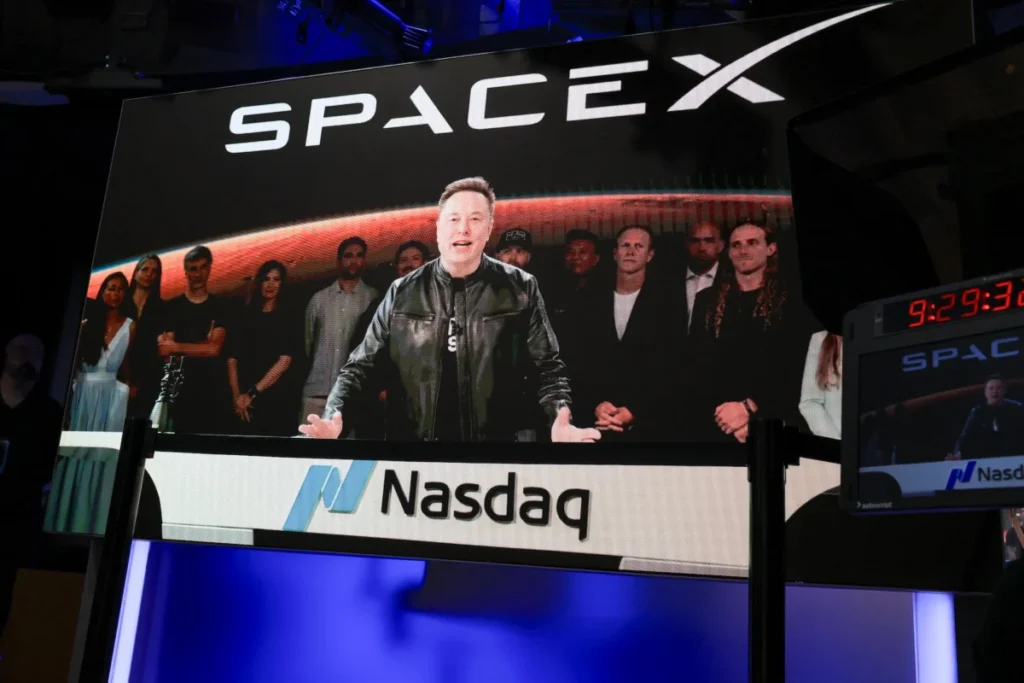
- The SpaceX IPO: As SpaceX transitioned to a publicly traded entity and was subsequently integrated into major indices like the Nasdaq 100, the "Musk footprint" in common portfolios grew exponentially.
- The Inauguration Flashpoint: The tipping point for market sentiment appeared to be the 2026 presidential inauguration, where Musk’s public behavior triggered widespread backlash.
- The Filing: Shortly thereafter, Subversive Capital identified the market gap, filing the prospectus for the Ex-Elon series with the SEC to provide a "clean" alternative for disaffected investors.
Analyzing the Mechanics of Exclusion
The core objective of these funds, as stated in the SEC prospectus, is "to provide capital appreciation through exposure to a broad universe of large-capitalization U.S. equity securities, while excluding the equity securities of companies that are founded, controlled, or led by Elon Musk, or with which Mr. Musk is otherwise primarily associated."
Defining the "Musk" Exclusions
Currently, the exclusion list is anchored by two heavyweights:
- Tesla (TSLA): A permanent fixture in large-cap growth portfolios that will be entirely absent from these ETFs.
- SpaceX (SPCX): A major component of current tech indices that will be removed to maintain the "Ex-Elon" mandate.
The prospectus leaves room for future expansion. By using the language "primarily associated," the fund managers have granted themselves the discretion to remove other entities should they fall under Musk’s control or influence. This dynamic management style is a departure from traditional "blind" index tracking, placing the fund managers in the role of moral arbiters for their investors.
Supporting Data and Market Context
To understand the necessity of these funds, one must look at the concentration of Musk-affiliated companies in standard indices. Tesla has long been a top-ten holding in the S&P 500 by market capitalization. When SpaceX was added to the Nasdaq 100, it effectively forced any investor holding a standard Nasdaq tracker to become a shareholder in Musk’s aerospace empire.
For many institutional investors—such as ESG-focused pension funds or university endowments—this forced inclusion represents a conflict of interest. The Subversive Capital funds provide a structural bypass. While the performance gap between a standard S&P 500 fund and an "Ex-Elon" version remains to be seen, the historical volatility of Tesla suggests that removing it could significantly alter the risk-return profile of a portfolio.
The "Subversive" Philosophy
Subversive Capital is no stranger to irony. Their portfolio strategy often relies on "social sentiment" rather than traditional fundamental analysis. Their previous funds—which track the stock trades of both Democratic and Republican members of Congress—were designed to let retail investors "invest like the oligarchy." The Ex-Elon funds follow this trend, blending serious financial engineering with a healthy dose of anti-establishment messaging.
Official Responses and Regulatory Outlook
The SEC filing for the Ex-Elon ETFs has sparked a broader debate about the nature of index tracking. Traditionally, an index is a reflection of the market, not a curated selection of "morally acceptable" stocks.
Financial analysts at firms like Bloomberg have noted that while the funds are legally sound, they create a "fragmented market." If every investor begins to demand "Ex-Elon" or "Ex-Other-CEO" indices, the efficiency of market indices could theoretically suffer. However, Subversive Capital maintains that they are simply responding to a legitimate market demand for agency.
There has been no official comment from Musk’s office regarding the launch of these specific ETFs. Historically, however, Musk has been openly hostile toward short-sellers and those who bet against his companies. Whether he views these funds as a nuisance or a validation of his disruptive status remains a subject of speculation among his supporters and detractors alike.
Implications for the Future of Investing
The launch of the Ex-Elon ETFs signals a shift in the power dynamic between corporate leaders and their shareholders.
1. The Rise of Personalization
Investors are increasingly demanding that their capital reflect their values. If a CEO becomes a polarizing political figure, that personality now carries a "brand risk" that can influence stock performance. The Ex-Elon funds are a formal recognition of "CEO Risk" as a measurable factor in portfolio management.
2. Fragmentation of the Index
If the Ex-Elon funds succeed in attracting significant assets under management (AUM), other providers may follow suit with "Ex-CEO" variations of popular indices. This could lead to a proliferation of "custom indices" that prioritize social or political alignment over pure market representation.
3. A New Battleground for Public Opinion
The existence of these funds turns the stock market into a voting booth. By buying into these ETFs, investors are making a public, monetary statement about their stance on Musk’s influence in the public square. This creates a feedback loop where the share price of Musk-led companies may be impacted not just by their quarterly earnings, but by the prevailing public sentiment toward the CEO.
Conclusion: A Barometer for Public Sentiment
Whether the Ex-Elon ETFs (QQNE and SPNE) will outperform the broader market is a question that will take years of data to answer. However, their very existence serves as a barometer for the current state of American discourse.
The "Ex-Elon" movement is not merely a financial strategy; it is a cultural statement. It highlights the growing tension between the outsized influence of individual tech titans and the desire of the average citizen to maintain a degree of separation from that influence. As these funds begin trading, the market will gain a unique insight into how much "Elon Musk" is worth—not just in dollars, but in the collective conscience of the investor class.
For now, the funds stand as a testament to the fact that in the modern economy, the most powerful tool an investor has is the choice of where—and where not—to put their money. As the boundary between the private lives of CEOs and their public companies continues to blur, the "Ex-Elon" model may well become the blueprint for a new generation of values-based, index-agnostic investing.