India’s Smartphone Manufacturing Evolution: The Strategic Pivot Behind the Vivo-Dixon Joint Venture
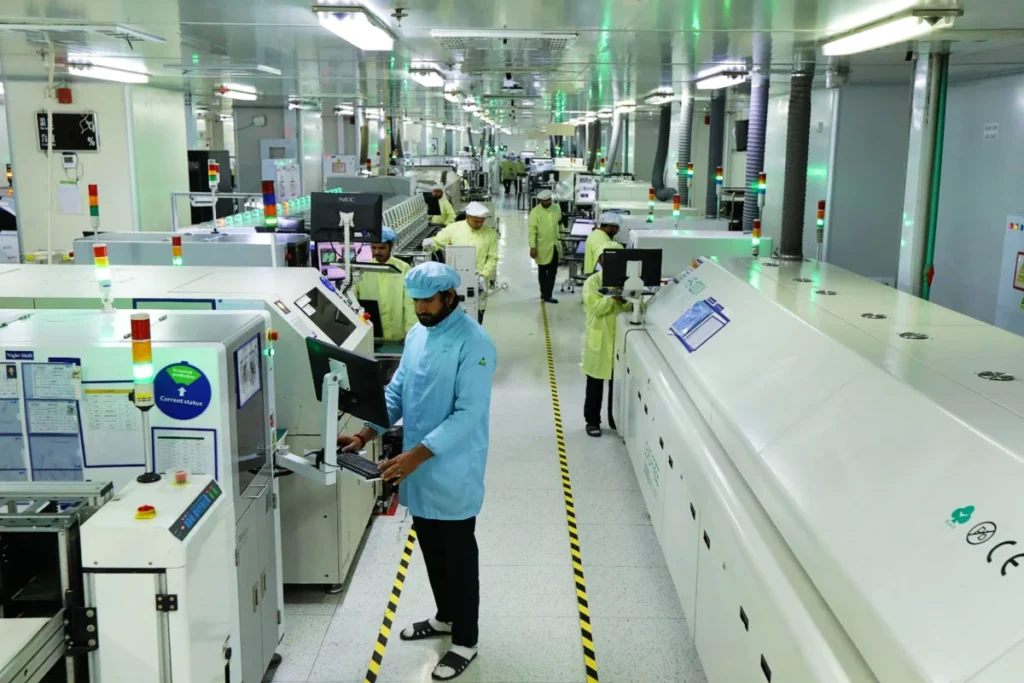
In a landmark development for India’s electronics manufacturing sector, the Indian government has officially approved a strategic joint venture between Chinese smartphone giant Vivo and local manufacturing powerhouse Dixon Technologies. This decision, finalized this Thursday, serves as a watershed moment for the "Make in India" initiative. While Apple has long been the primary driver of India’s transformation into a global manufacturing hub, the Vivo-Dixon partnership signals a new, more integrated phase: one where Chinese capital and Indian manufacturing expertise converge under a regulated, majority-local ownership model.
The approval clears the path for a partnership originally unveiled in December 2024. Under the terms of the deal, the new entity will be 51% owned by Dixon Technologies, with Vivo retaining a 49% stake. This structural arrangement is not merely a corporate reorganization; it is a calculated response to the complex geopolitical and regulatory environment that has governed India-China trade relations since 2020.
The Chronology of a Strategic Realignment
The journey to this joint venture has been defined by a shift from skepticism to structured collaboration. Following the border tensions between India and China in 2020, New Delhi introduced stringent "Press Note 3" regulations, which mandate enhanced government scrutiny for any foreign direct investment (FDI) originating from countries sharing a land border with India.
For several years, Chinese smartphone brands—which collectively dominate over 70% of the Indian handset market—operated under a cloud of regulatory uncertainty. Companies like Vivo, Xiaomi, and Oppo faced a barrage of investigations regarding alleged tax evasion and illegal remittances, creating a hostile climate for expansion.
The pivot began in earnest as these companies realized that maintaining a solo, fully-owned subsidiary model was becoming increasingly untenable. By aligning with a trusted domestic player like Dixon, which has already established itself as a reliable partner for brands like Xiaomi, the Chinese firms are effectively trading total control for operational stability and policy alignment. The approval of this joint venture marks the culmination of months of negotiation and vetting, providing a blueprint for other multinational corporations seeking to navigate the Indian regulatory landscape.
Supporting Data: The Manufacturing Disconnect
To understand the significance of this venture, one must look at the stark asymmetry in India’s current smartphone ecosystem. According to data from Counterpoint Research, while Chinese brands control roughly 72% of the Indian domestic market, their contribution to the country’s total smartphone exports remains below 10%.
In contrast, Apple has successfully utilized India as a critical node in its global supply chain. By leveraging partners like Foxconn and the Tata Group, Apple has scaled its manufacturing footprint to the point where it now accounts for 57% of India’s smartphone exports by volume. The "Apple model"—characterized by massive scale, high-end production, and export-led growth—is exactly what the Indian government hopes to replicate with other major players.
For Dixon Technologies, the numbers are equally compelling. As India’s largest electronics manufacturing services (EMS) provider, Dixon stands to gain significantly from this partnership. Managing Director Atul Lall noted during a recent earnings call that the collaboration could add between 20 million and 22 million units to the company’s annual manufacturing volume. This represents a substantial surge in capacity for a firm whose growth trajectory is intrinsically linked to its ability to secure large-scale assembly contracts.
The Anatomy of the Joint Venture
The 51/49 structure of the Vivo-Dixon venture is a masterclass in compromise. By ensuring that an Indian entity (Dixon) holds a majority stake, the venture satisfies the national interest and regulatory requirements for domestic control. Conversely, for Vivo, this is a pragmatic move to secure its future in the world’s second-largest smartphone market.
The scope of the venture extends beyond mere assembly. The entity is slated to:
- Acquire specific manufacturing assets currently held by Vivo India.
- Manage the production of a significant portion of Vivo’s domestic smartphone orders.
- Diversify into the production of electronic components and products for other third-party brands, thereby increasing the "local value addition"—a key metric for government incentives.
This diversification is vital. The Indian government’s Production Linked Incentive (PLI) schemes are designed to reward companies that not only assemble products in India but also integrate local components into the supply chain. By partnering with Dixon, Vivo gains immediate access to a robust, pre-existing local ecosystem, significantly reducing the "time-to-market" for its latest models.
Implications: A Template for the Future
Industry analysts are already describing the Vivo-Dixon deal as a potential template for the broader electronics industry. As global brands look to diversify their supply chains away from a "China-only" strategy, India has emerged as the premier alternative. However, the friction between New Delhi and Beijing necessitates a new operating model.
Tarun Pathak, research director at Counterpoint Research, emphasizes that this partnership creates a "win-win" scenario. "The approval of this joint venture creates a win-win for both players," Pathak stated. "The majority-Indian-owned structure provides Vivo with greater policy alignment and security, while giving Dixon the scale to deepen local value addition and pursue exports."
Impact on the Competitive Landscape
The immediate implication of this move is the potential for a massive boost in India’s export competitiveness. If other Chinese brands follow the Vivo-Dixon model, we could see a rapid shift in the export-to-sales ratio for non-Apple brands. This would effectively turn India into a global powerhouse for mid-range and budget smartphones, not just the high-end devices Apple currently produces.
Regulatory Stability and Trust
For the Indian government, this is a victory of policy. By incentivizing, or in some cases forcing, the hand of foreign firms toward joint ventures, the government is ensuring that the "Make in India" program is not just a branding exercise but a mechanism for technology transfer and capacity building. The willingness of Chinese giants to cede majority control suggests that the "India opportunity" is simply too large to ignore, even at the cost of total independence.
Conclusion: Beyond the Apple Narrative
For years, the story of India’s electronics manufacturing boom has been dominated by Apple’s ascent. While that narrative is well-deserved, the Vivo-Dixon deal proves that the story is becoming more nuanced.
The entry of a market leader like Vivo—which currently holds a 23% shipment share in India—into a majority-Indian-owned manufacturing partnership suggests that the country is maturing as a global manufacturing hub. It is moving beyond a reliance on a single American titan to a diversified landscape where various global players must adapt to local regulations to gain access to one of the world’s most dynamic consumer markets.
As Dixon scales its operations to accommodate these new volumes, the broader ripple effect will likely be felt across the entire electronics supply chain—from component manufacturers to logistics providers. If this joint venture succeeds in hitting its production targets, it will solidify India’s position as a permanent fixture in the global smartphone supply chain, regardless of the geopolitical winds blowing across the Himalayas.
For now, all eyes remain on the factory floors in Noida and beyond, as the industry watches to see if this marriage of convenience can indeed set a new standard for the global electronics manufacturing industry.