Beyond the Policy Brief: Why Collective Witnessing is the Missing Link in the Reparations Movement
For decades, the movement for reparations in the United States has operated primarily within the halls of academia, the corridors of legislative offices, and the solemn silence of courtrooms. Advocates have meticulously curated legal briefs, historical dossiers, and economic impact studies, operating under the assumption that the "truth" of the American racial experience, once presented with enough intellectual rigor, would inevitably compel a nation toward repair.
Yet, despite this mountain of evidence, the national conversation surrounding reparations remains mired in polarization, stagnation, and cyclical deflection. As the nation approaches its 250th anniversary, a fundamental question emerges: Is the barrier to reparations truly a lack of information, or is it a failure of the collective public imagination?
A growing movement in the arts, spearheaded by choreographers and cultural practitioners, suggests that we have been approaching the problem from the wrong angle. By treating reparations as a purely intellectual or policy-based exercise, we have neglected the vital "emotional infrastructure" required for a society to actually receive and enact justice.
The Apollo Theater Revelation: A Shift in Civic Engagement
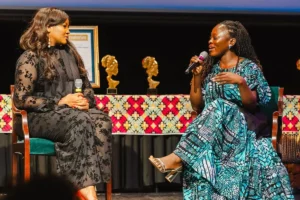
In 2024, during a performance of WITNESS at the historic Apollo Theater in Harlem, a member of the audience crystallized the limitations of our current civic discourse. As the dancers moved through a particularly harrowing passage depicting the visceral brutality of American slavery, the spectator was overheard remarking, "People lived through this, so I am going to make myself experience this."
This statement marks a profound departure from the traditional role of the "spectator." In that moment, she transformed from a passive observer seeking entertainment into a participant in a civic act. She chose, quite deliberately, to remain present with her discomfort rather than shielding herself from the reality of the history being presented.
This is the "threshold condition" that policy briefs and town hall meetings fail to manufacture. It is the transition from "learning about" history to "witnessing" history.
Chronology of an Artistic Intervention
The WITNESS project, conceived as a three-act journey, represents a deliberate attempt to bridge the gap between artistic performance and civic duty.

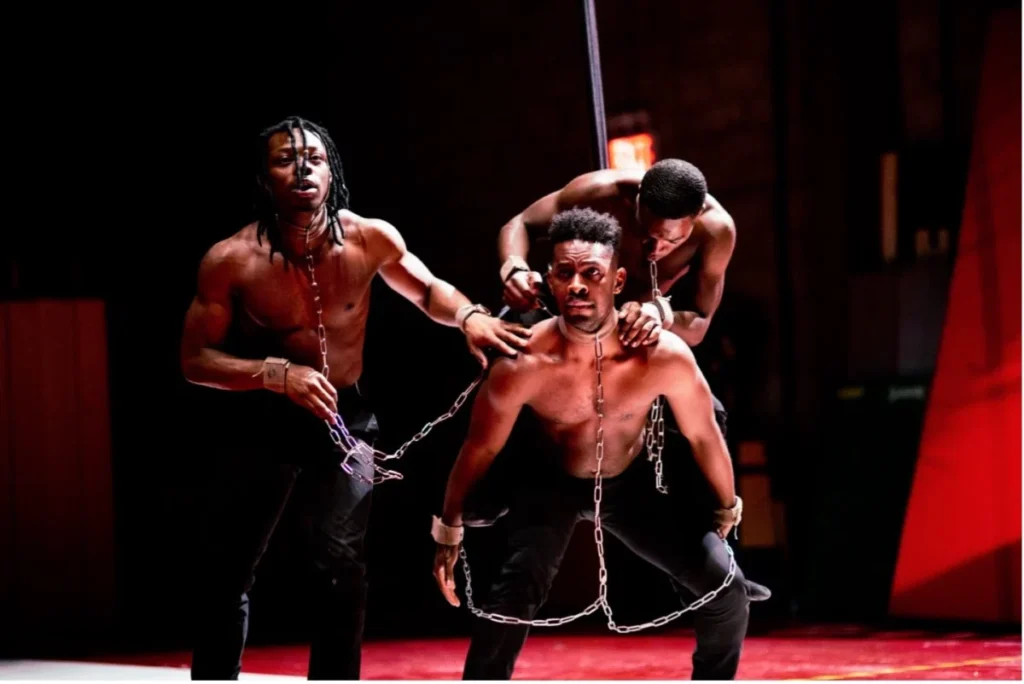
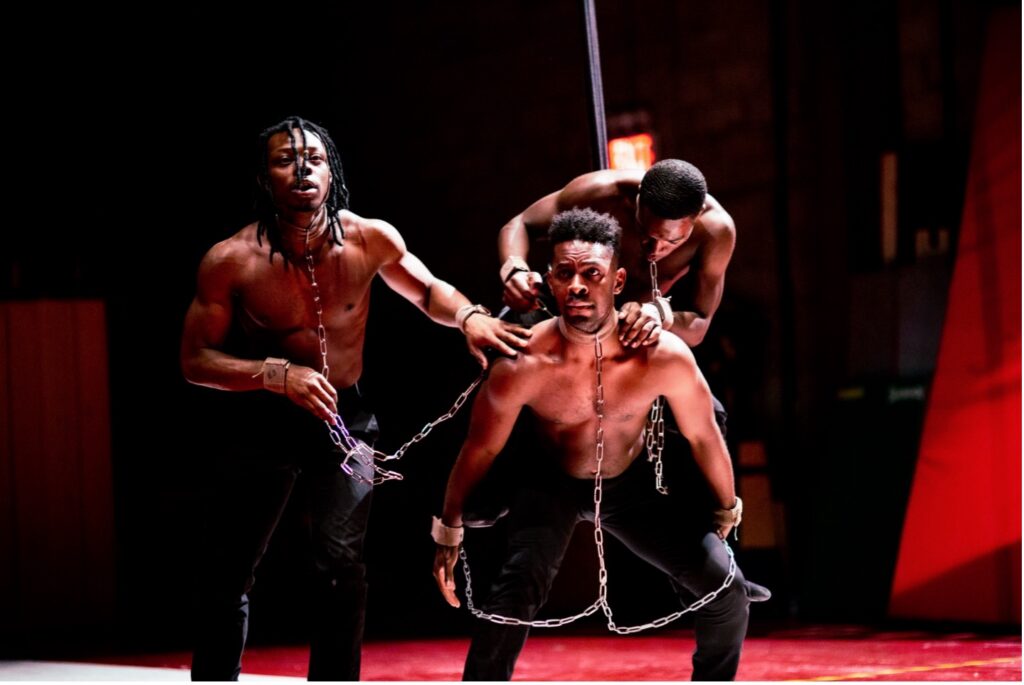
- Act I: YESTERDAY: The performance opens with a stark, unflinching portrayal of the dehumanizing machinery of American slavery. Dancers utilize aerial bungee apparatuses and heavy chains, illustrating the physical and psychological toll of bondage. It forces the audience to confront the raw, unvarnished violence that underpins the American economy.
- Act II: TODAY: The narrative shifts to the modern era, examining the compounding effects of the criminal justice system on Black families. By connecting the historical chains of the past to the systemic barriers of the present, the performance creates a temporal bridge that makes the "legacy" of slavery tangible rather than theoretical.
- Act III: TOMORROW: Currently in development, this act pivots from diagnosis to vision. It asks the audience to participate in an act of radical imagination: What does joy look like when the chains are broken? What does collective healing feel like? This is not merely an artistic finale; it is a collaborative effort to envision a future that, until now, has been excluded from the public policy discourse.
The Structural Absence of Cultural Infrastructure
The failure of the reparations movement to gain widespread, transformative traction is not an accident; it is structural. Most performing arts organizations are siloed, focusing on aesthetic value, while civic organizations focus on procedural outcomes. The intersection—where artistic rigor meets deep, sustained civic function—remains largely empty.
The Myth of Intellectual Persuasion
Philanthropy and advocacy groups have long operated on the belief that persuasion is a linear, intellectual process. The logic follows: Present the data, provide the history, and the public will eventually concede to the necessity of reparations.
However, this ignores the psychological defense mechanisms inherent in historical trauma. Information cannot reach a mind that has not yet chosen to be open. "You cannot wake someone who is pretending to be asleep," observes the project’s lead choreographer. By neglecting the "emotional conditions" of the public, proponents of reparations have been attempting to build the roof of a house before the foundation has been poured.
Integrating Civic Action
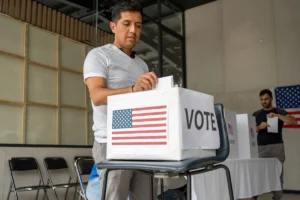
The WITNESS performances go beyond mere stagecraft. During the 2024 run, voter registration was integrated directly into the theater experience. It was not a table in the lobby or a post-show handout; it was part of the flow of the experience. This design forces a direct link between the emotional witnessing of history and the concrete, procedural actions of citizenship. It treats the audience member not as a consumer, but as a stakeholder in the democratic process.
Supporting Data: Why "Feeling" Matters
While empirical data on "emotional engagement" is notoriously difficult to quantify, social psychologists and trauma researchers have long argued that "vicarious traumatization"—when handled within a safe, communal space—can lead to higher levels of empathy and a stronger desire for prosocial behavior.
In contrast, statistics often trigger "compassion fatigue" or defensive denial. When a person is presented with a spreadsheet detailing the wealth gap, they may process it as a dry, debatable fact. When that same person watches a performance that humanizes the generational struggle to overcome those same barriers, the barrier to entry shifts from the intellect to the conscience.
Official Responses and The Role of Philanthropy
To date, major philanthropic institutions have been slow to fund the intersection of culture and civic reform. Most grant cycles remain rigidly divided: arts funding goes to "beauty and expression," while social justice funding goes to "lobbying and legal research."
Critics of this traditional model argue that this is a misuse of funds. If the goal is a national consensus on repair, then cultural funding should be reclassified as "civic infrastructure." The argument is that for legislation to pass, the public must first be "prepped" to accept it. Without this cultural preparation, policy will always remain years ahead of public imagination, doomed to fail in the face of legislative opposition.
Implications for the Future of Democracy
As the nation marks the 250th anniversary of independence, the implications of this approach are significant. The movement toward repair is not just a matter of bank transfers or tax credits; it is a matter of collective psychological health.
- The Need for New Institutions: There is a vacuum in the American landscape for institutions that combine the rigor of a theater company with the mission of a civic center. Building these spaces at scale is a prerequisite for any meaningful national reckoning.
- Redefining Participation: The woman at the Apollo Theater was practicing a form of civic participation. By choosing to stay, to witness, and to hold the discomfort of history, she was engaging in a form of repair that no bill in Congress can mandate.
- The Cost of Inaction: The current absence of these "witnessing spaces" is costing the nation more than can be measured in dollars. It is the cost of a fractured society that cannot look at its own reflection. The continued refusal to build the infrastructure for emotional honesty ensures that the national conversation on reparations will remain trapped in the same loop of frustration for another generation.
Conclusion
The WITNESS project serves as a pilot for a new kind of civic infrastructure. It demonstrates that when we treat the audience as a community capable of holding difficult truths, the conversation shifts. The question is no longer "should we pay reparations?" but rather "how do we, as a collective body, begin the work of repairing the damage we have all inherited?"
If we are serious about addressing the legacy of slavery and systemic injustice, we must move beyond the op-ed and the panel discussion. We must build the stages, the forums, and the spaces where the public can practice the act of witnessing. Until we do, we will continue to talk past one another, trapped in a cycle of arguments that—while historically accurate—remain emotionally disconnected from the very people who must choose to end the stalemate.
The path to repair begins not in the ledger, but in the room where we choose, together, to stay present with the past.