The Biometric Wallet: How Your Face Is Replacing Your Credit Card

In the rapidly evolving landscape of digital commerce, the traditional wallet is undergoing a profound transformation. What once held physical cash, plastic credit cards, and paper identification is being replaced by an invisible, immutable, and deeply personal asset: your biometric profile. As Apple and Android digital wallets move beyond simple storage to become the primary interface for our digital identities, industry leaders are declaring that the future of commerce is "frictionless," with the human face serving as the ultimate authentication token.
"Essentially, your face becomes your wallet," says Prashant Sharma, JPMorgan Chase’s global head of product for biometric payments and digital identity. This transition marks a significant shift from "what you have" (a card) to "who you are" (your biology). For the modern consumer, this means a future where purchasing groceries, boarding international flights, and accessing loyalty programs occurs in a seamless flow, unencumbered by the physical act of reaching for a wallet or fumbling for a forgotten PIN.
The Convergence of Identity and Payment
The modern digital wallet is no longer merely a repository for payment credentials; it is rapidly becoming a vault for state-issued digital identity. According to IDScan.net, 22 U.S. states and Puerto Rico have already authorized mobile driver’s licenses (mDLs) that can be integrated into digital wallets. This, coupled with the widespread adoption of biometric-enabled smartphones, has created a fertile ground for the integration of physical identity into the digital checkout process.
The implications for retail and travel are vast. By linking payment data to a biometric scan, merchants can achieve a "zero-thought" checkout experience. This is not merely a convenience play; it is a sophisticated security upgrade. Because biometric data—such as a fingerprint or iris scan—is tethered to the individual, the potential for payment fraud is significantly mitigated. In a world where static passwords are easily compromised, biometric authentication offers a dynamic, high-security alternative.
A Brief History of the Biometric Shift
The journey toward a biometric-based economy began roughly a decade ago with the mass adoption of smartphones equipped with touch and face-recognition technology.
- 2014–2016: The Dawn of Convenience. The introduction of Apple Pay and similar services familiarized consumers with using a fingerprint scan to authorize a transaction. This laid the psychological foundation for "biometric trust."
- 2018–2020: The Rise of Passkeys. As password fatigue hit global levels, the FIDO Alliance—a cross-industry consortium—began pushing for "passkeys," a standard that allows users to authenticate accounts using device-based biometrics rather than typed passwords.
- 2021–2023: Standardization and Expansion. The FIDO Alliance reported that passkeys reached a "global scale" with 5 billion active users by 2026. This period saw major tech players integrate digital IDs into Google and Apple Wallets, moving beyond just credit card storage.
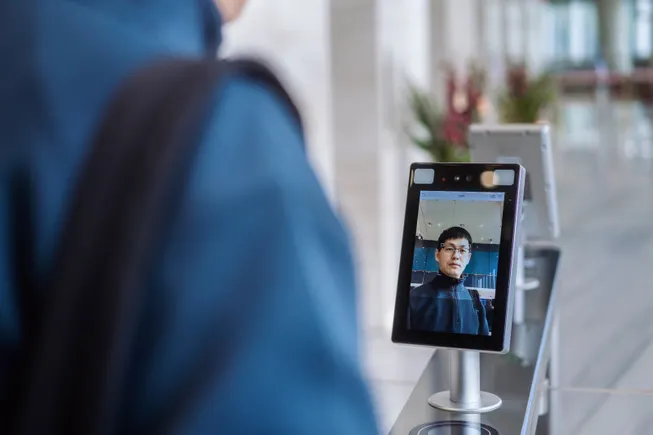
- 2024–Present: The "Touchless" Frontier. The TSA’s expansion of its "PreCheck Touchless ID" to 65 major U.S. airports signifies the move from theoretical to practical application in high-security environments, marking a turning point where facial recognition is now the standard for government-level identity verification.
Data Points: The Scale of Adoption
The shift is supported by robust data that indicates consumer readiness and merchant enthusiasm. According to a 2026 FIDO Alliance report surveying 11,000 adults across ten nations, 90% of consumers are now aware of passkeys, and three-quarters have already enabled them for at least one account.
Visa’s recent trends report categorized biometric-authenticated payments as "mainstream," noting that merchants are incorporating these systems at accelerated rates. The business case is clear: reduced friction leads to higher conversion rates, and fewer fraudulent transactions reduce the "hidden tax" of security breaches for retailers.
Official Responses and Industry Stances
The transition is being championed by both financial institutions and technology giants. P.J. Linarducci, Google’s vice president of consumer payments, emphasizes that security does not need to be a trade-off for convenience. "We believe security shouldn’t come at the cost of convenience—and as a result have seen consumers welcome biometric ID verification," Linarducci stated. Google Wallet’s integration with the TSA’s touchless ID program highlights how deeply the tech industry is embedding itself into critical infrastructure.
However, the regulatory landscape remains cautious. In 2023, the Federal Trade Commission (FTC) issued a stark policy statement, warning that the surge in biometric data collection poses "significant concerns with respect to consumer privacy, data security, and the potential for bias and discrimination." The FTC has vowed to enforce strict oversight to ensure that companies do not engage in "deceptive acts" regarding how this sensitive biological information is stored, shared, or utilized.
Cultural Nuances and the Global Divide
The adoption of biometric technology is not uniform. As Nishant Kaushik, CTO of the FIDO Alliance, points out, there is a distinct "cultural component" to how these technologies are accepted.

In nations like India, Singapore, and China, biometric integration is often tied to national identity programs (such as India’s Aadhaar system), where citizens have become accustomed to using biological identifiers for everything from tax filing to retail purchases. Conversely, the United States and parts of Europe maintain a more guarded approach. This skepticism is driven by historical concerns over government surveillance and the potential for civil rights violations.
Kaushik highlights a "strong, important division" in how these technologies are perceived: the difference between on-device biometrics (where the user controls their own data) and service-line biometrics (where a retail kiosk scans your face). The latter is where the most significant resistance occurs, as consumers worry about the "creepiness" factor and the potential for their data to be harvested by third-party retailers.
The Path Forward: Implications and Risks
The integration of biometrics into the retail and transit ecosystem brings both promise and peril.
The Promise: Efficiency and Security
For high-traffic environments like stadiums, airports, and quick-service restaurants, biometrics offer a clear path to scalability. "When you go to the stadium, it’s not just about going to the concession stand and buying a beer and a hot dog," says JPMorgan’s Sharma. "Entry to venues, food and merchandise sales, and lounge access could all be more efficient." By removing the need to manage physical tickets or credit cards, companies can process thousands of customers in a fraction of the time currently required.
The Peril: Privacy and Potential Bias
The American Civil Liberties Union (ACLU) and other privacy advocates remain vocal about the risks. Facial recognition technology has historically struggled with accuracy rates among minority populations, leading to concerns about "ID errors" and wrongful accusations. Furthermore, the risk of a "centralized" biometric database is the ultimate cybersecurity nightmare; unlike a password, which can be reset, your face and fingerprints are permanent. If a biometric database is breached, the damage to the user is irrevocable.

The Trust Deficit
The largest hurdle for the industry is not the technology, but the "trust gap." As Sharma notes, "The moment consumers hear the term biometrics, they think about the security and the privacy." For the industry to succeed, it must move away from burying consent in dense legal terms. Experts argue that transparency—ensuring the user knows exactly why they are being scanned, where the data goes, and how long it lasts—is the only way to gain widespread acceptance.
Conclusion: A Multi-Modal Future
Despite the momentum behind facial recognition, industry experts agree that we are not approaching a total replacement of traditional methods. Just as the smartphone did not lead to the disappearance of the paper ID, and credit cards did not eliminate cash, biometrics will likely serve as a layer of convenience rather than a total replacement.
"Given that it’s the consumer’s choice, we feel all of these methods are going to exist," Sharma concludes. The future of payments will likely be a multi-modal environment where the consumer decides the level of friction they are willing to accept. Whether using a physical card for anonymity or a face scan for speed, the goal is to provide a "seamless" experience that meets the consumer where they are—culturally, digitally, and physically.
As we look toward 2030, the question is no longer if our face will be our wallet, but how we will build the safeguards to ensure that this ultimate authentication tool remains a convenience for the individual, rather than a mechanism for mass surveillance.