Raising Financially Literate Children: A Practical Framework for Modern Parenting

In an era defined by seamless digital transactions and contactless payments, the tangible concept of money has become increasingly abstract for children. For parents looking to raise financially responsible adults, the challenge lies in demystifying the complex machinery of consumerism. Recently, a pedagogical approach to childhood money management—often referred to as a "Family Money Philosophy"—has gained traction among parents seeking to move beyond simple allowance systems toward a model of real-world economic literacy.
Main Facts: The Core of the Family Money Philosophy
At its heart, the strategy employed by many financially conscious households is deceptively simple: parents cover the foundational costs of living, while children assume responsibility for discretionary spending. This dichotomy creates a controlled environment where children can experience the mechanics of commerce without the risks associated with true financial instability.
The division of labor is typically as follows:

- Parental Responsibilities: Essential needs including housing, clothing, healthcare, education, books, and basic sustenance.
- Child Responsibilities: Discretionary "extras," such as specialized treats, souvenirs at museums or county fairs, and non-essential toys.
By creating this boundary, parents provide a "financial sandbox." Children are empowered to make choices within a limited budget, allowing them to grasp the fundamental relationship between labor, currency, and value.
Chronology: From Chore-Based Income to Economic Autonomy
The evolution of a child’s financial journey typically follows a developmental timeline, mirroring their cognitive growth and numerical literacy.
Phase 1: The Introduction to Labor and Value
Early lessons begin with the connection between effort and compensation. By assigning age-appropriate chores—such as organizing kitchen spaces or performing deep cleaning—parents introduce the concept of "fair market value." This is not merely about completing tasks; it is about meeting a standard of quality. If a chore is performed with poor results, the compensation is withheld, mirroring the professional reality of performance-based pay.

Phase 2: The Practical Application
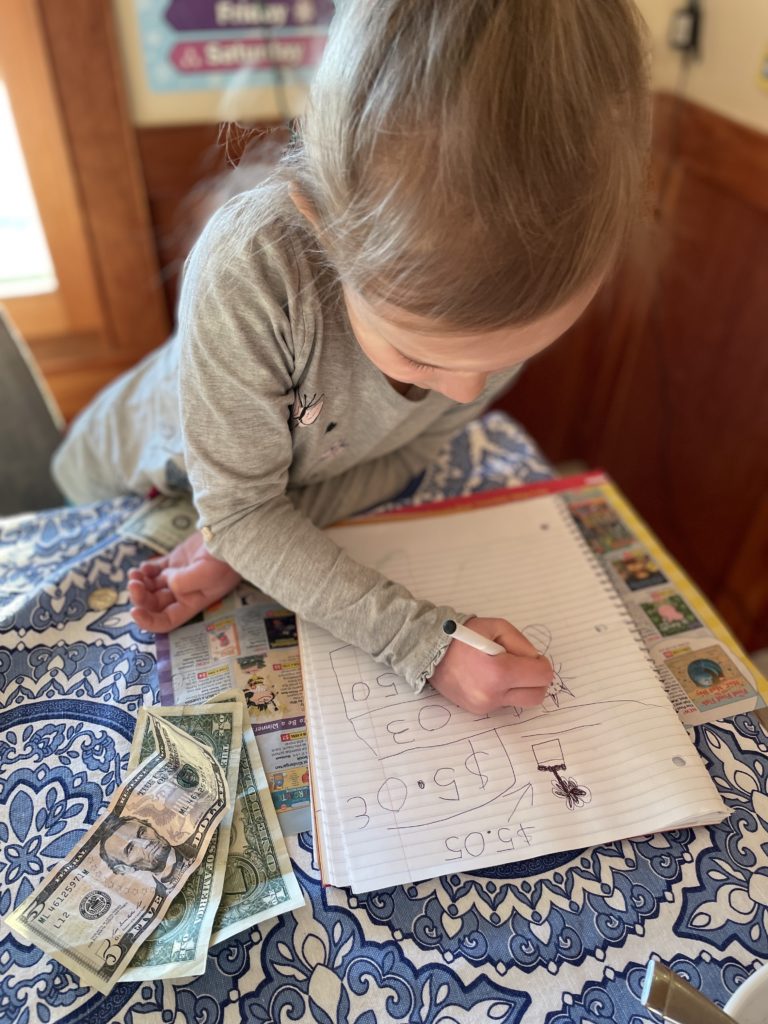
Once children begin to earn, the focus shifts to the physical management of funds. This stage often includes the use of personal wallets and the physical handling of coins and bills. During this period, parents frequently encounter "teachable moments," such as the accidental misplacement of money. These incidents serve as critical reminders that money is a resource requiring stewardship.
Phase 3: The Introduction of Debt and Consequences
A pivotal moment in financial education is the introduction of controlled debt. By allowing a child to "borrow" against future earnings to purchase an item they cannot currently afford, parents provide a visceral lesson in the psychological burden of debt. When a child realizes that their future time and effort are effectively "pre-sold" to pay for a past purchase, the long-term impact on their future spending habits is profound.
Supporting Data: The Mechanics of Financial Literacy
Financial experts and child development psychologists often emphasize that financial literacy is a scaffolded process. Just as children learn to add before they learn algebra, they must learn to handle cash before they can grasp concepts like interest rates or investment strategies.
The Power of "Unpaid" vs. "Paid" Work
A critical distinction in this pedagogical framework is the separation of household contributions.
- Unpaid Work: These are duties inherent to family membership—clearing the table, making beds, or feeding pets. These tasks teach communal responsibility and the idea that contributing to the household is a fundamental duty, not a transactional one.
- Paid Work: These tasks are "extra" projects that provide a direct pathway to discretionary income. This prevents the commodification of basic living standards while ensuring the child understands that "extra" desires require "extra" effort.
The Role of Real-World Simulation
Data from parental case studies suggests that direct involvement in the point-of-sale experience—physically handing cash to a cashier, calculating tax, or managing a shared budget for a dessert—significantly increases a child’s retention of mathematical and economic concepts.
Official Perspectives: The Philosophy of Money as a Tool
For parents who adopt these methods, the overarching goal is to strip away the emotional weight often attached to money. Money is categorized as a "tool," comparable to exercise or healthy eating—a means to reach an end, rather than an end in itself.
"We are working to demystify and simplify this weird adult world of money," explains one proponent of the philosophy. "These super basic explanations remove judgment, bias, and anxiety around money. We are just laying out the facts so our kids understand how the world operates."
This approach discourages the view that money equates to status or self-worth. By reframing it as a neutral resource, parents can help their children make rational decisions rather than emotional ones, fostering a healthy, objective relationship with their finances.
Implications: Preparing for Future Financial Complexity
As children progress through these early stages, the implications for their future are significant. A child who has learned to save, budget, and experience the discomfort of debt at age seven is significantly better prepared for the complexities of teen and young adult financial life.

The Future of the "Bank of Parents"
The next frontier in this educational model is the introduction of interest-bearing savings accounts managed within the family. By creating a "Bank of Parental Units," parents can introduce the concept of compound interest—the "eighth wonder of the world."
By offering a small return on savings that remain untouched, parents can incentivize long-term thinking over instant gratification. This transition from "earn-to-spend" to "earn-to-save" is the final step in preparing a child for the sophisticated financial systems they will navigate as adults.
Addressing Parental Anxiety
Many parents hesitate to discuss money with their children, fearing it will cause undue stress or anxiety. However, evidence suggests that transparency, when age-appropriate, actually reduces anxiety. When children understand that the family has a clear, logical, and structured approach to money, they feel more secure. They stop viewing the family’s financial decisions as mysterious or arbitrary and start seeing them as part of a coherent, manageable reality.

The Long-Term Goal
Ultimately, the goal of this financial education is not to produce children who are obsessed with money, but rather children who are indifferent to its power to control them. By mastering the mechanics of earning, saving, and thoughtful spending, children gain a sense of agency. They learn that they are not victims of the marketplace, but active participants in their own economic lives.
Whether it is the negotiation of a $10 fee for organizing a kitchen cabinet or the decision to split the cost of a farm-fresh dessert, every interaction serves as a building block for future financial independence. In a world that often encourages mindless consumption, these intentional lessons are an investment in the next generation’s long-term stability and success.
As we look toward the future of financial education, the model of transparency, responsibility, and experiential learning remains the most effective way to equip children with the tools they need to thrive. The "Family Money Philosophy" is more than a way to handle allowance; it is a way to ensure that our children grow up viewing money not as a source of stress, but as a reliable, logical, and effective tool for building the life they desire.