Navigating the Modern Investor’s Labyrinth: Timeless Questions in a Dynamic Market

By [Journalist’s Name/Financial Desk]
In an era of unprecedented market volatility and accessible information, investors across all wealth spectrums grapple with fundamental questions that remain strikingly consistent. From deploying substantial cash reserves to securing a comfortable retirement and optimizing portfolios for multi-million-dollar fortunes, the core dilemmas often revolve around risk, return, and peace of mind. This week, we delve into a selection of pressing inquiries from the investment community, dissecting expert perspectives and historical data to illuminate pathways through these complex financial quandaries.
The discussions underscore a crucial truth: while quantitative metrics provide a foundational framework, the qualitative, deeply personal aspects of an individual’s financial journey—their willingness to take risks, their life goals, and their psychological comfort—ultimately dictate the most suitable strategies.
The Lump Sum Conundrum: Deploying Capital in an Uncertain Market
Main Facts:
A common and enduring question among investors is how to best deploy a significant sum of cash into the market. A reader, inspired by a financial interview, specifically inquired about investing $150,000, proposing a diversified portfolio comprising a global equity fund (like the FTSE All-World), a 1-3 year government bond ETF, and a gold ETF. The core challenge lies not just in asset selection but in the timing of market entry, a decision often fraught with anxiety.
Chronology and Supporting Data:
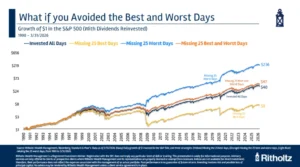
The debate between investing a lump sum immediately versus dollar-cost averaging (DCA) has been a cornerstone of investment theory for decades. Historical data, extensively analyzed by financial academics and institutions, often leans towards immediate lump-sum investment. Studies by Vanguard, for instance, have repeatedly shown that over rolling 10-year periods, immediate lump-sum investing has outperformed dollar-cost averaging approximately two-thirds of the time. This is primarily because markets, over the long term, tend to rise, meaning that delaying investment often means missing out on potential gains. The underlying mathematical principle is that time in the market generally trumps timing the market.
However, the emotional and psychological aspect of investing a large sum cannot be overstated. The fear of "anger the market gods"—that is, investing just before a significant downturn—is a potent deterrent for many. This behavioral bias, often termed "regret minimization," drives many investors towards strategies like dollar-cost averaging, where a lump sum is broken into smaller, periodic investments over several months or even a year. While statistically less optimal on average, DCA can provide psychological comfort, mitigating the perceived risk of a poorly timed entry and helping investors sleep better at night. It’s a classic example of where optimal financial theory meets practical human psychology.
Official Responses and Implications:
For the reader’s proposed portfolio, which includes global equities, short-term government bonds, and gold, the timing dilemma takes on a different dimension due to diversification. Financial strategists consistently advocate for diversification as a powerful tool to mitigate risk and reduce the need for precise market timing. A well-diversified portfolio inherently balances different asset classes that typically do not move in perfect lockstep.
Consider the historical performance of the proposed asset classes:
- Global Equities: Offer growth potential but come with higher volatility.
- Government Bonds: Provide stability, income, and often act as a safe haven during equity market downturns, given their low correlation with stocks. Short-duration bonds further reduce interest rate risk.
- Gold: Historically viewed as a store of value and an inflation hedge, gold often performs well during periods of economic uncertainty or when real interest rates are low, acting as a diversifier against both stocks and sometimes even bonds.
Remarkably, historical analysis over the past 75 years reveals that stocks, gold, and short-duration bonds have never simultaneously declined in the same year. Furthermore, gold and stocks have only finished down in the same year four times in that period, with the average S&P 500 decline in those years being a modest 5%. This low correlation across asset classes is the "beauty of a diversified portfolio."
The implication for lump-sum investors with a diversified approach is profound: Establishing a pre-determined asset allocation and deploying the money according to that plan reduces the pressure of market timing. If one asset class declines, another may hold steady or even rise. More importantly, diversification enables a strategic rebalancing process. If equities fall, an investor can rebalance by selling a portion of their relatively higher-performing bonds or gold to buy more equities at a lower price, adhering to their target asset allocation. This systematic approach transforms market volatility from a source of fear into an opportunity for strategic adjustment, making the "how to enter" question less about prediction and more about disciplined execution.
The Retirement Riddle: Defining Financial Security for Frugal Seniors
Main Facts:
Another common concern revolves around retirement readiness, particularly for those with substantial savings but lingering anxieties. A reader presented the case of their parents, nearing retirement, with $1.5 million in liquid assets (excluding home equity), all debts paid off, and extremely frugal living expenses estimated at $30,000 per year. The father will begin collecting Social Security next year, expected to cover most living expenses. Despite their strong financial position, the mother expresses nervousness about outliving their money.
Chronology and Supporting Data:
The fear of outliving one’s savings, often termed "longevity risk," is a legitimate concern, especially with increasing life expectancies. However, for this particular couple, their financial situation paints a picture of exceptional security.
- Wealth Quintile: With $1.5 million in liquid assets at age 65, they fall into the top 15% or so of people their age, positioning them firmly within the "rich" category by most objective measures.
- Social Security as a Foundation: Social Security benefits are a cornerstone of retirement planning for most Americans. The average monthly Social Security check is currently around $2,000. If both spouses receive an average check, their combined annual income from Social Security alone could approach $50,000. This figure significantly exceeds their estimated $30,000 annual living expenses. This is a critical piece of supporting data; Social Security essentially covers their base expenses, providing a robust floor under their retirement income.
- Longevity Insurance: Financial planners often refer to Social Security as the "perfect longevity insurance." It’s a government-backed annuity that provides inflation-adjusted income for life, irrespective of market performance or how long an individual lives. This feature directly addresses the mother’s concern about outliving their money, as a substantial portion of their needs is met by a guaranteed, lifelong income stream.
Official Responses and Implications:
Given their financial profile, financial advisors would typically reassure this couple of their strong position. With Social Security covering their baseline needs, the $1.5 million in liquid assets serves as a substantial supplementary fund, offering flexibility and a buffer against unexpected costs or desires for discretionary spending.
The "4% Rule" (or a more conservative variant) is a widely cited guideline for retirement withdrawals. This rule suggests that withdrawing 4% of a retirement portfolio’s initial value (adjusted for inflation annually) provides a high probability of the money lasting for 30 years or more. For a $1.5 million portfolio, a 4% withdrawal would equate to $60,000 per year. Even a more conservative 3% withdrawal would yield $45,000 annually. When combined with their Social Security income, this easily covers their $30,000 annual expenses and provides ample room for a comfortable lifestyle.
Implications for their retirement planning extend beyond mere numbers:
- Peace of Mind: The primary implication is that their financial foundation is secure, allowing them to shift focus from accumulation to enjoyment. The mother’s anxiety, while understandable, is largely unfounded from a purely financial standpoint.
- Lifestyle Planning: Once the math is robust, financial planning evolves into defining the desired quality of life. The $1.5 million can fund travel, hobbies, healthcare needs, or even leave a legacy. They need a plan not just for their money, but for their time and enjoyment, exploring how they wish to "purchase" their ideal retirement with their substantial resources.
- Flexibility: The large liquid asset base provides immense flexibility. They could invest in a balanced portfolio, withdrawing $50,000-$60,000 annually, knowing that their core expenses are already covered by Social Security. This reduces sequence of returns risk, as they are not solely reliant on their investment portfolio in the early, vulnerable years of retirement.
This scenario highlights that financial security is often as much about psychological comfort as it is about mathematical certainty. For this couple, the data unequivocally suggests financial abundance, and the task now becomes embracing that reality and planning for a fulfilling life.
The Ultra-High Net Worth Paradox: Risk, Return, and Personal Philosophy
Main Facts:
A final reader query delves into the investment strategies of ultra-high net worth (UHNW) individuals. The question posed was whether individuals with $5 million or more typically invest solely in low-cost index funds like VTI or SPY through retirement, akin to Warren Buffett’s disciplined approach. The reader mused whether the potential upside of aggressive growth outweighs the risk of a 30% market drop, especially when expenses are reasonable.
Chronology and Supporting Data:
The concept of risk profiling is central to investment management, regardless of wealth level. For financial professionals, understanding a client’s risk profile involves a nuanced assessment of three interconnected components, a framework often studied in advanced financial certifications like the CFA exam:
- Need to Take Risk: The return required to achieve specific financial goals. For someone with $5 million and modest expenses, the "need" for aggressive returns to cover basic living costs might be very low.
- Ability to Take Risk: This is determined by objective financial circumstances: time horizon, portfolio size, income stability, liquidity needs, and spending habits. An individual with $5 million and low expenses has a very high "ability" to absorb market fluctuations.
- Willingness to Take Risk: This is the subjective, emotional component—the balance between the desire for portfolio growth and the desire for peace of mind ("sleeping soundly at night").
Many traditional wealth management philosophies suggest that once an investor has "won the game"—i.e., accumulated more than enough wealth to meet their financial goals—they should de-risk. Why take unnecessary risks when the "need" for higher returns is diminished? However, as the reader points out, having a large portfolio also confers a significant "ability" to take more risk. What, then, is the harm in pursuing further growth?
Official Responses and Implications:
Providing investment advice to UHNW clients can be surprisingly complex precisely because of this paradox. The sheer scale of capital means fewer inherent limitations. An investor with $10 million could pursue an uber-aggressive, all-equity strategy and still likely cover their living expenses, even after significant market corrections. Conversely, they could adopt a super-conservative, bond-heavy approach and still generate substantial income.
This is where the "willingness to take risk" becomes the emotional fulcrum of the investment plan. For UHNW individuals, the decision often transcends pure financial need and delves into personal philosophy and legacy.
- Growth for Future Generations: Some UHNW investors choose aggressive growth strategies to maximize wealth transfer to heirs or philanthropic causes. For them, a 30% market drop is a temporary setback on a multi-generational horizon.
- Capital Preservation and Lifestyle: Others prioritize capital preservation and stable income to fund a desired lifestyle without anxiety. They might opt for a more balanced or conservative portfolio, even if it means foregoing some potential growth. The desire to "sleep better at night" becomes paramount.
- Philanthropy: A significant portion of UHNW wealth is often directed towards charitable endeavors. The investment strategy might then be tailored to maximize the impact of their giving, whether through aggressive growth for larger future donations or stable income for consistent philanthropic support.
The implication is that a successful investment process, even for the wealthiest, often benefits from self-imposed limitations. Without a clear "need" to dictate risk, the decision becomes intensely personal, driven by objectives beyond mere financial accumulation. The author notes seeing both extremes: UHNW clients with portfolios almost entirely in stocks and others with eight-figure portfolios that are far less aggressive. The optimal path hinges on individual tolerance for risk, specific time horizons (personal vs. multi-generational), and overarching goals.
Ultimately, whether an investor has $150,000, $1.5 million, or $5 million+, the question of how much risk to take remains deeply personal. While quantitative metrics offer valuable guidance, the qualitative, subjective piece—"know thyself"—will always matter more in shaping an investment strategy that aligns with one’s financial goals and personal comfort. It is this intricate dance between numbers and human nature that defines the enduring challenge and fascination of investment management.