The Nord Stream Indictment: A Geopolitical Breach in the Baltic Sea
The investigation into the catastrophic sabotage of the Nord Stream gas pipelines has reached a critical legal milestone. German federal prosecutors have formally charged a former Ukrainian army officer, identified as Serhii K., with acting as a co-perpetrator in a war crime that sent shockwaves through global energy markets and international diplomacy. The indictment, filed before a regional court in Hamburg, alleges that the destruction of the subsea infrastructure was not merely an act of random sabotage, but a coordinated operation executed on behalf of Ukrainian state entities.
As the legal proceedings commence, the case threatens to strain the delicate alliances between Kyiv and its Western backers, while simultaneously fueling long-standing narratives regarding the weaponization of energy infrastructure in the wake of the ongoing Russia-Ukraine conflict.
The Core Allegations: A Tactical Strike on Infrastructure
According to the German Federal Prosecutor’s Office (Generalbundesanwalt), Serhii K.—a former officer within the Ukrainian armed forces—played a pivotal role in the September 2022 explosions that crippled the Nord Stream 1 and Nord Stream 2 pipelines. Prosecutors contend that the defendant did not act in isolation; rather, he operated as part of a sophisticated military-linked cell with a singular objective: to permanently sever the flow of Russian natural gas to Europe.
The indictment characterizes the mission as a "war crime involving an attack on civilian objects." Prosecutors argue that by destroying these pipelines, the perpetrators aimed to strip Moscow of the revenue necessary to finance its ongoing invasion of Ukraine. The operational complexity of the attack suggests a high degree of planning: the defendant allegedly led a specialized team comprised of professional divers, an explosives expert, and a skilled skipper.
The logistical trail described by investigators is stark: the team reportedly entered Germany in September 2022 using forged Ukrainian passports. They then chartered a private yacht, utilizing fabricated identification documents to evade scrutiny. Moving through international waters to a location near the Danish island of Bornholm, the team allegedly deployed large quantities of military-grade explosives, attaching them to the Baltic Sea floor pipelines before setting time fuses.
Chronology of a Geopolitical Crisis
The path to the current indictment is marked by years of international tension and exhaustive forensic investigation.
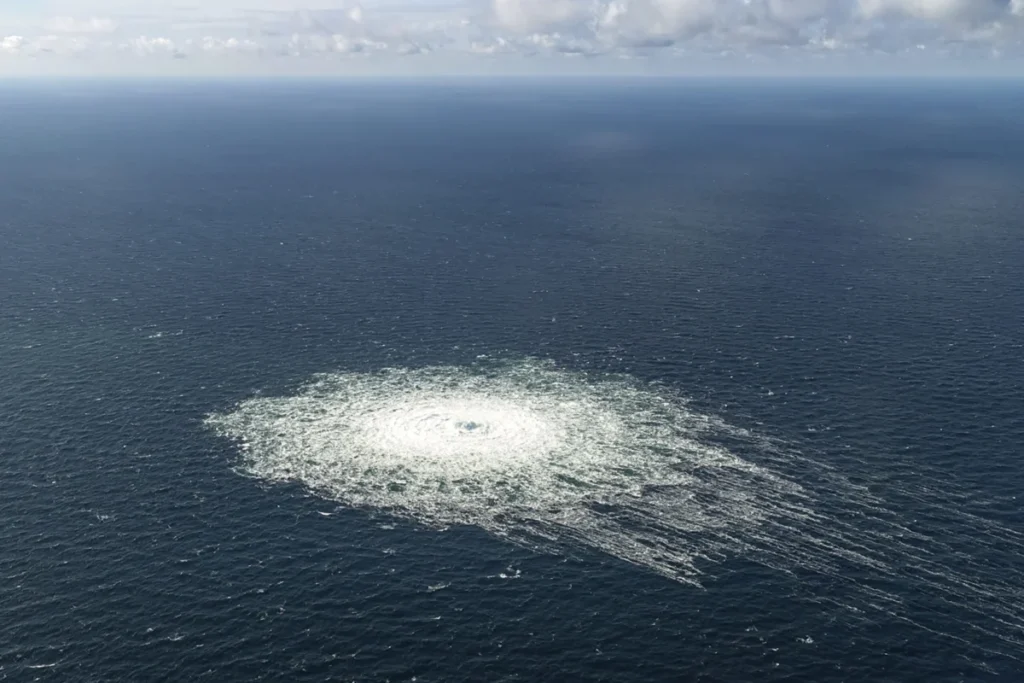
- September 2022: The Nord Stream 1 and 2 pipelines are rocked by massive underwater explosions. Seismic monitors detect significant tremors in the Baltic Sea, and gas leaks are observed near the Danish island of Bornholm.
- Late 2022 – 2023: International authorities launch investigations. While Russia blames Western intelligence agencies, Western officials initially express caution, often labeling the act as "sabotage" without immediately pointing fingers at specific state actors.
- August 2024: Following a European arrest warrant, Serhii K. is apprehended in Italy. His arrest marks the first major breakthrough in the high-profile case.
- November 2024: The suspect is extradited to Germany to face trial under the jurisdiction of the German judicial system, which asserts authority due to the pipelines’ termination point in Lubmin and the resulting threat to German energy security.
- April 2026: German federal prosecutors formally file charges of war crimes, destruction of infrastructure, and disruption of public services against the defendant.
The Defense and the Demand for Transparency
Despite the weight of the allegations, Serhii K. has consistently denied any involvement in the sabotage. His legal representation has adopted an aggressive stance, aiming to shift the focus toward the lack of public evidence and the perceived political nature of the prosecution.
Nicola Canestrini, the defendant’s lawyer in Italy, issued a defiant statement following the indictment. "We do not fear the indictment—we demand that the facts be established, and in public," Canestrini stated. The defense team suggests that the trial will serve as a venue to expose the discrepancies in the prosecution’s theory. With the defendant now in German custody, the trial is expected to be a grueling test of evidentiary standards, particularly given the reliance on intelligence-derived information that is often shielded from public view.
Official Responses: Navigating Diplomatic Minefields
The revelation that the attack may have been conducted on behalf of Ukrainian state entities has placed the administration of President Volodymyr Zelenskiy in a precarious position.
In Kyiv, the official response has been one of tactical ambiguity. President Zelenskiy confirmed that he had received the indictment but maintained that his government lacked the comprehensive details required to offer a substantive rebuttal. "The relevant authorities of our countries will get in touch, and when we receive more details, we will probably be able to respond. For now, it is too early to speak," the President stated.
The diplomatic implications are profound. Ukraine remains heavily dependent on European military and financial aid, much of which is funneled through Germany. An admission of state-sanctioned sabotage against critical European infrastructure could create a severe rift in public opinion and political support across the European Union. Conversely, a prolonged denial risks casting doubt on the transparency of Kyiv’s military operations.
Implications for Global Energy Security
The destruction of the Nord Stream pipelines was more than a military act; it was a watershed moment for European energy policy. Before the September 2022 blasts, Nord Stream 1 had been the primary conduit for Russian gas exports to Germany and the wider European market. Although Moscow had already throttled supply—a move the West characterized as the weaponization of energy—the physical destruction of the pipelines effectively ended the era of cheap, pipeline-delivered Russian gas to Western Europe.
The insurance and economic ramifications have been equally significant. As noted by industry observers, insurers are increasingly invoking "war exclusion" clauses to avoid paying out on claims related to the blasts. The case has also forced Germany to accelerate its transition toward liquefied natural gas (LNG) and renewable energy, fundamentally restructuring its industrial base.
Legal Precedents and Challenges
The decision by German prosecutors to frame the charges as a "war crime" is legally significant. Under the German Code of Crimes against International Law (VStGB), targeting civilian objects that do not constitute a military objective is a serious offense. If convicted, the defendant faces a minimum of three years in prison, with the potential for much longer sentences depending on the interpretation of the severity of the act and its consequences.
However, the trial faces significant hurdles:
- Jurisdictional Complexity: While Germany asserts jurisdiction due to the pipeline’s terminus, the act occurred in international waters near Danish territory, raising questions about international law and cooperation between Denmark, Sweden, and Germany.
- Evidence Classification: Much of the evidence likely stems from intelligence gathering by German and allied agencies. Balancing the need for a "public" trial as demanded by the defense with the need to protect sensitive intelligence methods will be a constant point of friction.
- The "Co-Perpetrator" Argument: Proving that the defendant acted on behalf of "Ukrainian state entities" requires a degree of proof regarding the chain of command that may be difficult to satisfy in a courtroom, particularly if the command structure was intentionally opaque.
Conclusion: A Trial to Watch
As the Hamburg regional court prepares for trial, the world is watching. This case is not merely about the destruction of steel pipes on the seabed; it is about the blurring lines between state-sponsored covert action and international humanitarian law.
If the prosecution successfully proves that the operation was sanctioned by the Ukrainian military or government, the political fallout could be seismic. If the defense successfully sows reasonable doubt, it could trigger a new round of accusations and counter-accusations regarding the true perpetrators of one of the 21st century’s most significant acts of industrial sabotage.
For now, Serhii K. remains in German custody, awaiting a day in court that promises to be as much a trial of international relations as it is a trial of an individual. The outcome will likely define how the international community interprets the legality of infrastructure attacks in the context of modern, hybrid warfare for years to come.