The Billion-Dollar Ledger: President Trump’s 2025 Financial Disclosure Reveals Massive Crypto Windfall
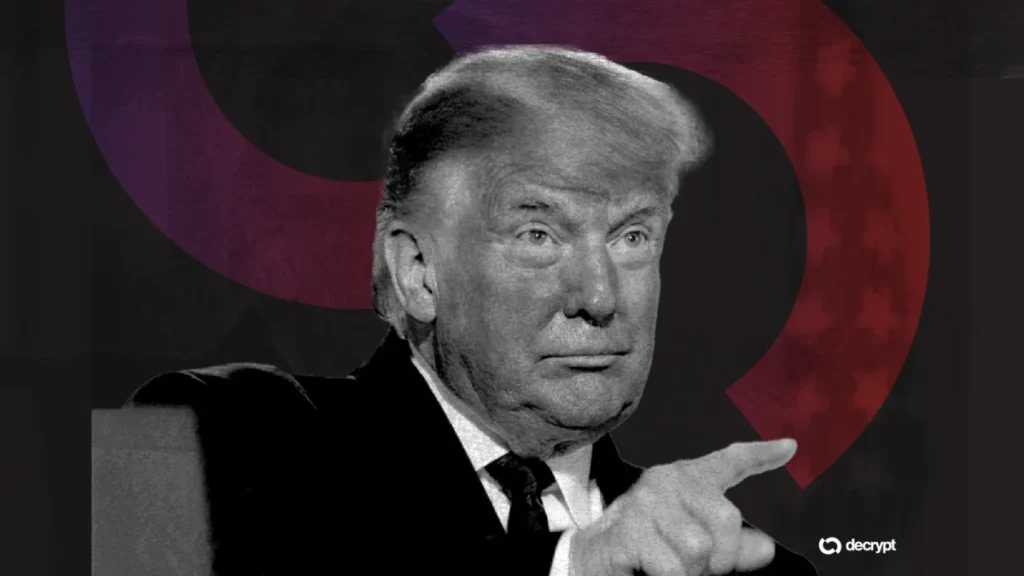
In a disclosure that underscores the unprecedented intersection of the American presidency and the burgeoning digital asset economy, the U.S. Office of Government Ethics (OGE) released President Donald Trump’s annual financial report on Tuesday. Spanning more than 900 pages, the document provides an exhaustive, albeit staggering, look at the President’s business empire. Most notable, however, is the revelation that President Trump generated more than $1.2 billion in income from various cryptocurrency-related ventures over the past year.
The report highlights a rapid and lucrative pivot into decentralized finance (DeFi) and digital assets, marking a distinct departure from traditional presidential asset portfolios. As the President continues to influence national economic policy, these disclosures have ignited a firestorm of debate in Washington, raising urgent questions regarding potential conflicts of interest, the regulatory future of the crypto industry, and the ethical boundaries of a sitting head of state.
Main Facts: A Fortune Built on the Blockchain
The financial disclosure confirms that cryptocurrency is no longer a peripheral hobby for the Trump family but a cornerstone of their current wealth generation. According to the OGE filing, the President’s crypto-linked earnings surpassed $1.2 billion in 2025 alone.
Beyond income, the President’s personal holdings are equally significant. The report details that Trump maintains a personal stash of over $50 million in Bitcoin (BTC), alongside a substantial position in Ethereum (ETH), valued between $5 million and $25 million. These figures represent a massive commitment to digital assets, positioning the President as one of the most prominent individual crypto holders in the world.
The primary drivers of this wealth were twofold: royalties from a licensed Solana-based meme coin and the explosive launch of World Liberty Financial, a family-operated DeFi venture.
Chronology: The Rise and Fall of the ‘TRUMP’ Token
The narrative of President Trump’s entry into the meme coin market is one of meteoric growth followed by a volatile correction.
The Launch
In January 2025, just days before his inauguration, a meme coin trading under the ticker symbol "TRUMP" was launched on the Solana network. The token was the result of a licensing agreement with Celebration Coins. The market reaction was instantaneous and aggressive; within hours of its debut, the coin’s market capitalization surged into the billions as retail investors rushed to capitalize on the branding.
The Peak
On January 19, 2025—the eve of his return to the White House—the TRUMP token reached an all-time high, fueled by speculation and the unique cultural weight of the President’s brand. During this window of peak excitement, the President’s royalties from the licensing agreement totaled approximately $635 million.
The Correction
The momentum, however, proved unsustainable. In the weeks following the inauguration, the coin’s market value began a precipitous decline. Currently, the token trades at approximately $1.66, reflecting a market capitalization of roughly $394 million. This represents a staggering 98% drop from its mid-January peak, leaving many early retail investors holding assets worth a fraction of their initial purchase price.
Supporting Data: World Liberty Financial and Asset Diversification
While the meme coin royalties provided a massive short-term liquidity event, the President’s involvement in "World Liberty Financial" indicates a long-term strategic investment in the infrastructure of the crypto economy.
The filing reports over $588 million in net proceeds from token sales distributed by the platform. World Liberty Financial is a DeFi project explicitly operated by the Trump family and a group of business associates. The platform aims to offer decentralized lending, borrowing, and stablecoin services—a sector that is currently the subject of intense scrutiny by the Securities and Exchange Commission (SEC) and other federal regulators.
Furthermore, these figures build upon previous disclosures from May 2025, which revealed the President’s active trading of equities. That report highlighted significant gains from positions in traditional finance companies that have pivoted toward digital assets, including Coinbase and Robinhood, as well as holdings in specialized Bitcoin mining stocks. When combined with the latest data, the pattern suggests a cohesive, multi-layered financial strategy centered on the normalization and expansion of the cryptocurrency ecosystem.
Official Responses: The Clash on Capitol Hill
The scale of these holdings has triggered an immediate and polarized response from lawmakers. The debate has largely centered on the "Clarity Act," a piece of legislation aimed at providing a comprehensive legal framework for cryptocurrency activity in the United States.
The Pro-Crypto Stance
Supporters of the Clarity Act argue that the President’s personal financial success in the space mirrors the potential for the American economy. They contend that his involvement provides "skin in the game," ensuring that the administration is incentivized to create a regulatory environment that fosters innovation and maintains the U.S. competitive edge against global rivals like China and the UAE.
The Ethical Backlash
Conversely, top Democratic lawmakers have voiced severe concerns. They argue that the President’s personal profit from projects like World Liberty Financial creates an untenable conflict of interest.
"We cannot have a situation where the Chief Executive is crafting policy that directly impacts the valuation of his own private holdings," said one high-ranking member of the Senate Banking Committee.
Democratic opposition to the Clarity Act has hardened, with many insisting that the bill should not proceed without the inclusion of strict ethics clauses. These proposed amendments would legally bar the President and his immediate family from engaging in or profiting from cryptocurrency-related businesses during their time in office. Currently, the Clarity Act remains in legislative limbo in the Senate, stalled by the very ethical questions raised by the President’s latest disclosure.
Implications: A New Era of Presidential Finance
The implications of these disclosures reach far beyond the President’s bank account. They represent a fundamental shift in the relationship between the executive branch and the financial markets.
Regulatory Capture vs. Market Leadership
Critics worry that the President’s financial stake in crypto could lead to "regulatory capture," where federal agencies—such as the SEC or the Commodity Futures Trading Commission (CFTC)—may be pressured to issue rulings favorable to the President’s business interests. If the President owns, promotes, or profits from specific protocols, the distinction between national economic policy and personal portfolio management becomes blurred.
Market Volatility and Investor Protection
The rapid rise and fall of the TRUMP token serves as a case study in the risks of celebrity-endorsed assets. The 98% loss in value for those who bought at the peak highlights the dangers of retail investors following presidential branding into highly volatile markets. This raises the question: Does the President have a responsibility to warn investors, or are these assets simply "buyer beware"?
The Future of DeFi
World Liberty Financial’s success in raising over $500 million indicates that there is a massive appetite for DeFi services among the President’s base. However, the legal legitimacy of such platforms remains unsettled. By placing his family name at the center of a DeFi project, the President has effectively forced the federal government to decide whether it will embrace the decentralized model or attempt to enforce traditional banking standards upon it.
The Precedent
Finally, this disclosure sets a new precedent for future presidential transparency. As digital assets become a permanent fixture of the global economy, the public will likely demand higher standards of disclosure regarding crypto-assets. Future candidates may now find themselves forced to divest from crypto-ventures entirely to avoid the level of scrutiny and ethical conflict that has defined the current administration’s first year.
As the Senate continues to debate the Clarity Act, the nation is watching closely. The President’s billion-dollar ledger is not just a record of personal wealth; it is a signal of a new economic paradigm, one where the blockchain is as much a matter of statecraft as it is of commerce. Whether this represents the future of American prosperity or a dangerous entanglement of interests remains the central question of the 2025 legislative session.