The Modi Era: Assessing the Transformation of a Nation at a Historical Juncture
By Shashi Tharoor
June 30, 2026
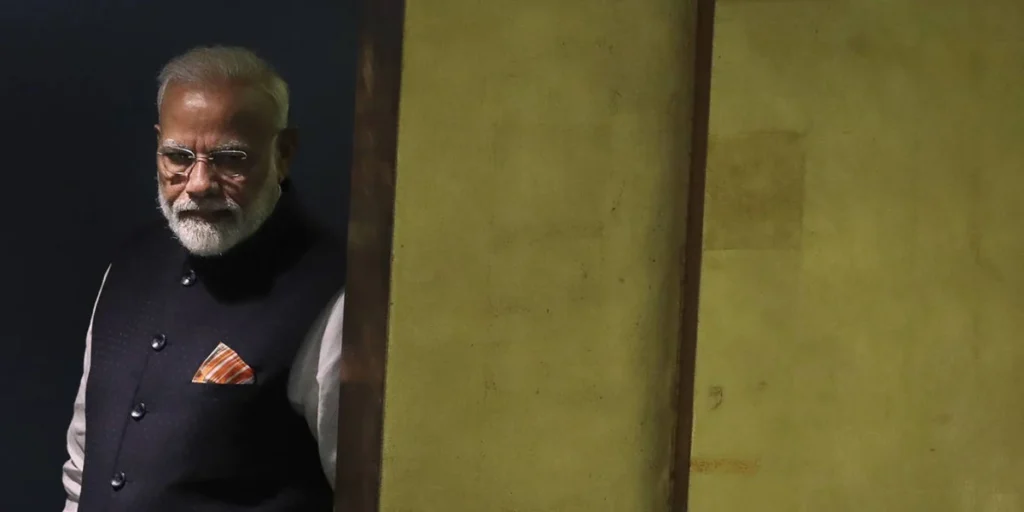
On June 10, 2026, a significant milestone was reached in the corridors of power in New Delhi. Narendra Modi, having surpassed 4,398 days of continuous service since the conclusion of the first post-independence general elections, officially became India’s longest-continuously serving elected Prime Minister. In doing so, he eclipsed the record set by Jawaharlal Nehru, the nation’s founding architect.
While historical nuances dictate that Nehru’s total tenure—including his pre-election years—remains distinct, and Indira Gandhi’s cumulative time in office remains a point of reference, the political reality is undeniable: Narendra Modi has firmly etched his name alongside the titans of Indian history. Over the past twelve years, his administration has overseen a period of intense economic modernization and state capacity-building, shadowed by deepening concerns regarding institutional erosion and social cohesion. As India navigates the complexities of the 21st century, the “Modi Era” stands as the defining framework for understanding the nation’s current trajectory and its future ambitions.
The Chronology of Power: From Gujarat to the Global Stage
To understand the current political landscape, one must look at the arc of Modi’s rise. After serving as the Chief Minister of Gujarat for over a decade, Modi’s 2014 national victory represented a seismic shift in Indian politics, signaling the end of the coalition era and the rise of a singular, dominant political brand.
- 2014: The "Modi Wave" swept the Bharatiya Janata Party (BJP) into power with an absolute majority, promising "Minimum Government, Maximum Governance."
- 2016: The controversial demonetization of high-value currency notes marked a radical attempt to formalize the economy, sparking intense debate on efficacy versus disruption.
- 2019: A resounding mandate for a second term, characterized by an emphasis on national security and a muscular foreign policy.
- 2020–2022: Navigating the COVID-19 pandemic, which tested the limits of India’s healthcare infrastructure and federal fiscal management.
- 2024: Securing a third consecutive term, cementing his position as the most dominant political figure of the post-liberalization era.
- June 2026: Surpassing the continuous service record of Jawaharlal Nehru, signifying a transition from a political leader to a historic institution.
Economic Modernization and State Capacity-Building
The hallmark of the Modi administration has been an aggressive pursuit of state capacity. The government’s approach to "Digital India" has been nothing short of transformative. Through the Unified Payments Interface (UPI) and the Aadhar-linked direct benefit transfer system, the state has effectively bypassed traditional bureaucratic leakages, delivering subsidies and welfare directly to the accounts of millions.
Infrastructure and the "Hard" Economy
The focus on infrastructure has been relentless. From the rapid expansion of the national highway network to the modernization of airports and the introduction of high-speed rail corridors, the physical landscape of India has undergone a visible facelift. The "Make in India" initiative, while facing headwinds, has successfully incentivized manufacturing in key sectors, particularly electronics and defense, positioning India as a vital cog in the global supply chain diversification strategy—often referred to as the "China Plus One" policy.
The Digital Revolution
The digitization of the Indian economy has enabled a level of financial inclusion previously deemed impossible. Small-scale entrepreneurs, who were once excluded from the formal banking sector, now utilize digital ledgers and micro-credit facilities with ease. This "fintech revolution" has provided a bedrock for growth, allowing the Indian economy to remain resilient despite global inflationary pressures.
The Institutional Ledger: A Critical Perspective
However, the rapid modernization of the economy has been accompanied by what many observers describe as a "hollowing out" of institutional independence. A healthy democracy relies on the autonomy of its pillars: the judiciary, the press, and investigative agencies.
Under the current administration, critics argue that the balance of power has tilted heavily toward the executive. The frequent use of central investigative agencies against political opponents has raised questions about the sanctity of the electoral playing field. Furthermore, the decline in India’s global rankings on press freedom and democratic indices is a source of concern for international observers. The concentration of power, while facilitating swift decision-making, has simultaneously reduced the space for dissent and legislative deliberation.
Minority Inclusion and the Social Contract
Perhaps the most contentious aspect of the Modi era is the state of minority inclusion. The rhetoric surrounding national identity has often blurred the lines between cultural heritage and political majoritarianism. As the country moves toward a more assertive definition of its national character, there is a palpable sense of anxiety among religious and social minorities. The social contract, which was forged on the promise of "unity in diversity," is currently being tested by a majoritarian impulse that risks alienating significant segments of the populace.
Official Responses and Administrative Stance
The government maintains that its policies are designed for the greater good of all citizens, irrespective of caste or creed. Official responses to criticism regarding institutional health are generally framed around the concept of "sovereign national interest."
Government spokespersons frequently cite the success of welfare programs—such as the distribution of free rations to over 800 million citizens and the widespread electrification of rural households—as evidence of a government that serves the poor. From the perspective of the current leadership, the "old institutions" were often prone to inertia and corruption; therefore, the current administrative style is framed as a necessary disruption to ensure efficiency and transparency. Regarding international criticism, the government maintains a firm stance that India’s democratic processes are internal matters and that the country’s record on development speaks for itself.
Implications for India’s 21st-Century Trajectory
As India moves forward, the legacy of the Modi era will be defined by the tension between these two realities: the high-speed engine of economic growth and the fragility of democratic institutions.
The Geopolitical Pivot
India’s foreign policy under Modi has been characterized by a pragmatic, multi-aligned approach. By positioning India as a "leading power" rather than a "balancing power," New Delhi has managed to deepen strategic ties with the United States while maintaining historical relationships with the Global South and the BRICS+ bloc. This shift has elevated India’s profile, making it a critical voice in discussions regarding climate change, global debt, and technology standards.
The Future of Governance
The long-term implication of the Modi era is the transformation of the Indian state into a centralized, data-driven, and hyper-active entity. The challenge for the next decade will be whether this centralized model can evolve to accommodate a more pluralistic political discourse.
If the state can harness the current economic momentum while restoring the robustness of independent institutions, India could solidify its status as a stable, high-growth superpower. Conversely, if the focus remains exclusively on centralized control, the nation risks social polarization that could stifle the very growth it seeks to achieve.
Conclusion
Narendra Modi’s tenure is no longer just a political mandate; it is a historical epoch. He has successfully dismantled the old order and replaced it with a new, assertive, and digitized state apparatus. As he continues his record-breaking run, the eyes of the world remain fixed on New Delhi. The path forward will require a delicate balancing act—one that preserves the democratic spirit of the Constitution while satisfying the aspirations of a billion people hungry for a seat at the high table of global influence. India’s success will not merely be measured by the size of its GDP, but by the strength of its institutions and the inclusivity of its national identity.