The Trillion-Dollar Question: Elon Musk and the Dawn of the Oligarchic Age
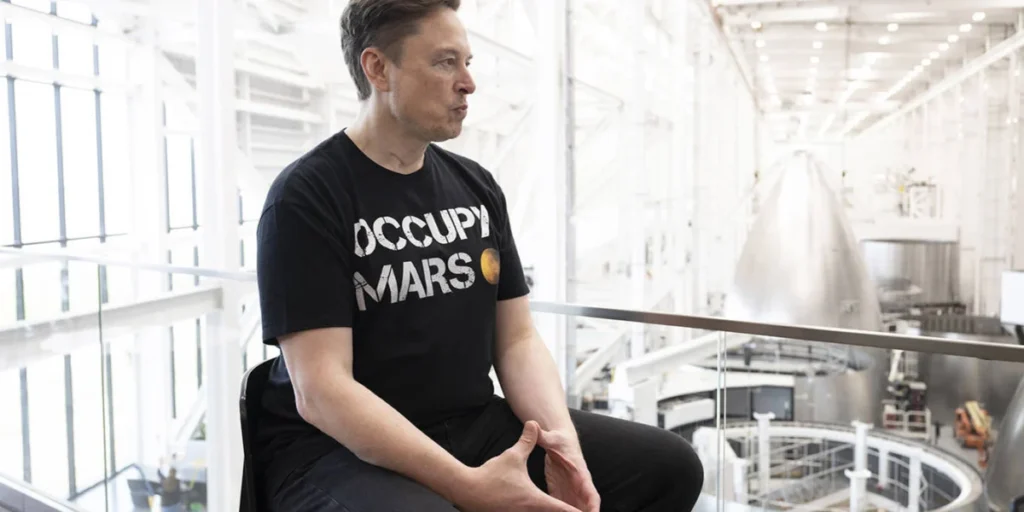
In the annals of economic history, there are milestones that signify a shift in the fundamental structure of human society. The rise of the world’s first trillionaire—Elon Musk—is one such event. Following the Initial Public Offering (IPO) of SpaceX earlier this month, Musk’s personal fortune has eclipsed the $1 trillion threshold, a figure so vast it defies conventional comprehension. While some herald this as the ultimate victory of American innovation and the free market, a deeper analysis reveals a more complex and troubling narrative: a tale of state-sponsored monopoly, public-private entanglement, and the fragility of modern democracy.
The Calculus of Concentration: Main Facts
The sheer scale of Musk’s wealth is difficult to contextualize. Growing by more than $1 million every minute over the past year, his net worth now exceeds the combined wealth of nearly four billion people—roughly 46% of the global population. This is not merely an accumulation of capital; it is the manifestation of a new economic paradigm where private interests possess the resources of a medium-sized nation-state.
Critics and economists argue that we are witnessing the solidification of an "oligarchic" era. Musk’s wealth is not just a reflection of consumer demand for electric vehicles or the engineering marvel of reusable rockets; it is the product of an environment where the line between government policy and corporate balance sheets has been erased. In this new reality, the market no longer bets on technology alone; it bets on the perception of "irreversibility"—the belief that the state has become so reliant on these corporations that it cannot allow them to fail.
A Brief Chronology: From Upstart to Titan
The path to the first trillionaire was not a sprint, but a decades-long marathon of bipartisan cultivation.
- 2000s–2010s: The Subsidy Foundation: Under the Obama administration and successive governments, SpaceX and Tesla were bolstered by billions in federal contracts, grants, and tax incentives. This era laid the groundwork for what would become a de facto monopoly on space access and a dominant position in green technology.
- 2017: The Early Warning: Oxfam predicted that the world would see its first trillionaire within 25 years. The pace of wealth concentration, however, accelerated far beyond even the most pessimistic projections.
- 2024: The Shift in Expectations: Estimates were revised to less than a decade, setting off alarms among sociologists and policy analysts concerned with democratic stability.
- 2025: The "One Big Beautiful Bill": Under the Trump administration, the "One Big Beautiful Bill Act" represented one of the most significant wealth transfers in history, gutting regulatory safeguards and further entrenching the power of ultra-wealthy corporate entities.
- 2026: The IPO Milestone: SpaceX’s public offering provided the final surge necessary to push Musk’s net worth into the thirteen-figure range, marking a historic and controversial milestone.
Supporting Data: The Anatomy of Inequality
The data surrounding Musk’s rise is stark. According to research from Oxfam and various economic policy institutes, the mechanisms enabling this wealth concentration are systemic:
- Fiscal Policy: Through a tax code that favors capital gains and allows for massive tax shielding, individuals like Musk have, at times, paid negligible federal income taxes relative to their wealth.
- Public Funding, Private Equity: Musk’s companies have received an estimated $38 billion in government support. Crucially, while taxpayers assumed the risk of these ventures, the public received no equity or profit-sharing in return.
- Antimonopoly Failures: The current regulatory environment has allowed for unprecedented consolidation. Today, two-thirds of active satellites orbiting Earth are under Musk’s control, granting his private enterprise immense leverage over global telecommunications and military logistics.
- Campaign Finance: The 2024 election cycle saw nearly $300 million in political spending by Musk, underscoring the role of private wealth in shaping the democratic process.
Official Responses and Political Realignment
The political response to the "Trillionaire Era" has been polarized. Supporters of the current administration argue that the reliance on Musk’s infrastructure is a strategic necessity. They point to the vital role of Starlink in global communications and the necessity of SpaceX’s launch capabilities for national security.
Conversely, opposition leaders and international human rights organizations have voiced profound concerns. The Lancet recently published findings suggesting that the dismantling of government agencies and the slashing of social aid—policies spearheaded by Musk during his tenure as head of the Department of Government Efficiency—could lead to an estimated 700,000 preventable deaths annually by 2030.
In the international arena, the G20 has begun discussions regarding a global wealth tax, driven by the realization that current national regulatory frameworks are insufficient to contain the influence of transnational corporate giants.
The Implications for Democracy and Global Stability
The rise of the trillionaire brings with it severe implications for the future of governance.
The Erosion of Sovereignty
When the US military and space complex becomes reliant on a single private entity for its operations, the distinction between state power and corporate power vanishes. This "perilous public-private entanglement" means that national policy can be effectively held hostage by the strategic preferences of one individual. If a corporation is "too big to fail," the government loses its capacity to regulate it, as the cost of failure would be catastrophic to national infrastructure.
The Threat to Social Cohesion
Justice Louis D. Brandeis once famously warned that America must choose between extreme wealth concentration and democracy. The current reality suggests that the scales have tipped heavily toward the former. When wealth concentration reaches such levels, it inevitably distorts the political arena, making campaign finance reform, antitrust enforcement, and social safety nets nearly impossible to sustain against the lobbying power of the elite.
A Call for Global Reckoning
The problem is not confined to the United States. The current international economic order—governing trade, intellectual property, and taxation—has been systematically wired to favor the wealthy at the expense of the working class. As countries like Mexico and Spain explore progressive taxation and universal healthcare, they offer a blueprint for a potential counter-movement.
Conclusion: The Path Forward
The minting of the world’s first trillionaire is a clarion call for structural reform. It is an indictment of a system that has prioritized the accumulation of capital over the health of the body politic. Addressing this will require more than just marginal tax increases; it demands a fundamental rethinking of how governments interact with "frontier" companies.
To restore democracy, nations must move toward:
- Equity-Based Public Investment: Ensuring that when taxpayer money funds innovation, the public receives a share of the returns.
- Robust Antimonopoly Enforcement: Breaking up concentrations of power that threaten essential infrastructure.
- Global Tax Cooperation: Ending the "race to the bottom" that allows billionaires to bypass national fiscal responsibilities.
We stand at a crossroads. History shows that societies capable of curbing extreme inequality—such as the post-Gilded Age era or the post-WWII reconstruction—are those that successfully revitalized the middle class and constrained the power of monopolies. The emergence of a trillionaire is not an inevitable outcome of progress; it is a policy choice. The question is whether the global community has the political will to reclaim its sovereignty from the architects of this new,, highly concentrated age.