The Great Bifurcation: U.S. Economic Resilience Faces Headwinds Amid Geopolitical Volatility
By Jim Tyson | Published June 23, 2026
The United States economy is navigating a period of profound complexity, characterized by a stark divergence in performance between its industrial backbone and its service-oriented core. According to the latest data from S&P Global, the U.S. business landscape is experiencing a "bifurcation"—a phenomenon where robust manufacturing growth is being systematically offset by an increasingly sluggish service sector.
While the overall composite index rose to 52.2 in June, marking a five-month high from the 51.5 recorded in May, the momentum remains fragile. This three-month streak of expansion masks deeper structural challenges, as the economy struggles to regain the velocity seen prior to the onset of the conflict with Iran on February 28, 2026.
The Bifurcation: Manufacturing vs. Services
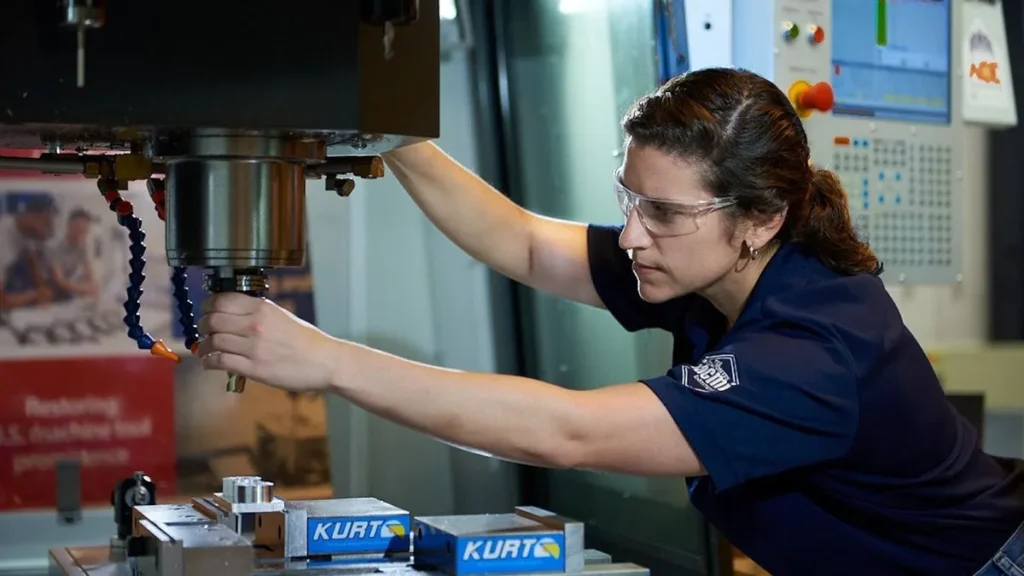
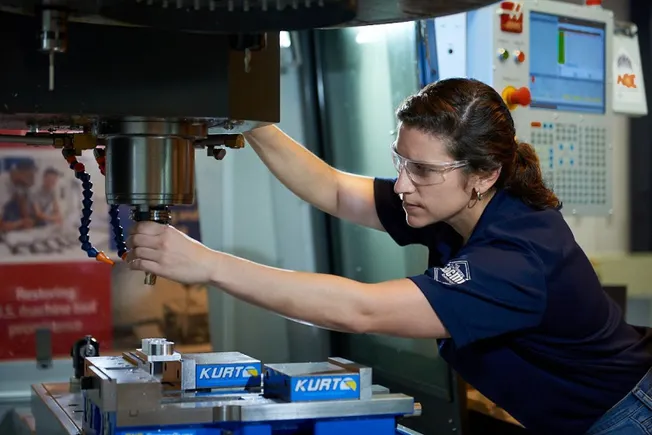
The June survey from S&P Global paints a picture of two distinct economic realities. On one side, the manufacturing sector has shown surprising resilience, with output and new orders expanding at a solid clip. This industrial uptick suggests that supply chain recalibrations and domestic investment initiatives are finally yielding tangible results.
Conversely, the service sector—which accounts for more than 75% of U.S. economic growth—is faltering. Service providers report that they are being squeezed by a "triad of constraints": elevated price pressures, high interest rates, and a palpable erosion of confidence among both business clients and the average consumer. As the engine of the American economy, the stuttering performance of the service sector acts as a significant drag on overall GDP potential, creating a ceiling that the manufacturing sector alone cannot break.
Chronology of an Economic Shift
To understand the current malaise, one must look at the timeline of the 2026 fiscal year:
- Early Q1 2026: Initial optimism surrounded the U.S. economy, with projections for GDP growth sitting comfortably at 2.4%.
- February 28, 2026: The onset of the conflict with Iran marks a critical pivot point. Global markets reacted with immediate volatility, and domestic business confidence began a steady decline.
- April–May 2026: Economic indicators began to diverge. While manufacturing adapted to the new geopolitical reality, the service sector bore the brunt of inflationary pressures and defensive consumer spending.
- June 2026: The S&P Global Composite Index hits 52.2. While technically an improvement, the growth rate remains significantly below pre-war levels, confirming that the economy is trapped in a low-growth equilibrium.
Supporting Data and Forecast Adjustments
The realization that the economy is underperforming has triggered a wave of downward revisions from the nation’s top analysts. On Monday, the National Association for Business Economics (NABE) released a report that served as a sobering check on investor enthusiasm. A panel of association economists slashed their median forecast for full-year GDP growth to 2%, down from the 2.4% projected in March.
This revision is not merely a statistical adjustment; it reflects a fundamental concern regarding the "drag" created by prolonged international instability. The data suggests that unless the service sector can find a way to navigate high interest rates and persistent inflation, the economy may struggle to maintain even a 1% annualized growth rate in the second quarter.
Official Responses and Expert Analysis
The consensus among economists is that geopolitical risk has moved from the periphery to the center of financial planning. Yelena Maleyev, Senior Economist at KPMG and chair of the latest NABE survey, underscored this reality. "Geopolitical conflict remains the top downside concern," Maleyev stated. However, she also identified a glimmer of hope: "For the first time in over a year, an end to the wars in Ukraine and the Middle East outranked productivity gains as the leading upside risk."
Chris Williamson, Chief Business Economist at S&P Global, pointed to the psychological impact of the headlines. "Brighter news out of the Middle East has helped restore some confidence among U.S. businesses in June," Williamson noted. "However, the survey signals that current output levels are consistent with an economy struggling to gain momentum."

For business leaders and CFOs, the challenge is clear: how to plan for capital allocation when the macroeconomic environment is tethered to the shifting sands of global diplomacy. The current environment rewards agility over scale, as companies are forced to react to volatile cost structures that have not yet stabilized.
Implications for the Future
The current state of the U.S. economy carries several long-term implications for stakeholders across the private and public sectors.
1. The Persistence of "Sticky" Inflation
With service providers citing elevated prices as a primary barrier to growth, the "last mile" of the Federal Reserve’s inflation fight remains elusive. If the service sector continues to pass on costs to maintain margins, the disinflationary trend could stall, potentially forcing the Federal Reserve to maintain higher interest rates for longer than the market currently anticipates.
2. Capital Expenditure Hesitancy
The divergence between manufacturing and services creates a split in investment strategies. While industrial firms are leaning into modernization and localized supply chains, service-oriented firms are entering a defensive posture. This hesitation to invest in labor or technology could lead to a widening productivity gap between the two sectors.
3. The Geopolitical Premium
The U.S. economy is currently paying a "geopolitical premium"—a cost embedded in every transaction, from supply chain insurance to the price of energy. Until there is a definitive resolution to the conflicts in the Middle East and Eastern Europe, this premium will continue to act as a tax on domestic growth.

4. Consumer Sentiment as a Leading Indicator
The survey makes it clear that the consumer is the ultimate arbiter of the current economic struggle. With low confidence cited by service providers, any further shocks—whether they are energy price spikes or further escalations in the Iran conflict—could lead to a contraction in consumer spending. Given that services comprise the vast majority of the economy, a pullback in consumer spending would be a precursor to a wider recessionary environment.
Conclusion: A Precarious Balance
The U.S. economy in June 2026 stands at a precarious juncture. The expansion of the manufacturing sector provides a vital floor, preventing a slide into outright contraction, but the service sector is currently unable to provide the lift required for a robust recovery.
As we move into the second half of the year, the interplay between diplomatic progress and domestic fiscal policy will be the primary narrative. While the NABE panel’s move to lower growth forecasts to 2% is a recognition of the current reality, it also leaves room for upside potential if global tensions subside. For now, however, the "Great Bifurcation" remains the defining feature of the American economic experience, demanding that leaders prepare for a future where volatility is not an exception, but the baseline.
The path forward requires a delicate balancing act: maintaining the momentum of industrial expansion while addressing the structural barriers that are currently paralyzing the service sector. Until then, the economy remains in a state of watchful waiting, sensitive to every signal from the global stage.