Breaking the Cycle: How One Couple Used Creative Real Estate to Erase Debt and Redefine Financial Freedom
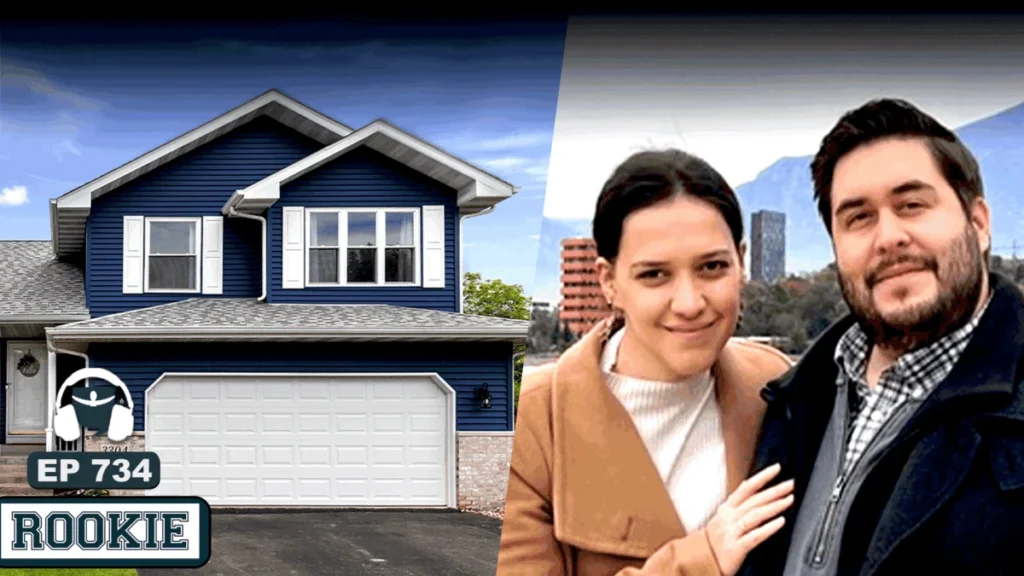
For most young professionals, the traditional path to financial stability is paved with decades of corporate climbing, student loan payments, and the slow, steady accumulation of a 401(k). However, for James Doren and his wife, Aida, a standard spreadsheet calculation at their kitchen table revealed a future they found fundamentally unappealing. At 31 and 24 respectively, the couple faced a combined $200,000 in student loan debt and a retirement trajectory that prioritized survival over sovereignty.
Rather than accepting this "30-year grind," the couple pivoted. By leveraging an underutilized space above their garage, they engineered a transformation that not only wiped out their debt but fundamentally altered their approach to real estate investing. Their journey, recently detailed on the Real Estate Rookie podcast, serves as a blueprint for investors who are willing to prioritize math over emotion and creativity over conventional wisdom.
The Catalyst: A Kitchen Table Reckoning
The turning point for the Dorens did not occur in a boardroom or a seminar, but during a routine "money date." James and Aida had established a discipline of meeting weekly to review their finances—an hour dedicated to analyzing expenditures, adjusting budgets, and tracking their path toward long-term goals.
At the time, the couple’s financial picture appeared stable on the surface. James was a director for a healthcare company, and Aida worked as a data scientist for an insurance firm. With a household income of approximately $300,000, they appeared successful. Yet, the reality of their balance sheet was stark: they were saving less than 10% of their income, burdened by $200,000 in student loans and multiple car payments.
"We sat down and ran the numbers on the next 30 years," James recalled. "We didn’t like what we saw." This realization prompted a shift from passive saving to active investment. They decided to stop waiting for external change and instead build their own path to financial independence.
Chronology of a Transformation: From Renters to Investors
The couple’s entry into real estate began with a commitment to action. Unlike many aspiring investors who stall at the "analysis paralysis" phase, the Dorens bypassed endless book-reading in favor of boots-on-the-ground experience.
The First Move: The Accessory Dwelling Unit (ADU)
After moving to Pennsylvania for work, the couple initially rented. They soon contacted a local real estate agent with a clear directive: they wanted to purchase a property that served as an investment rather than just a home. Their strategy focused on "house hacking," a method where the owner lives in one part of a property while renting out the rest to offset mortgage costs.
They eventually purchased a 2,500-square-foot home that included an oversized, detached two-car garage with an unfinished space above it. Aida quickly recognized the potential of this "empty space," proposing they finish the ADU to live in, while renting out the main house to cover their expenses.
Financing and Renovation
The project was not without its hurdles. To fund the $57,000 renovation, the couple secured a $50,000 loan from a private money lender—a family friend who trusted their vision and financial discipline. This relationship was built on transparent communication; the Dorens presented their lender with a detailed breakdown of the projected value, the risks involved, and the exit strategy.
The renovation took six months of grueling work. During this time, the couple lived on an air mattress in the living room of the main house, managing a chaotic environment of garbage-bag closets and construction dust. By early 2022, they had completed the ADU and successfully refinanced the property, realizing a significant increase in equity. The home, purchased for $445,000, appraised at $675,000—a $230,000 windfall that proved the viability of their "small but mighty" portfolio strategy.
Supporting Data: The Power of Intentional Portfolio Management
The Doren strategy relies on high equity and low debt, a departure from the "collect as many doors as possible" mentality that dominates much of the real estate community. Their numbers illustrate the efficacy of this conservative yet aggressive approach:
- Initial Investment: $445,000 purchase price + $57,000 renovation costs.
- Appraisal: $675,000 post-renovation.
- Cash Flow: By renting the main house for $2,750 and the ADU for $2,000, the couple generated $4,750 in monthly income against a $2,650 mortgage, netting roughly $2,000 in monthly cash flow.
- Debt Reduction: Utilizing the surplus from their house hack and their high incomes, the couple aggressively paid off their entire $200,000 student loan balance in just 18 months.
The Tenant-Led Pivot: Rent-to-Own Innovation
Perhaps the most surprising aspect of the Doren story is the "deal that wasn’t on Zillow." Their tenant, a food truck owner with a solid business but limited documentation for bank underwriting, expressed a desire to buy a specific condo. The bank had rejected him due to a lack of two-year business income history.
Recognizing the tenant’s reliability, the Dorens stepped in. They purchased the $185,000 property and structured a rent-to-own agreement. The tenant provided a 20% option fee—a move that protected the Dorens against risk—and agreed to purchase the home for $205,000 after two years. This arrangement provided the tenant with a home, the Dorens with a profitable investment, and both parties with a solution that traditional banking failed to facilitate.
Implications for Future Investors
The Doren approach offers several critical lessons for those looking to replicate their success:
- Communication is Currency: Whether dealing with private lenders, real estate agents, or tenants, James emphasizes that consistent, transparent communication keeps you "top of mind" for exclusive opportunities.
- Reject Emotional Decisions: By utilizing Aida’s analytical rigor, the couple removed the "ego" from their investments. They chose to live in the smaller ADU, not because it was comfortable, but because the math dictated it was the fastest path to their long-term goals.
- Consolidation Over Expansion: While many investors chase volume, the Dorens chose to shrink their portfolio from 10 doors to four. This move was intended to reduce management complexity and exposure to risk, prioritizing equity growth over door counts.
- Adopt a "Small but Mighty" Mindset: The goal is not necessarily to own 50 single-family homes, but to build a portfolio of high-performing assets that can eventually be leveraged into larger multifamily complexes.
Expert Insight and Next Steps
When asked what advice he would offer to those starting their journey, James was direct: "Don’t take a course. Don’t read another book. Don’t analyze 50 different markets. Pick one that works, and run honest numbers on properties every day."
The Dorens are now setting their sights on larger apartment buildings, viewing this shift as a natural progression of their education. By formalizing their business plan and leveraging the experience gained from their single-family portfolio, they are proof that financial freedom is not a matter of luck or inheritance, but a result of rigorous, consistent, and creative execution.
As James noted in his podcast appearance, the most valuable tool in his arsenal wasn’t a bank loan or an agent—it was the decision to look at the numbers, acknowledge that the current path was unsustainable, and possess the courage to build something entirely new.