The Post-Brexit Decade: A Nation in Transition as Keir Starmer Steps Down
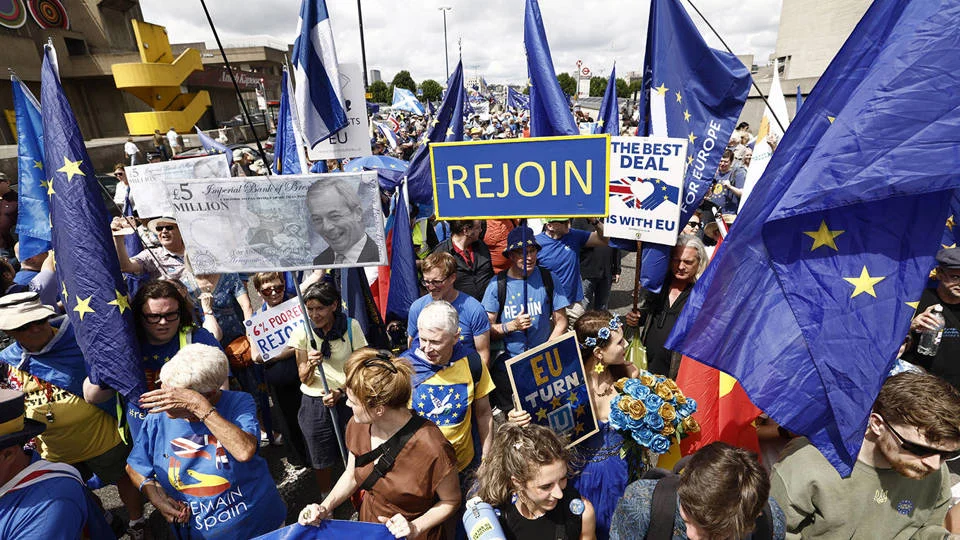
By Mark Leonard
June 23, 2026
Ten years ago today, the United Kingdom took a leap into the unknown, casting a ballot that would redefine its geopolitical standing for generations. The 2016 Brexit referendum was not merely a vote on European Union membership; it was a seismic rupture that tore through the fabric of British society, paralyzed its parliamentary processes, and ultimately birthed a decade of instability.
As the tenth anniversary of that fateful vote arrives, the political landscape is once again defined by upheaval. The resignation of Prime Minister Keir Starmer—a casualty of the very systemic tensions the referendum ignited—marks a poignant bookend to this turbulent era. While observers focused on the stale rhetoric of intergovernmental negotiations and the media’s fixation on legislative gridlock, a deeper, more profound shift has occurred beneath the surface of the English Channel. New, comprehensive polling suggests that the fatigue of the last decade has culminated in a surprising consensus: the majority of both the British public and their continental neighbors are now ready for a new chapter of pragmatic re-engagement.
The Main Facts: A Decade of Dislocation
The resignation of Keir Starmer represents the culmination of a decade defined by "the Brexit hangover." Since 2016, the UK has navigated a succession of leadership crises, economic stagnation, and a persistent identity crisis regarding its role in a post-imperial, post-EU world.
Starmer, who took office with the promise of "normalizing" relations with Brussels, found himself trapped between the hardening realities of a trade-restricted economy and a domestic electorate that remained deeply divided. His departure underscores a fundamental truth: the legacy of the referendum has proven more durable than any single administration. The core issue remains the "sovereignty vs. prosperity" dilemma—a trade-off that the British public is increasingly viewing through a lens of pragmatic necessity rather than ideological purity.
A Chronology of a Divided Decade
The last ten years can be viewed as a series of tremors that followed the main earthquake of June 23, 2016.
- 2016: The referendum result triggers the resignation of David Cameron and launches a period of intense internal Conservative Party strife.
- 2017–2019: The "Theresa May Years" are characterized by the "meaningful vote" failures and the slow erosion of the UK’s negotiating leverage.
- 2020: The official exit occurs on January 31, followed by a transition period that ends in a thin Trade and Cooperation Agreement (TCA).
- 2021–2023: The "Normalization Phase" attempts to address the Northern Ireland Protocol, leading to the Windsor Framework.
- 2024–2025: Economic stagnation becomes the defining political issue, with inflation and labor shortages attributed increasingly to the "friction-heavy" nature of post-Brexit trade.
- 2026: The tenth anniversary coincides with the resignation of Keir Starmer, signaling the failure of the "managed decline" strategy and the onset of a new, perhaps more desperate, search for integration.
Supporting Data: The Tide Turns
Perhaps the most significant revelation of this anniversary is the shift in public sentiment. For years, the polling was stagnant, mirroring the binary "Leave vs. Remain" divide. However, recent data from the European Council on Foreign Relations and partner research institutes paints a different picture.
The Shift in Opinion
Data indicates that over 60% of British voters now support a closer relationship with the EU, with a significant plurality supporting a re-entry into the Single Market. On the continental side, the sentiment is equally telling. In Germany, France, and Italy, citizens who previously expressed frustration with the "British obstructionism" of the late 2010s have softened their stance. There is a burgeoning recognition that a fragmented Europe—with a decoupled UK—is a net negative for continental security and economic competitiveness.
Economic Indicators
The economic data serves as the engine for this change in public opinion. Since 2020, GDP growth in the UK has consistently lagged behind its G7 peers. Business investment, which remained flat during the uncertainty of the Article 50 period, has failed to recover to pre-2016 trends. For the average voter, the "Brexit dividend" has failed to materialize, replaced instead by a persistent cost-of-living crisis and the quiet disappearance of cross-border frictionless trade.
Official Responses and Political Realignments
The resignation of Prime Minister Starmer has sent shockwaves through European capitals. Brussels, which had been cautiously optimistic about Starmer’s "reset" strategy, now finds itself in a state of diplomatic limbo.
The European Perspective
In a joint statement issued from the European Commission, leadership expressed "readiness to continue a constructive dialogue with any future British administration." However, the subtext is clear: the EU remains wary of internal British volatility. Brussels is no longer interested in renegotiating the fundamental tenets of the Single Market to accommodate a "pick-and-choose" UK strategy. Any future engagement will be predicated on a long-term, stable commitment that transcends British party lines.
The British Response
Inside Westminster, the scramble for succession is underway. Candidates from across the political spectrum are acknowledging the reality that the "Brexit question" can no longer be ignored. The shadow of the 2016 vote looms over every policy proposal. Even those who once championed the exit are now framing their platforms around "re-aligning" with European standards, a tacit admission that the original promise of a "Global Britain" requires a functioning relationship with its nearest neighbor.
Implications: Where Does the UK Go From Here?
As we look beyond the current political vacuum, the implications of this ten-year milestone are profound.
1. The End of "Exceptionalism"
The decade has served as a sobering lesson in the limitations of national sovereignty in an interconnected world. The UK is discovering that in the 21st century, power is exercised through networks and collective blocs. The pursuit of "splendid isolation" has, in practice, led to a loss of agency on the world stage.
2. The Necessity of a New Settlement
The next British government will likely face a binary choice: continue to drift into a position of a peripheral, low-growth economy, or initiate a comprehensive, structural realignment with the EU. This will not necessarily mean full re-entry—a politically explosive prospect—but rather a bespoke, high-alignment relationship that mirrors models like those seen in Switzerland or Norway.
3. The Generational Divide
The polling also highlights a stark generational split. Younger Britons, who were teenagers during the 2016 vote, are overwhelmingly pro-European. They view the last decade not as a necessary correction, but as a period of lost opportunity. As this demographic increases its share of the electorate, the pressure on the political establishment to rectify the relationship with Europe will only intensify.
4. A Security-First Approach
Beyond economics, the geopolitical climate has changed. The war in Ukraine and the shifting dynamics of the transatlantic alliance have made the security of the European continent a paramount concern. Both London and Brussels realize that a bifurcated security architecture is unsustainable. A formal, treaty-based security partnership is likely to be the first step in any potential rapprochement, serving as a bridge to deeper economic ties.
Conclusion: A New Beginning or a Lingering End?
The tenth anniversary of the Brexit referendum was supposed to be a moment of celebration for the architects of the exit. Instead, it has become a moment of somber reflection. The resignation of Keir Starmer is a reminder that in politics, as in life, consequences are rarely avoided; they are merely deferred.
The era of "Brexit" as a disruptive, defining force in British politics is slowly drawing to a close, not because the arguments of 2016 have been resolved, but because they have been exhausted. The British public, tired of the volatility, is signaling a clear desire for stability and a return to the pragmatic, cooperative politics that defined the continent for the latter half of the 20th century.
Whether the next generation of leadership has the political courage to translate this public sentiment into a lasting, structural settlement remains to be seen. But one thing is certain: the era of pretending that the UK can thrive in isolation from its closest neighbors is effectively over. The next decade will not be defined by how the UK leaves, but by how it learns to live, work, and grow in a new, re-integrated relationship with Europe. The path ahead is long and fraught with political hazards, but for the first time in ten years, the direction of travel appears to be pointing back toward the continent.