The Great AI Budget Crunch: How Rising Token Costs are Reshaping the Global Tech Landscape
By PYMNTS | June 19, 2026
The honeymoon phase of enterprise artificial intelligence is officially over. After two years of unbridled experimentation and "AI-first" mandates, the world’s largest corporations are slamming on the brakes. As the financial reality of generative AI begins to weigh on balance sheets, a growing "token shock" is forcing a strategic pivot that threatens to curb the meteoric growth of Western AI giants like OpenAI and Anthropic, while simultaneously creating a window of opportunity for lean, cost-efficient Chinese competitors.
The Economic Reality of the Token Economy
For years, the software-as-a-service (SaaS) model relied on predictable, per-seat subscription pricing. It was simple, scalable, and easy for CFOs to forecast. However, as enterprises transitioned from pilot programs to full-scale production deployments, they discovered that the commercial infrastructure of traditional software does not translate to the generative AI era.
The industry has moved toward a "pay-as-you-go" architecture based on token consumption. Whether it is an API call, a generated image, an inference cycle, or an autonomous workflow running in the background, every interaction incurs a cost. This shift has turned AI usage into a variable expense that can spiral out of control overnight.
"The productivity case hasn’t closed for many," noted one industry analyst. When costs are tied to compute power rather than headcount, a sudden surge in employee usage—or a runaway autonomous agent—can burn through an annual budget in a single fiscal quarter.
Chronology of a Crisis: From Adoption to Restriction
The current predicament is the culmination of a rapid, 18-month trajectory of AI integration.
- Early 2025: Corporations across the globe rush to integrate LLMs into their workflows. Executives view AI as an existential necessity, and "unlimited" access is granted to staff to encourage innovation and familiarity with the new tools.
- Late 2025: As AI models shift from simple text-based chatbots to complex, multi-step autonomous agents, computing power requirements skyrocket. The transition to token-based billing catches many IT departments off guard.
- February 2026: Reports begin to surface that the SaaS billing model is fundamentally broken when applied to AI. CFOs start flagging the lack of cost predictability as a major barrier to long-term AI sustainability.
- May 2026: The crisis hits the headlines as industry giants like Uber announce they have exhausted their entire annual AI budget by April. The company is forced to "go back to the drawing board" to find a path toward ROI.
- June 1, 2026: Walmart, a bellwether for operational efficiency, imposes strict caps on employee AI usage. The internal tool "Code Puppy," previously available with unlimited tokens, is throttled, with employees now allocated a fixed, finite budget of tokens.
- June 18, 2026: New data emerges indicating that the tide is turning toward low-cost Chinese AI models, as Western labs face a cooling demand from cost-conscious enterprises.
Supporting Data: The Rise of the Global Competitor
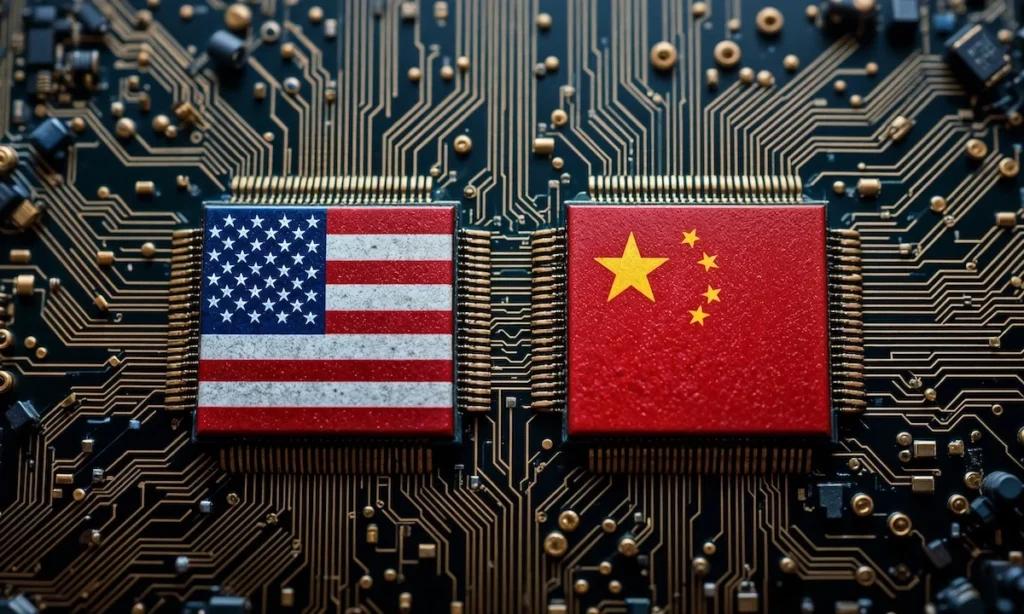
The economic pressure on U.S. firms has created a vacuum that is being rapidly filled by Chinese AI labs. According to data from OpenRouter, a significant shift has occurred since the beginning of the year: Chinese AI models have now surpassed their U.S. counterparts in total token consumption.
This development is rooted in two distinct advantages held by Chinese developers:
- Efficiency Engineering: Chinese labs have prioritized the development of smaller, more efficient models that require less computing power per output without sacrificing performance.
- Energy Arbitrage: With significantly lower energy costs compared to the U.S. data center hubs, Chinese firms can offer substantially lower prices to enterprises that are desperate to cut costs.
While U.S. labs have focused on "frontier" models—massive, all-encompassing systems—the current market sentiment is shifting toward "right-sizing." Businesses are increasingly asking: Do I need a trillion-parameter model to summarize this email, or can a smaller, cheaper, specialized model do the job?
Strategic Responses: How Enterprises are Retrenching
The "AI-at-all-costs" era has been replaced by a "cost-conscious AI" mandate. Executives are employing a variety of tactics to bring spending under control:
1. Usage Caps and Quotas
Following the lead of Walmart, many organizations are abandoning unlimited access. By assigning a "token budget" to specific departments or individual employees, companies are incentivizing staff to be more deliberate about when and how they deploy AI.
2. Model Tiering
IT leaders are now categorizing tasks by complexity. A junior-level model (older, faster, and cheaper) is used for basic summarization and data entry, while high-performance "frontier" models are reserved only for complex coding tasks or strategic analysis. This multi-model strategy is becoming the industry standard for cost management.
3. The Open-Source Pivot
Many companies are moving away from proprietary, API-gated models toward open-source alternatives that can be hosted on private infrastructure. By owning the model, companies can avoid the "per-token" markup charged by major AI labs, effectively turning a variable cost into a fixed capital expense.
4. Human-in-the-Loop Optimization
The rise of autonomous agents has proven to be the most expensive component of AI integration. Organizations are implementing strict "human-in-the-loop" protocols to ensure that autonomous workflows are not running loops indefinitely or performing redundant tasks, effectively curbing the "hidden" costs of AI agents.
Implications for the Future of AI
The current friction between AI labs and enterprise users signals a maturation of the technology. For OpenAI, Anthropic, and other Western labs, the challenge is clear: the market is no longer satisfied with "bigger is better." They must now innovate on pricing transparency and model efficiency.
If these companies fail to address the cost concerns of their largest customers, they risk a massive migration toward open-source models or, increasingly, lower-cost international alternatives.
The Innovation Paradox
There is a paradox in this retrenchment. While cutting costs is necessary for business survival, it risks stifling the very innovation that AI is meant to drive. If employees are afraid to use AI because they are being "tracked" by token usage, they may cease to use the tools for the small, iterative experiments that often lead to major breakthroughs.
"We are entering the ‘optimization phase’ of the AI cycle," says a lead architect at a major cloud provider. "The companies that survive will be the ones that can prove AI provides a tangible, verifiable return on investment that outweighs the compute costs."
Conclusion
The "token shock" of 2026 is not the end of the AI revolution, but it is the end of the experimental phase. As businesses transition to a more disciplined, fiscally responsible approach to AI integration, the market for AI services is becoming more competitive and more discerning.
For the labs, the message is simple: price your models for the real world, or watch your enterprise clients drift toward more efficient horizons. For the corporations, the challenge remains: how to balance the need for cutting-edge intelligence with the hard, cold reality of the bottom line. As we look toward the second half of 2026, one thing is certain—the winners of the AI race will be decided not just by who has the smartest model, but by who has the most sustainable bill.