The Warsh Doctrine: Navigating the Fed’s New Frontier of Productivity and Geopolitical Friction
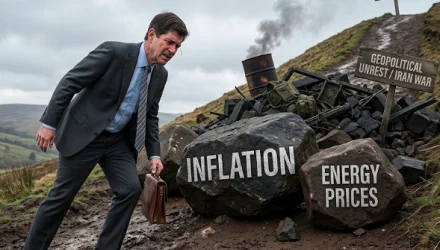
Kevin Warsh steps into the role of Federal Reserve Chair at a juncture that many economists are already calling the most complex policy environment since the 1970s. Inheriting a mantle of expectation, Warsh arrives with a reputation as a policy dove, yet the macroeconomic terrain he must traverse is anything but accommodating. His leadership will be defined by a singular, ambitious thesis: that a "golden age" of productivity-driven expansion can insulate the U.S. economy from the harsh trade-offs between growth and inflation. However, as geopolitical tremors in the Middle East roil energy markets and consumer prices, Warsh’s vision faces an immediate, uphill battle against a skeptical bond market and a cautious Federal Open Market Committee (FOMC).
The Core Thesis: Betting on the Productivity Miracle
At the heart of Warsh’s economic philosophy lies the conviction that technological innovation and efficiency gains are not merely auxiliary economic tailwinds, but the primary drivers of sustainable prosperity. In this view, if the economy experiences a structural surge in productivity, the output per worker increases, allowing businesses to maintain robust margins without necessarily resorting to price hikes.
This "Warsh Thesis" suggests that if companies produce more with less, they can afford to sustain higher wages—thereby supporting the American worker—without triggering a destabilizing wage-price spiral. Under these conditions, the economy could theoretically sustain a higher potential growth rate. Consequently, Warsh argues that the Fed would have the necessary "room" to recalibrate monetary policy toward lower interest rates, providing a cushion for the economy without sacrificing the central bank’s core mandate of long-term price stability.
However, this theoretical framework relies on the assumption that the structural shifts in AI, automation, and industrial efficiency are deep-rooted enough to counteract the short-term supply-side shocks currently plaguing the global economy.
Chronology of the "Warsh Trade" and Market Skepticism
The market’s reception of the new Chair has been a study in volatility and rapid re-evaluation. Initially, the announcement of Warsh’s nomination triggered what traders dubbed the "Warsh Trade"—a bullish sentiment predicated on the expectation of immediate, aggressive interest rate cuts. Investors anticipated that a dovish Chair would pivot quickly to support liquidity and equity valuations.
- The Initial Pivot: Upon his nomination, yields on the 10-year Treasury dipped, and equity markets rallied, anticipating a return to easier monetary conditions.
- The Geopolitical Reality Check: The "Warsh Trade" began to unwind in earnest as the conflict in Iran escalated, resulting in the critical disruption of the Strait of Hormuz. As a vital artery for global energy, the closure sent crude oil prices spiraling upward, injecting fresh inflationary pressure into the U.S. economy.
- The Data Inflection: The disillusionment was cemented by cooling—but still stubborn—inflation data. April’s CPI print of 3.8% served as a warning, while May forecasts, hovering near 4.2% year-over-year, confirmed that the path to the Fed’s 2% target was not a straight line.
- The Current Stand: Bond markets have since pivoted from betting on aggressive cuts to pricing in a "higher for longer" narrative, as Treasury yields climb in response to the tightening of financial conditions driven by market forces rather than Fed policy.
Supporting Data: The Inflationary Tug-of-War
The quantitative landscape facing the new administration is characterized by a stark dichotomy between lagging indicators and the forward-looking expectations of the FOMC.
The Inflationary Pressure Points
Current CPI figures remain elevated, driven significantly by energy costs stemming from the Iranian conflict. Energy-dependent supply chains are feeling the pinch, and these costs are increasingly being passed on to the consumer. The persistence of core inflation—excluding volatile food and energy components—suggests that the underlying price pressure is more entrenched than many had hoped.
The Productivity Counter-Argument
Warsh maintains that these energy-driven shocks are transitory, arguing that the long-term disinflationary forces of productivity growth will eventually dominate the narrative. However, the timing is the critical variable. As one economist noted, "The market is not looking for long-term productivity gains in the next quarterly report; it is looking for the reopening of the Strait of Hormuz." Without a clear timeline for the cessation of geopolitical hostilities, the Fed’s ability to "look through" the current energy inflation is limited.
Official Responses and Internal FOMC Dynamics
Warsh’s leadership will be tested not just by the markets, but by the committee he chairs. The FOMC is a consensus-driven institution, and the current membership is deeply divided between those who prioritize inflation containment and those who favor growth-oriented stimulus.
The Dovish-Hawkish Divide
While Warsh remains committed to the idea of rate cuts, he faces a significant contingent of hawkish officials who are concerned that any premature loosening of policy could cause inflation to become de-anchored. These members have pointed to the rising Treasury yields as a signal that the market itself is demanding a tighter policy stance, regardless of what the Fed might prefer.

The "Dual-Policy" Framework: A Potential Middle Ground
In an effort to bridge this divide, Warsh has proposed a nuanced strategy that goes beyond simple rate adjustments. He advocates for a combination of:
- Front-loaded rate cuts: Designed to support short-term economic activity and lower the cost of capital for businesses.
- Aggressive Quantitative Tightening (QT): By removing excess liquidity from the financial system, Warsh believes the Fed can prevent long-term inflation from taking hold, even as short-term rates move lower.
This "barbell" strategy—lowering rates while simultaneously shrinking the balance sheet—is intended to appease both camps. It provides the stimulus that growth-focused members desire while maintaining the "tightness" that inflation-focused members demand. However, the effectiveness of this maneuver is historically unproven and represents a significant risk if the transmission mechanism of these two policies does not align as expected.
Implications for Investors and the Economy
The implications of Warsh’s tenure are profound for both the institutional investor and the retail market.
The Challenge of Consensus
The greatest risk facing Warsh is the institutional inertia of the Federal Reserve. Managing the economy is only half the job; the other half is the political and psychological management of the committee. If Warsh fails to convince his colleagues that his productivity thesis is more than a theoretical construct, the Fed could drift into policy paralysis, leaving markets without a clear signal.
Investment Strategy in a Volatile Environment
For investors, the current environment suggests a defensive posture until there is more clarity regarding the duration of the geopolitical shocks. While the "Warsh Trade" may have failed in its initial, optimistic form, the prospect of future rate cuts remains a possibility if the inflation data begins to soften.
However, investors should be wary of betting on a "soft landing." The complexity of the variables—productivity trends, energy supply chains, and fiscal policy—means that the risk of a policy error is higher than at any point in the last decade. As the Fed navigates this landscape, the "golden age" of productivity may yet emerge, but it will likely be preceded by a period of significant market volatility.
Conclusion: The Road Ahead
Kevin Warsh has articulated a vision for the Federal Reserve that is bold, optimistic, and technologically forward-looking. By emphasizing productivity as the ultimate solution to the growth-inflation trade-off, he offers a path that avoids the draconian necessity of high-interest-rate-induced recessions. Yet, his vision is currently colliding with the harsh realities of a volatile, resource-constrained global order.
Whether the "Warsh Doctrine" succeeds will depend on his ability to harmonize the divergent views within the FOMC and his capacity to weather the unpredictable storms of global geopolitics. For the American economy, the next several quarters will be decisive. The question is no longer just about the direction of interest rates, but whether the central bank can successfully pivot to a new paradigm of growth without losing its grip on the stability that is the bedrock of the global financial system.
Disclaimer: This report has been prepared for informational purposes only. It may include content generated or assisted by artificial intelligence (AI) tools. While the information presented is based on sources believed to be reliable, it should not be construed as personalized investment advice, considered a recommendation or solicitation for the purchase or sale of any security or strategy. Strategy Holdings, Attributions and/or Sectors mentioned are as of the date indicated, subject to change, and should not be relied upon as current. This does not constitute legal or professional advice and is not tailored to the investment needs of any specific investor. Investors should seek tailored advice and should understand that statements regarding future prospects of the financial market may not be realized. For more information, visit the ETF Strategist Content Hub.