The Fragile Horizon: Why a Ceasefire in the Iran War Offers No Lasting Peace
By Don Aviv
June 15, 2026
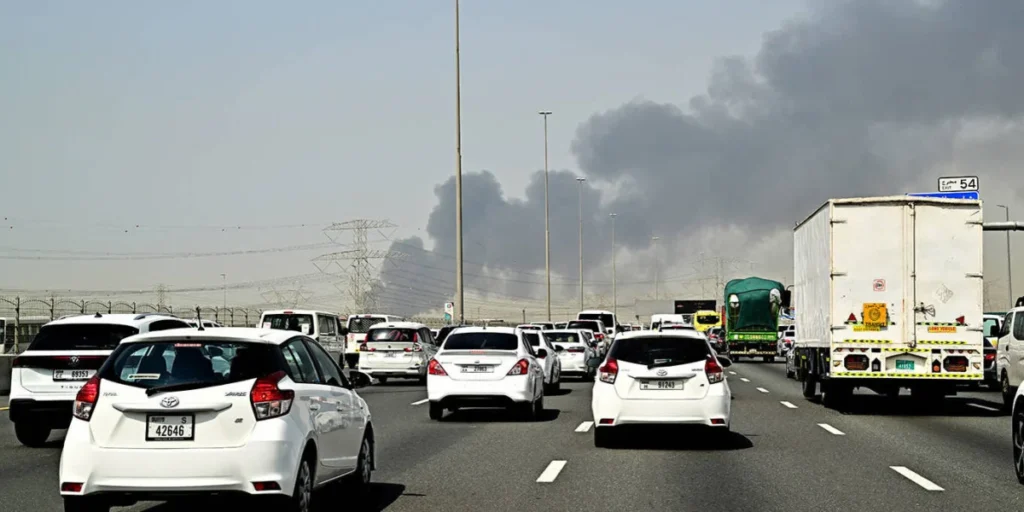
NEW YORK — As the smoke lingers over the Strait of Hormuz and the global markets remain in a state of high-alert volatility, the international community finds itself fixated on a singular, elusive question: How does the Iran war conclude? Diplomatic channels in Geneva, Muscat, and Doha are burning with the frantic energy of mediators attempting to bridge the chasm between Washington and Tehran. Yet, as the headlines focus on the mechanics of a potential ceasefire, a more sobering reality is beginning to take shape.
The most probable outcome of this conflict is not a definitive peace, nor a triumphant resolution, but an unsatisfying, fragile ceasefire that leaves the core drivers of regional instability entirely unaddressed. We are entering an era of "uneasy equilibrium," characterized by a waning U.S. security umbrella, the pragmatic realignment of Gulf monarchies, and an unsettled regional order that remains prone to eruption.
Main Facts: The Anatomy of a Stalemate
The current conflict, which escalated rapidly in the spring of 2026, has shifted the tectonic plates of Middle Eastern geopolitics. Unlike previous proxy conflicts, this war saw direct, state-on-state kinetic exchanges that tested the limits of regional missile defense systems and cyber-warfare capabilities.
At its core, the conflict was ignited by a breakdown in the "shadow war" that had defined the region for decades. When the threshold of direct engagement was crossed, the illusion of manageable tensions evaporated. The primary facts on the ground are as follows:
- The Stalemate: Neither side has achieved a decisive military victory. Iran’s asymmetric capabilities remain largely intact, while the U.S.-led coalition has successfully neutralized significant portions of the Islamic Republic’s long-range strike capacity.
- Economic Shock: Global energy markets have experienced unprecedented fluctuations. With the closure of critical transit chokepoints and the targeting of energy infrastructure, Brent crude prices reached heights unseen since the 1970s before settling into a precarious, elevated range.
- The Diplomatic Impasse: Negotiations are currently stalled over the status of post-war security guarantees and the lifting of sanctions. Tehran views a ceasefire as a tactical necessity to rebuild, while Washington seeks to tie a cessation of hostilities to long-term commitments regarding nuclear enrichment and regional ballistic missile proliferation.
Chronology: The Road to the Brink
To understand why a ceasefire will fail to provide long-term stability, one must look at the rapid deterioration of the status quo leading up to June 2026.
- March 2026: A series of retaliatory cyber-attacks crippled major financial hubs, triggering a cascading failure in regional supply chains.
- April 2026: Direct military engagements commenced following a miscalculated strike on a naval vessel in the Persian Gulf. The "Red Lines" that had held for twenty years were systematically dismantled.
- May 2026: As the intensity of the war peaked, the global community witnessed the first major disruption of Liquefied Natural Gas (LNG) flows, sending European energy prices into a tailspin.
- June 2026: Exhaustion begins to set in. With both domestic economies straining under the weight of war spending and market panic, back-channel talks began in earnest, setting the stage for the current ceasefire discussions.
Supporting Data: The Cost of Instability
The economic fallout of the war serves as the primary catalyst for the current push toward a ceasefire. Data compiled by global financial institutions indicates that the region’s economic trajectory has been fundamentally altered.
The Energy Crisis
Energy markets are no longer reacting to supply-and-demand fundamentals alone; they are now driven by a "geopolitical risk premium." Even with a ceasefire, investors anticipate that the insurance costs for shipping through the Persian Gulf will remain permanently higher.
The Stalled Vision
For Saudi Arabia and the broader Gulf Cooperation Council (GCC), the war has acted as a wrecking ball to ambitious economic diversification programs, such as Vision 2030. Projects requiring multi-billion dollar foreign direct investment (FDI) have been paused as capital flight accelerates toward safer, more predictable jurisdictions. The data suggests a contraction in regional GDP growth of nearly 3.5% for the current fiscal year, a figure that is unlikely to recover in the short term regardless of a signed peace agreement.
Official Responses: A Divided World
The international response to the prospect of a ceasefire reflects the deep fractures in the global order.
- Washington’s Stance: The U.S. administration maintains that any ceasefire must be "durable and verifiable." Officials have expressed skepticism regarding Tehran’s willingness to cease support for regional non-state actors, arguing that a pause in fighting without a change in behavior is merely a "strategic reset" for the Islamic Republic.
- Tehran’s Perspective: The Iranian leadership frames the potential ceasefire as a victory against "Western aggression." Domestically, the narrative emphasizes the resilience of the nation, while the Ministry of Foreign Affairs signals a willingness to engage in dialogue—provided that sanctions are lifted and their regional security concerns are recognized as legitimate.
- The Gulf Perspective: Riyadh, Abu Dhabi, and Doha are increasingly vocal about the need for a regional security architecture that does not rely solely on the United States. They have begun a "hedging" strategy, maintaining open lines of communication with both Washington and Tehran, effectively signaling that they will prioritize their own national security survival over alignment with any single superpower.
Implications: The New Regional Order
If, as expected, a ceasefire is reached, it will not be the "End of History" for this conflict. Instead, it will signal the beginning of a cold, transactional, and highly volatile era.
1. The Waning of U.S. Influence
The war has exposed the limitations of American power in the 21st century. The inability to fully deter or decisively win the conflict has led many regional actors to conclude that the U.S. is a partner of convenience rather than a guarantor of security. We should expect to see a diversification of defense alliances, with regional powers turning to alternative suppliers for military hardware and intelligence sharing.
2. The Gulf’s Strategic Autonomy
The Gulf states are entering a period of forced independence. Having realized that a war between Iran and the U.S. leaves them in the crossfire, these nations will likely pursue a more aggressive "neutrality" policy. This means normalizing relations where possible and ignoring Western-led pressure to participate in containment strategies that endanger their own prosperity.
3. The Unresolved Issues
A ceasefire does nothing to resolve the fundamental dispute over Iran’s nuclear program, nor does it address the regional rivalry between the Islamic Republic and the Sunni monarchies. These issues will remain as open sores. The "uneasy equilibrium" will be defined by:
- Low-level Proxy Warfare: The war will likely continue through clandestine means—cyber-attacks, maritime sabotage, and regional influence operations—even if formal military strikes cease.
- Nuclear Ambiguity: The ceasefire will leave Iran’s nuclear capabilities in a "gray zone," where the threshold for a breakout remains just weeks or months away, perpetually keeping the region on edge.
4. Market Volatility as the New Normal
Investors should brace for a permanent increase in risk premiums. The era of cheap, reliable transit through the Gulf is likely over. Businesses operating in the region will need to incorporate "conflict contingency costs" into their long-term financial modeling, likely suppressing economic growth for the remainder of the decade.
Conclusion: The Mirage of Peace
As we look toward the potential signing of a ceasefire agreement, we must temper our expectations. History is replete with examples of treaties that merely paused the fighting while the combatants sharpened their knives.
The current Iran war is a symptom of a deeper, structural failure in the global security apparatus. Until a comprehensive framework that includes regional stakeholders is established—one that addresses the genuine security dilemmas of all parties—a ceasefire will only serve as a temporary lull in a long, grinding contest for regional hegemony. The world must prepare for a future where the absence of war is not the same as the presence of peace. The "uneasy equilibrium" is not a solution; it is a warning.