Strategic Betrayal or Contractual Right? Pagaya Sues Klarna Over Alleged Intellectual Property Theft
By Banking Dive Staff
Published June 10, 2026
The high-stakes world of fintech partnerships has been rocked by a explosive legal battle that threatens to redefine how AI-driven underwriting firms interact with their larger retail-facing counterparts. Last month, Pagaya Technologies, a New York-based AI underwriting powerhouse, filed a lawsuit against the global buy now, pay later (BNPL) giant, Klarna, alleging a systematic campaign of intellectual property theft and deceptive business practices.
The core of the dispute centers on a multi-year collaboration that began in 2022, when the two firms joined forces to expand the reach of Klarna’s point-of-sale (POS) financing. Pagaya, which specializes in utilizing complex artificial intelligence models to assess the creditworthiness of subprime borrowers, alleges that its proprietary technology was not merely a service provided to Klarna, but the foundation upon which Klarna built its own competitive infrastructure—before abruptly severing ties.
The Allegations: A "Trojan Horse" Strategy
In its legal filing, dated May 14, 2026, Pagaya paints a picture of a calculated, "bait-and-switch" operation. According to the complaint, Klarna entered the partnership with a hidden objective: to gain deep, internal access to Pagaya’s trade secrets. By integrating Pagaya’s underwriting technology into its own ecosystem, Klarna was able to observe and map the specific data points and algorithmic logic that allowed Pagaya to successfully approve subprime customers—a demographic traditionally underserved by conventional banks.
"Klarna’s objective was to absorb Pagaya’s trade secrets, use them to build its own competing capabilities, and cut Pagaya out of the very business Pagaya made possible for Klarna," the lawsuit asserts.
Pagaya claims that while they were led to believe they were building a long-term, mutually beneficial enterprise, Klarna was simultaneously reverse-engineering their models. The suit alleges that Klarna’s leadership misled Pagaya executives regarding their intention to scale the partnership, effectively causing Pagaya to sink significant capital and human resources into a venture that Klarna had already decided to dismantle once its internal "clone" of the technology was operational.

A Chronology of the Breakdown
The timeline provided by Pagaya reveals a rapid deterioration of the relationship, culminating in what the plaintiff describes as a "game of gotcha" during the first quarter of 2026.
- 2022: The partnership commences. Pagaya begins providing AI-driven credit assessment services for Klarna’s subprime POS loan products in the United States, effectively allowing Klarna to approve a broader range of consumers.
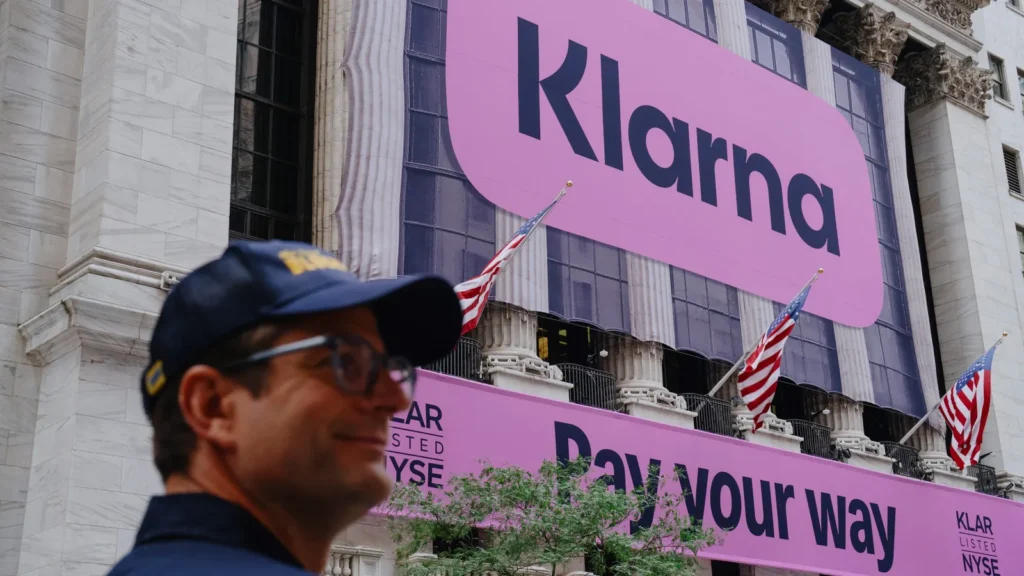
- September 2025: Klarna executes its highly anticipated initial public offering (IPO) on the New York Stock Exchange. During the lead-up to this event, CEO Sebastian Siemiatkowski begins to distance the company’s success from its partners, publicly emphasizing Klarna’s internal technological autonomy.
- February 2026: During an earnings call, Siemiatkowski credits Klarna’s "proprietary underwriting systems" and "20 years of risk management knowledge" for the success of its U.S. fair financing products. Pagaya contends these statements were false and intended to obscure the origin of the underwriting models.
- March–April 2026: The "gotcha" period. Pagaya alleges that Klarna initiated a series of tactical moves to extract the last of the needed intelligence before finalizing its plan to terminate the relationship.
- March 25, 2026: Klarna officially notifies Pagaya that it is terminating the commercial agreement.
- May 14, 2026: Pagaya files its lawsuit, seeking damages and legal intervention.
The Public Disconnect: CEO Statements and Internal Realities
A critical element of the lawsuit hinges on the rhetoric employed by Klarna’s leadership as the company transitioned into a publicly traded entity. Pagaya points to recorded interviews and investor calls where Siemiatkowski allegedly downplayed the role of external partners.
In the February 2026 earnings call, Siemiatkowski noted that Klarna’s underwriting was built on systems "we’ve developed" and reflected "the knowledge we have built around risk management for the past 20 years." Pagaya’s legal team argues that these statements were not only inaccurate but served to insulate Klarna from the reality that it had outsourced its core subprime risk assessment to an external AI firm.
Furthermore, the lawsuit highlights comments made by Klarna CFO Niclas Neglén during the same call, where he signaled an aggressive shift toward keeping transactions within the company’s own "rails." Pagaya argues this was a clear admission of intent to capture the full economic value of the lending cycle by internalizing the trade secrets they had allegedly misappropriated.
Official Responses and the Legal Defense
Klarna has responded to the lawsuit with a swift and categorical denial. In a statement provided to Banking Dive, a Klarna spokesperson framed the matter as a simple, standard contract termination.
"On March 25, 2026, we notified Pagaya that we were terminating our commercial relationship, as is our contractual right," the spokesperson said. "Pagaya has responded by filing a lawsuit, which we believe is without merit. We will defend ourselves vigorously against these false allegations and are evaluating all legal options."

Klarna’s defense appears to hinge on the premise that they did not "misappropriate" secrets but rather operated within the bounds of a standard vendor contract. From Klarna’s perspective, the termination is a routine business decision to consolidate operations, not an admission of intellectual property theft.
Pagaya, which has remained relatively quiet regarding the specifics of the ongoing litigation, has yet to issue a detailed counter-statement beyond the contents of the court filing.
Broader Implications for the Fintech Industry
The legal battle between Pagaya and Klarna is likely to serve as a bellwether for the future of B2B fintech partnerships. As AI becomes the central nervous system of financial services, the lines between "service provider" and "competitor" are becoming increasingly blurred.
1. The Vulnerability of AI Partnerships
Fintechs that rely on proprietary algorithms as their primary product face an existential threat when partnering with larger, dominant platforms. The "black box" nature of AI underwriting makes it difficult for a partner to prove exactly where their influence ends and the client’s internal development begins. This case may set a legal precedent for how much transparency is required when a partnership involves the transfer of sensitive data or models.
2. The "Platformization" Risk
As companies like Klarna evolve into comprehensive financial ecosystems, they are under immense pressure to internalize revenue streams. The goal of "owning the rails" is a common strategy for scaling, but as this lawsuit demonstrates, the path to internalization can be fraught with ethical and legal hazards. If companies are perceived as "stealing" the innovation of their partners, it could stifle the ecosystem of collaborative fintech growth.
3. Investor Scrutiny of IPOs
The fact that this dispute surfaced following Klarna’s IPO adds another layer of complexity. Investors rely on the narrative of internal technological superiority when valuing fintech firms. If it is revealed that a significant portion of that "proprietary" success was actually built on the intellectual property of a third party, it could have significant repercussions for the company’s valuation and governance.

4. The Future of Contractual Safeguards
Legal experts anticipate that this case will lead to more stringent "non-compete" and "non-solicitation" clauses in future AI partnership agreements. Vendors will likely seek to implement more robust auditing rights to ensure their technology is being used for its intended purpose and not for reverse-engineering.
Conclusion
The litigation is in its nascent stages, and a long discovery process lies ahead. The court will ultimately need to determine if Klarna’s internal systems were indeed built through independent development or if they represent a direct derivation of Pagaya’s intellectual property.
For the fintech industry at large, the outcome of this case will be closely watched. It serves as a stark reminder that in the race to dominate the digital economy, the bridge between collaboration and competition is often narrower than it appears. Whether this was a calculated intellectual heist or a bitter, but legal, business divorce remains the fundamental question that the court must resolve.