Beyond the Brink: Lula’s Historic Re-Election and the Hard Road Ahead for Brazilian Democracy
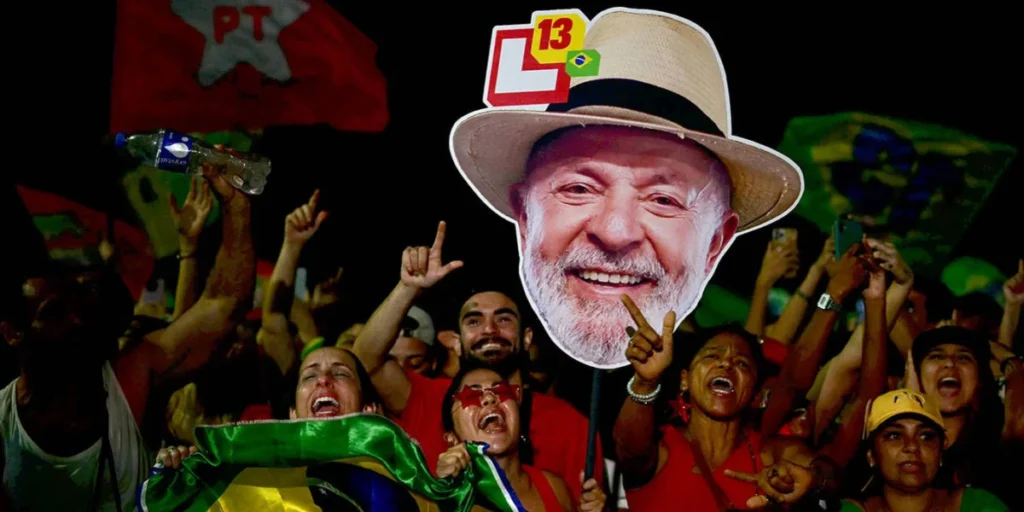
By Robert Muggah and Ilona Szabó de Carvalho
Published: October 27, 2026
Section: Politics & World Affairs
Main Facts
SÃO PAULO — In what political analysts are already calling one of the most dramatic political comebacks in modern Latin American history, President Luiz Inácio Lula da Silva secured a historic re-election victory in Brazil’s 2026 presidential runoff. In doing so, Lula shattered a long-standing electoral precedent: he became the first candidate in Brazilian history to successfully overturn a first-round deficit in a subsequent presidential runoff.
Lula clinched victory with nearly 52% of the valid vote, fending off a fierce challenge from Flávio Bolsonaro, who finished closely behind with 48%. The election drew massive civic participation, with more than 128 million Brazilians heading to the polls—an increase of nearly three million voters compared to the fiercely contested first round.
Yet, as the confetti settles in Brasília and São Paulo, the underlying reality of the vote remains starkly clear. Brazil is a nation divided down the middle. Lula’s renewed democratic mandate is undeniable, but it is accompanied by deep legislative fragmentation, a resilient conservative opposition, and an urgent imperative for structural reform. To govern effectively during his new term, Lula must transition from campaign mode to coalition-building, reaching far beyond his traditional base on the political left. In doing so, Brazilian democratic institutions face a critical test: can they consolidate stability while bridging a profound ideological chasm?
Chronology of the 2026 Electoral Showdown
The path to the October 2026 runoff was paved with intense polarization, institutional stress, and relentless campaigning. A chronological look at the key phases reveals how the race unfolded:
- Early 2026: As the electoral season officially commenced, Brazil’s political landscape was defined by economic anxieties, global supply chain shifts, and entrenched cultural debates. The conservative camp, galvanized by the legacy of former President Jair Bolsonaro, coalesced swiftly behind Flávio Bolsonaro, presenting a unified front against the incumbent administration.
- August–September 2026: Campaign trails across Brazil’s twenty-six states and the Federal District buzzed with heated rhetoric. Inflation, public security, Amazonian environmental policy, and social welfare programs dominated the national discourse. Lula’s campaign emphasized economic stabilization, social protection, and international reintegration, while the opposition focused on fiscal discipline, anti-corruption narratives, and conservative social values.
- Early October 2026 (First Round): The first round of voting produced a shock for the incumbent administration. Defying several pre-election polls, Flávio Bolsonaro captured a plurality of the votes, sending shockwaves through the left-of-center camp. For the first time in Brazil’s modern democratic history, an incumbent or leading frontrunner entered a runoff trailing from the first round.
- Mid-October 2026: The inter-round period was characterized by unprecedented mobilization. Both camps ramped up digital campaigns, targeted outreach in key swing states like Minas Gerais and Rio de Janeiro, and high-stakes televised debates. Civil society organizations, trade unions, and industrial federations weighed in, amplifying the stakes of the democratic exercise.
- October 27, 2026 (Second Round & Results): The Superior Electoral Court (TSE), led by its president, announced the definitive results late in the evening. With over 128 million votes cast, Lula achieved his historic turnaround, securing roughly 52% of the vote to Flávio Bolsonaro’s 48%, thereby sealing a second consecutive term in his historic third presidency.
Supporting Data and Electoral Demographics
A granular analysis of the 2026 election data illustrates a country cleaved along geographic, economic, and demographic lines.
- Voter Turnout: The runoff saw an impressive surge in civic engagement, with total turnout exceeding 128 million citizens. This represented an increase of roughly 3 million voters compared to the first round, underscoring the high stakes perceived by the electorate.
- The Final Margin: Lula’s victory, while decisive in securing the presidency, was razor-thin in comparative historical terms. Securing ~52% to 48% (a margin of roughly 4 to 5 million votes out of more than 120 million) highlights that the opposition retains a massive, mobilized, and politically active constituency.
- Regional Divides: As has been characteristic of Brazilian elections over the past decade, stark regional patterns persisted. The Northeast region remained a stronghold for Lula, providing the vital margins needed to offset losses elsewhere. Conversely, the agribusiness-heavy Center-West, the prosperous Southeast (including the economic powerhouse of São Paulo), and parts of the South heavily favored the conservative opposition.
- Legislative Realities: While the executive branch is secured, Lula’s administration must navigate a notoriously fragmented National Congress. The Centrão—a loose, pragmatic bloc of center-right parties that holds immense sway over budgetary allocations and legislative throughput—remains the ultimate kingmaker in Brasília. Without broad-based legislative alliances, passing structural reforms will prove exceptionally difficult.
Official Responses and International Reactions
The announcement of the election results prompted swift reactions from domestic institutions, political leaders, and the international community.
Domestic Leadership and the Electoral Authority
Following the verification of the results by the Superior Electoral Court (TSE), institutional leaders emphasized the resilience of Brazil’s electronic voting system and democratic infrastructure. In his victory speech in São Paulo, President Lula struck a conciliatory tone, emphasizing national unity, economic development for all social strata, and the strengthening of democratic norms.
"The election is over," Lula declared to cheering supporters. "There are not two Brazils. We are one people, one nation. My commitment is to govern for all Brazilians—those who voted for me and those who did not."
Flávio Bolsonaro and key figures within the conservative opposition acknowledged the high voter turnout while signaling their intent to serve as a robust, vigilant opposition in the National Congress. Prominent conservative governors and lawmakers stressed that while the executive office has changed hands, the conservative movement in Brazil remains institutionalized, deeply rooted, and prepared to challenge government policies on taxation, public spending, and cultural issues.
International Observers and Global Leaders
Global capitals watched the Brazilian contest closely, viewing it as a bellwether for democratic resilience in the Global South.
- United States and European Union: Leaders from Washington to Brussels dispatched formal congratulations, lauding the Brazilian people for their commitment to democratic participation. International observers praised the TSE for organizing a secure, transparent, and swift electoral process.
- Latin American Partners: Regional neighbors expressed relief and optimism. Progressive leaders across South America hailed Lula’s victory as a reaffirmation of multilateralism and regional integration, while center-right governments emphasized the importance of maintaining stable commercial and diplomatic ties regardless of ideological differences in Brasília.
Strategic Implications: Lessons from Abroad and the Road Ahead
As Lula prepares to embark on his new mandate, political scientists and policy strategists are looking beyond Brazil’s borders to evaluate how fragile democracies survive and consolidate in times of acute polarization. Recent developments in European democracies—specifically Hungary and Serbia—offer valuable, albeit cautionary, lessons for Brazil’s political elite.
The Dangers of Hyper-Polarization: Lessons from Hungary and Serbia
In nations like Hungary and Serbia, democratic erosion has often occurred not through sudden military coups, but through the gradual hollowing out of independent institutions, the capture of media ecosystems, and the entrenchment of zero-sum political warfare. When political parties treat governance as an existential war between absolute good and absolute evil, the middle ground vanishes.
For Brazil, the lesson is clear: winning an election is merely the first step. True democratic consolidation requires active measures to de-escalate social tensions. If the Lula administration relies solely on its base and engages in retributive politics, it risks hardening the resolve of the conservative opposition, paralyzing governance, and leaving democratic norms vulnerable to future populist exploitation.
The Imperative for Structural and Institutional Reforms
To move past the cycle of perpetual crisis, Brazil’s political leadership must pursue deep institutional reforms. Key areas demanding attention include:
- Fiscal Responsibility and Economic Inclusion: Lula must balance demands for expanded social welfare with credible fiscal frameworks that reassure domestic and international markets. Sustainable growth is the ultimate antidote to populist radicalization.
- Democratic Safeguards and Information Integrity: Combating disinformation, reinforcing the independence of the judiciary, and safeguarding civil liberties are paramount. Brazil’s democratic institutions have proven resilient against authoritarian pressures, but they require continuous reinforcement.
- Broad-Based Coalition Building: Governing a divided nation requires abandoning sectarian instincts. Lula must demonstrate a willingness to forge alliances with moderate center-right politicians, regional governors, and civil society actors who do not traditionally align with the left.
Conclusion
Brazil’s 2026 presidential election has demonstrated that the nation’s democratic spirit remains vibrant, capable of mobilizing over 128 million citizens to the ballot box and executing a historic electoral pivot. Yet, the narrow margin of victory and the deeply entrenched political polarization serve as a stark warning.
Lula’s historic comeback has bought Brazil time, but time alone will not heal its societal fractures. By looking to international lessons in institutional resilience, committing to inclusive governance, and reaching across the ideological aisle, Brazil has a narrow window to transform a contested electoral victory into lasting democratic stability. The hard work of building a unified future begins now.