The Chainsaw Paradox: How Javier Milei’s Radical Economic Experiment Became Washington’s Riskiest Geopolitical Bet
By Jeremy Adelman
Published: October 22, 2026
Main Facts
Nearly three years into his turbulent presidency, Argentine leader Javier Milei remains the global far-right’s quintessential poster boy. Armed with his literal and metaphorical chainsaw, the self-described anarcho-capitalist has reshaped Argentina’s fiscal landscape, earning the adoration of international conservatives. US President Donald Trump has publicly hailed Milei as his "favorite president," while right-wing political figures across the hemisphere—such as Brazil’s presidential hopeful Flávio Bolsonaro—vow to replicate the "Argentine model" in their own nations.
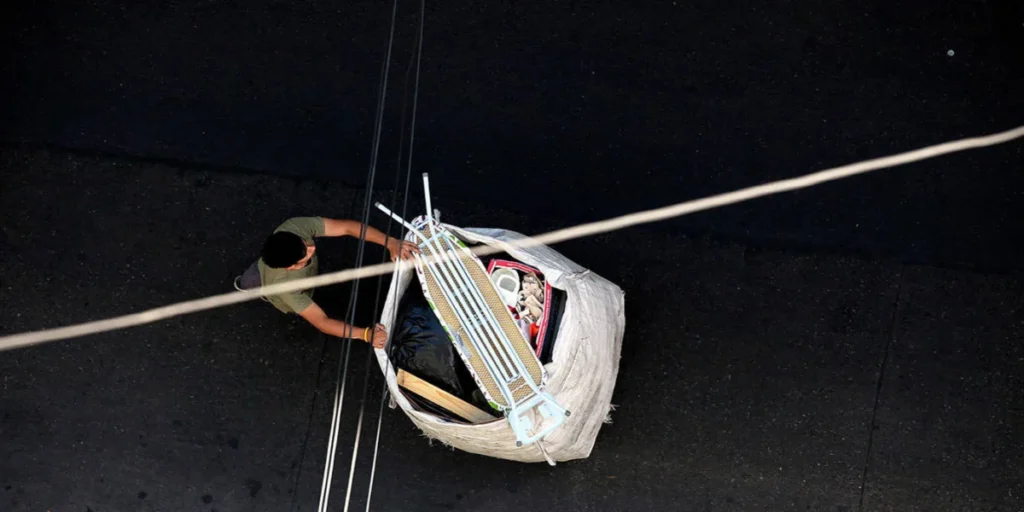
Yet, beneath the glossy veneer of fiscal stabilization, Wall Street praise, and presidential bromances lies a volatile social reality. Milei has successfully arrested hyperinflation, stabilized relative prices, and orchestrated an artificial economic recovery, but he has done so at a staggering human cost: millions of ordinary Argentines have been driven into severe destitution.
This juxtaposition creates a dangerous paradox. Milei is currently positioned as the linchpin of Washington’s broader geoeconomic strategy for Latin America. However, with crucial national elections looming next year, the deep social fractures created by his shock therapy could transform him into Washington’s weakest and most volatile link in the region.
Chronology: The Road to the Chainsaw Presidency
To understand the precarious state of Argentina’s economy in late 2026, it is vital to examine the timeline of events that brought Javier Milei to power and sustained his radical tenure:
- Late 2023: Following a bitter and polarizing campaign fueled by populist anger against decades of Peronist mismanagement, Javier Milei captures the presidency, promising to dollarize the economy, abolish the central bank, and slash public spending.
- 2024 (The Year of Shock Therapy): Upon taking office, Milei implements the largest fiscal adjustment in Argentine modern history. Subsidies are slashed overnight, thousands of public-sector workers are laid off, and price controls are dismantled, triggering an immediate spike in poverty.
- Mid-2025: As inflation begins to cool off from triple-digit highs, the macroeconomic data begins to please international creditors, but consumer purchasing power collapses. Domestic consumption plummets, and small-to-medium enterprises (SMEs) face a wave of bankruptcies.
- Late 2025 (The $20 Billion Lifeline): Facing a catastrophic run on the peso and a looming electoral disaster on the eve of midterm legislative elections, US President Donald Trump intervenes. Washington extends an unprecedented $20 billion currency swap line to Argentina, stabilizing the currency and injecting artificial confidence into the market.
- October 2025: Bolstered by the US-backed currency rescue and a momentary stabilization of prices, Milei’s political coalition defies expectations, scoring a surprising and decisive victory in the legislative elections.
- October 2026 (Current Status): Approaching the critical 2027 presidential cycle, the cracks in the model are widening. While the macroeconomic ledger looks pristine to foreign investors, the social ledger reveals a nation stretched to its absolute breaking point.
Supporting Data and Economic Realities
The debate over Milei’s presidency ultimately boils down to a fundamental conflict between macroeconomic metrics and microeconomic suffering.
The Macroeconomic Wins
From the perspective of orthodox monetary economists and international financial institutions (IFIs) like the International Monetary Fund (IMF), Milei’s achievements are undeniable on paper:
- Inflation Control: Monthly inflation, which peaked at terrifying levels prior to his inauguration, has been dragged down to single digits through relentless fiscal austerity and monetary contraction.
- Fiscal Surplus: For the first time in decades, Argentina has posted consecutive primary fiscal surpluses, reversing chronic deficits that had plagued the nation for generations.
- Exchange Rate Stability: Thanks in large part to the $20 billion US swap line extended in late 2025, the peso has avoided the apocalyptic free-fall that financial analysts feared.
The Microeconomic Toll
However, these triumphs have been purchased with the livelihoods of the working and middle classes:
- Poverty Rates: Independent sociological studies indicate that poverty has surged, pushing nearly half of the population—and over 50% of children—below the official poverty line.
- Destitution and Food Insecurity: Millions have fallen past mere poverty into destitution, struggling to afford basic caloric intake, medicine, and utilities. Soup kitchens and community food banks (comedores) report unprecedented demand that far outstrips private donations and dwindling state assistance.
- Industrial Retrenchment: The domestic economy has contracted sharply. High interest rates and a severe credit crunch have starved local industries of working capital, leading to a wave of factory closures and rising urban unemployment.
Official Responses and Political Reactions
The polarizing nature of Milei’s administration has generated sharp divisions both within Argentina and across the international community.
Washington and the White House
For the Trump administration, backing Milei is viewed as a geopolitical imperative. By propping up Buenos Aires with a $20 billion currency swap line, Washington sought to secure a reliable, pro-American anchor in South America—a region where Chinese infrastructure investments and leftist governments have steadily expanded their influence. US officials have praised Milei’s "courageous reforms," framing his administration as a beacon of economic liberty against the tides of socialism and statism.
The Domestic Opposition
Back in Buenos Aires, Peronist leaders, labor unions, and leftist social movements have launched relentless pushback. Labor confederations have organized general strikes that paralyze transport, commerce, and public services. Opposition lawmakers argue that Milei’s policies amount to a systematic dismantling of the Argentine welfare state, transferring national wealth upward to foreign creditors and elite financiers while crushing the domestic labor force.
The International Financial Community
Wall Street analysts remain deeply conflicted. While asset managers applaud the privatization drives, deregulation, and fiscal discipline, credit risk agencies warn that political sustainability remains the wild card. Investors love the balance sheets, but they privately fear the social explosion that could accompany another severe economic shock.
Geopolitical and Domestic Implications
As Argentina looks ahead to the crucial 2027 presidential elections, the stakes extend far beyond the borders of Buenos Aires.
1. The Fragility of the "Washington Consensus 2.0"
For the United States, tying its diplomatic and financial credibility so heavily to a single foreign leader is a high-stakes gamble. If Milei’s economic model collapses under the weight of domestic social unrest, the $20 billion lifeline could morph into a toxic political liability for Washington. It would validate critics who argue that US foreign policy in Latin America remains blind to the human costs of neoliberal shock therapy.
2. The 2027 Electoral Precipice
Milei’s surprise legislative victories in 2025 proved that financial stabilization can buy temporary political breathing room. However, elections in 2027 will serve as a definitive referendum on his entire mandate. If the electorate decides that the psychological and material trauma of the past three years outweighs the virtue of low inflation, the political pendulum could swing violently back toward the left, discrediting the far-right playbook for a generation.
3. Contagion Across Latin America
The outcome of the Argentine experiment carries regional implications. If Flávio Bolsonaro or other right-wing disciples across South America adopt Milei’s aggressive "chainsaw" blueprint, they will inherit the exact same structural dilemma: how to balance the demands of international capital markets with the survival instincts of an impoverished citizenry.
Ultimately, Javier Milei has proven himself to be a master of fiscal surgery, but his patients are bleeding out. Whether Argentina can survive the cure before the electorate pulls the plug remains the defining question of contemporary South American politics.