Beyond the Transaction: Reimagining Social Infrastructure for Human Dignity
Modern social infrastructure is currently navigating a profound identity crisis. For decades, the prevailing model of charitable intervention has been built upon a "transactional triangle": the needy recipient, the administrative volunteer, and the financial donor. While this structure has successfully moved resources from point A to point B, it has simultaneously eroded the human element, often reducing complex lives to a series of deficits and needs.
As we look toward the future of community resilience, the challenge is clear: How can we provide material support while preserving human dignity, identity, and connection? The answer lies not in scaling up existing bureaucracies, but in a radical shift toward "participatory orchestration"—a model that treats charity as a ritual of connection rather than a mere exchange of goods.
The Flaw in the Conventional Triangle
The traditional framework of social support operates in isolation. In this model, individuals facing hardship—whether they are children, older adults, patients, or displaced populations—are viewed primarily through the lens of what they lack. Conversely, volunteers are relegated to the role of "conduits," acting as administrative operators within rigid, formal structures. Finally, supporters are viewed through the narrow aperture of financial philanthropy.
This system prioritizes logistical efficiency at the cost of human story. When a transaction is completed, the process stops. The donor remains detached, the volunteer remains a processor, and the recipient remains a passive object of charity. This creates a systemic "invisibility" that strips people of their agency. To strengthen our social ecosystem, we must move beyond these rigid delivery systems toward a participatory model that makes needs, capabilities, and resources visible and connectable.
Chronology of the Shift: From Scarcity to Asset-Based Development
The evolution of social support is currently moving through several distinct phases:
- The Early 20th Century (Institutionalization): The era of centralized, top-down social welfare, where needs were met through massive, standardized bureaucratic systems.
- The 1980s-2000s (The Rise of Nonprofits): A shift toward the formalization of volunteer-led nonprofits, which brought localized, albeit often siloed, support to specific community sectors.
- The 2010s (Digital Aggregation): The emergence of platforms that allowed for easier donation and coordination, though these often reinforced the "transactional" nature of charity.
- The Present (Participatory Orchestration): The current movement toward "Asset-Based Community Development" (ABCD), which seeks to identify the hidden potential within every individual and every piece of "waste" in a community.
This latest phase represents a departure from the "deficit-based" model. By focusing on what a community has rather than what it lacks, we unlock latent potential that has been sitting idle for generations.
Unlocking Underutilized Community Capacity
A critical pillar of this new orchestration is the recognition of "hidden capacity." In our current economy, we are conditioned to view excess as waste. However, from a social design perspective, waste is simply a failure of imagination.
Consider the environmental and social cost of discarding surplus. Every day, tons of floral arrangements from weddings and corporate events are thrown into landfills. Every year, millions of tons of fruit rot in orchards because they don’t meet retail aesthetic standards. Organizations like Random Acts of Flowers have demonstrated that this "waste" is actually a bridge. By collecting and repurposing these items for patients in care facilities, they transform a discarded object into an act of profound human connection.
This principle extends far beyond physical objects. It encompasses the "idle capacity" of our infrastructure:
- Logistics: Cargo companies often have empty space on return routes that could be used to transport donated goods to underserved areas.
- Expertise: Retired professionals, from psychologists to craftsmen, possess decades of experience that could provide pro-bono mentorship or support if there were a mechanism to connect them to those in need.
- Infrastructure: Schools, factories, and corporate offices often sit vacant during weekends or evenings, representing a vast, untapped resource for community education or gathering.
By expanding the definition of a "supporter" from a mere financial donor to a "custodian of resources," we turn the entire community into an engine of social empowerment.
Redefining the Volunteer: The Circulatory System of Change
In a participatory ecosystem, the volunteer is no longer a clerk logging requests. They function more like the human body’s circulatory system, providing distributed intelligence that expands and contracts based on the community’s needs.
When volunteering is decoupled from rigid institutional roles, it becomes an act of shared creation. A truck driver with a light load, a graphic designer with a few spare hours, or a gardener with extra produce—these are not "volunteers" in the traditional, time-strapped sense; they are contributors. This democratization of participation allows everyday citizens to activate their unique micro-capacities. It turns the act of helping into a form of social fabric weaving, where the volunteer is an active builder of relationships rather than a delivery agent.
Official Perspectives: The Strengths-Based Approach
Public policy experts and social researchers are increasingly endorsing this transition. A strengths-based approach to human services—frequently cited in reports by the Administration for Children and Families (ACF) and academic institutions—emphasizes that dignity is inherently tied to being recognized as a whole person.
"True empowerment," according to leading social innovation researchers, "does not occur simply when a need is quietly met. It occurs when a person’s capability and identity are recognized alongside their need."
When we label an individual solely by their vulnerability, we effectively "sentence" them to permanent invisibility. By shifting the focus to an individual’s latent talents—whether it is a homeless individual’s musical ability or an elderly resident’s teaching expertise—we validate their existence as a contributor, not just a recipient.
Implications: Building the Orchestration Layer
The most significant implication of this shift is the need for an "orchestration layer." This is not a new central government agency or a massive, monolithic nonprofit. Rather, it is a decentralized, adaptive mechanism that senses emerging needs and aligns them with available, hidden capacities.
1. Transparency and Visibility
For this system to function, the community must be able to see its own assets. If a local shop has an empty warehouse space, that information must be visible to the youth center that needs a practice space. This requires a digital and social infrastructure that prioritizes connectivity over control.
2. The Fluidity of Roles
Perhaps the most transformative implication is the dissolution of static roles. In a healthy, participatory community, there is no permanent "recipient" or "supporter." A person may receive support during a health crisis, volunteer their skills as a carpenter during a period of recovery, and later contribute resources when they are financially stable. This fluidity prevents the creation of a "charity class" and fosters a culture of mutual aid.
3. Creating Rituals, Not Transactions
The shift from transaction to ritual is the core of the new social contract. A transaction is a one-off event; a ritual creates continuity. When a community consistently comes together to repurpose resources or share skills, it builds a history of shared success. This history creates the social capital necessary to weather future crises.
Conclusion: The Whole Human Being
The core challenge of our time is not an absence of compassion or a lack of resources. The resources are there, and the compassion is abundant. The missing element is the ability to continuously align human potential with the realities of community life.
Modern social innovation must be the architect of this alignment. By moving away from the "deficit-based" trap and toward a "participatory orchestration" model, we can ensure that every individual is noticed, valued, and utilized. In this future, the goal is not merely to "solve" a problem, but to create a community where everyone has a seat at the table—not as a burden to be managed, but as a person with unique capabilities to offer.
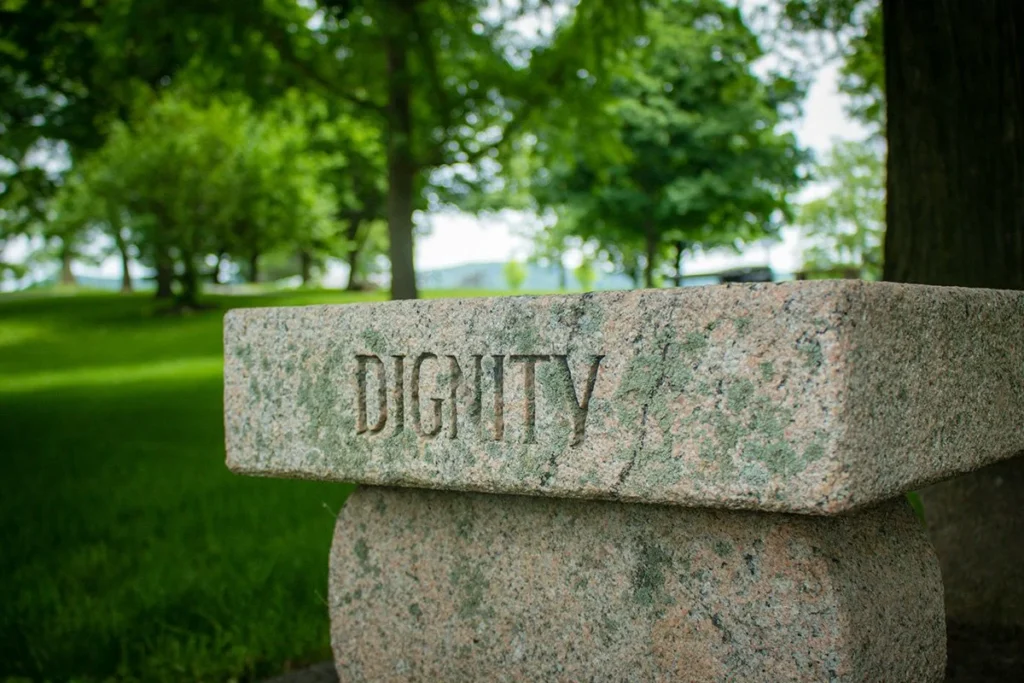
The stone pillar of "dignity" mentioned in our opening is not a static ideal; it is a dynamic process. It is a process that begins when we stop seeing what people lack and start seeing who they truly are. By weaving together the hidden capacities of our neighbors, our businesses, and our institutions, we do more than just provide aid—we build a more resilient, connected, and fundamentally human society.