Peak XV Partners Elevates Seed-Stage Strategy: A Deep Dive into the Surge 12 Cohort
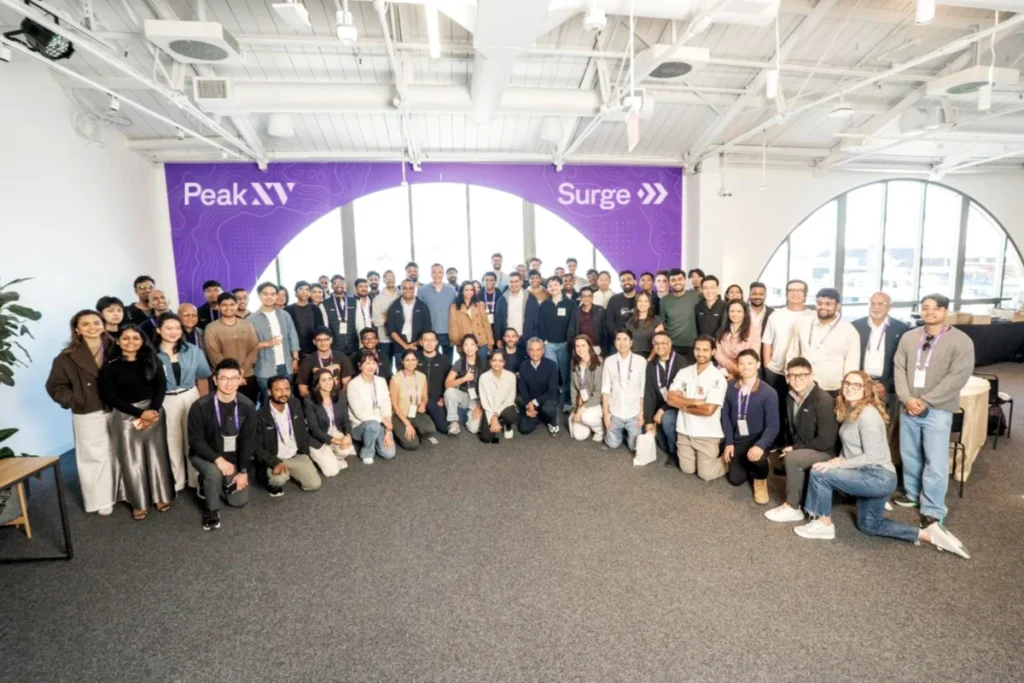
Peak XV Partners, the venture capital titan managing over $10 billion in assets, has officially signaled a shift in its early-stage investment philosophy. With the unveiling of "Surge 12"—its latest cohort of 18 startups—the firm has raised its investment ceiling to $5 million per company, a significant increase from the previous $3 million cap. This move reflects a broader market reality: as the threshold for Series A funding rises, venture firms are recalibrating their capital deployment to ensure their portfolio companies have the runway necessary to reach maturity.
The Strategic Pivot: Adapting to a New Economic Reality
The venture capital landscape has undergone a seismic shift over the past two years. The days of "growth at all costs" have been replaced by a rigorous focus on profitability, sustainable unit economics, and the ability to survive in a high-interest-rate environment.
Rajan Anandan, Managing Director at Peak XV, articulated the necessity of this pivot during a recent interview. "The bar to raise a Series A has gone up pretty significantly," Anandan noted. By increasing the capital infusion per startup, Peak XV is providing its founders with a greater buffer against the tightening capital markets.
Furthermore, the firm is observing a transition in the types of businesses being founded. Anandan pointed to a surge in "capital-intensive" companies—particularly in the deeptech, robotics, and aerospace sectors—that require more substantial initial liquidity than a standard SaaS platform. By raising the ceiling, Peak XV is effectively future-proofing these high-potential ventures.
Chronology and Evolution: From Sequoia to Peak XV
To understand the trajectory of Surge, one must look back to its origins in 2019. Originally launched under the banner of Sequoia Capital India and Southeast Asia, the platform was designed to bridge the gap between early-stage experimentation and institutional venture backing.
Since its inception, Surge has evolved from a regional experiment into a global powerhouse. To date, it has backed more than 180 startups led by entrepreneurs from over 18 different nationalities. The impact is quantifiable: the ten largest companies to emerge from these cohorts now generate a combined annual revenue exceeding $1 billion.
The transition from the Sequoia brand to Peak XV Partners in 2023 was more than a name change; it represented a structural evolution that allowed for greater global reach and more flexible investment mandates. Surge 12 serves as a testament to this evolution, featuring companies that are as likely to be based in Sydney or San Francisco as they are in Bengaluru or Jakarta.
Supporting Data: By the Numbers
The financial mechanics behind Surge 12 illustrate a firm doubling down on its convictions. Peak XV confirmed that it has invested more than $50 million across the 18 companies in this cohort. Collectively, these startups have raised over $90 million in seed-stage funding, a clear indicator of strong external validation.

A critical nuance in the data is the "global-first" mindset of the current cohort. While 18 companies are involved, only five are exclusively focused on the Indian market. The remaining 13 are targeting global markets from day one, underscoring a decoupling between where the companies are engineered and where they derive their revenue.
Furthermore, the "operator-led" trend continues to hold strong. According to firm data, roughly 50% to 60% of the founders in this cohort are veteran operators, hailing from established technology giants. This shift toward "experienced builders" over "first-time founders" suggests that investors are increasingly favoring teams with proven operational pedigree.
The Surge 12 Portfolio: Innovation Across Sectors
The Surge 12 cohort is a diverse tapestry of modern technological ambition. From AI safety to autonomous underground robotics, the startups reflect the current "frontier" of venture interest.
Deeptech and AI Infrastructure
- HiLoop: Focused on the post-training of open-weight models, HiLoop is positioning itself at the heart of the generative AI supply chain. With a founding team that includes a Cambridge PhD who finished his doctorate at 24, they are streamlining the adoption of AI for specific enterprise applications.
- Reinforce Labs: As AI integration grows, so do the risks. Founded by Anish Das Sarma, an Airbnb and Google veteran, the company provides red-teaming and evaluation tools to ensure enterprise AI systems are safe, reliable, and compliant.
- ULOOK: Pushing the boundaries of space tech, ULOOK is developing autonomous satellite systems for radio-frequency sensing. Having already worked on 12 satellite missions, the founders are looking to provide critical spectrum intelligence to global clients.
Consumer and Fintech
- Ditto: Aiming to revolutionize Gen Z dating, Ditto acts as an AI matchmaker embedded within iMessage. By moving away from the "swiping" fatigue of traditional apps, it focuses on facilitating real-world connections.
- Tribe Money: Targeting the personal finance sector, this platform uses AI to help users track expenses and navigate complex investment decisions in real-time.
- GameStock: A unique intersection of finance and entertainment, GameStock introduces competitive mechanics to the world of retail trading, targeting a demographic that views investing as a gamified experience.
Healthcare and Lifestyle
- August AI: Founded by IIT-BHU alumnus Anuruddh Mishra, this platform is a prime example of global reach, currently serving over 9 million users across 160 countries by combining AI diagnostics with human physician oversight.
- Hoola Health: A comprehensive care platform for children, Hoola Health simplifies the administrative and clinical burden of pediatric care, covering everything from vaccinations to developmental therapy.
Implications: The Future of Seed-Stage Investing
The decision to increase the investment cap to $5 million carries significant implications for the startup ecosystem.
- Increased Runway, Higher Expectations: By providing more capital upfront, Peak XV is implicitly signaling that it expects its companies to achieve higher milestones before returning to the market for a Series A. This puts pressure on founders to demonstrate not just growth, but a clear path to profitability.
- The Rise of "Super-Seed" Rounds: Surge 12 confirms that the distinction between seed and Series A is becoming blurred. As firms like Peak XV write larger checks, the traditional "seed" round is evolving into a more substantial, multi-year funding event.
- Cross-Pollination of Talent: The inclusion of three companies that had already received prior backing from Peak XV highlights a "doubling down" strategy. The firm is increasingly comfortable acting as a lead investor early and staying on the cap table as the company matures through subsequent rounds.
Conclusion: A Bar Set Higher
Surge 12 is more than just a list of 18 promising companies; it is a declaration of intent from Peak XV Partners. By identifying a need for larger initial capital, the firm is positioning itself to be the primary engine for companies that are too capital-intensive for traditional accelerators but not yet ready for late-stage venture capital.
As the global technology landscape continues to mature, the success of these 18 companies will likely depend on their ability to navigate the tension between innovation and fiscal discipline. With the backing of a firm that manages over $10 billion and a revamped investment strategy, the Surge 12 cohort enters the market with a distinct advantage: the capital to build, the data to scale, and the institutional support to survive the current economic climate.
Whether these companies—ranging from satellite sensing to AI dating—will achieve the same scale as their predecessors remains to be seen. However, one thing is certain: in the world of venture capital, the "Surge" model has proven that a structured, cohort-based approach, when coupled with deep operational expertise and increased financial support, remains one of the most effective ways to nurture the next generation of global tech unicorns.