Old Glory Bank Faces Critical Crossroads Amid Regulatory Scrutiny and Failed Merger

In the high-stakes world of community banking, few institutions have captured the attention of the national political and financial discourse quite like Old Glory Bank. Positioned as a "pro-America" financial institution serving the so-called "Freedom Economy," the $279.4 million-asset lender has recently found itself navigating a turbulent period defined by regulatory friction, the collapse of a transformative merger, and a persistent struggle to maintain capital adequacy.
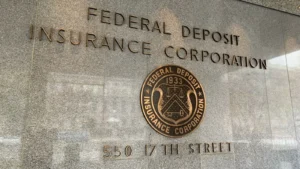
As the bank works to stabilize its balance sheet, it remains under the intense oversight of the Federal Deposit Insurance Corporation (FDIC), which has issued a prompt corrective action (PCA) directive—a stark escalation from the consent order the bank has operated under since May 2024. For a bank backed by prominent conservative figures, including former Housing and Urban Development Secretary Dr. Ben Carson and former Trump administration press secretary Sean Spicer, the current climate presents a defining test of its long-term viability.
A Chronology of Financial Volatility
The current challenges facing Old Glory Bank are the culmination of a year marked by ambitious expansion plans that ultimately collided with the realities of federal oversight.
January 2024: The SPAC Ambition
The year began with optimism. Old Glory Holding Company entered into a definitive merger agreement with Digital Asset Acquisition Corp., a special-purpose acquisition company (SPAC). The objective was to form OGB Financial Company, a new entity intended to be listed on the Nasdaq exchange. The vision was clear: to create a cryptocurrency-focused financial powerhouse that would leverage the bank’s existing "pro-America" branding to capture a niche but growing market of retail and institutional clients.
May 2024: The Consent Order
By late spring, the operational reality caught up with the growth strategy. The bank entered into a formal consent order with the FDIC. The document cited "insufficient capital," highlighting that the bank had failed to maintain the required tier 1 leverage ratio of 14%. At the time, management expressed a belief that they could renegotiate these ratios with regulators to a more sustainable 7% to 9% range, but the regulatory pressure only intensified.
August 2024: The Merger Collapse
The most significant blow occurred in August, when Old Glory and Digital Asset Acquisition Corp. officially scrapped their merger plans. A spokesperson for Old Glory confirmed that the Federal Reserve had declined to approve the transaction. This rejection was not merely a procedural setback; it effectively severed the bank’s most viable path to the capital injection it required to satisfy the FDIC’s requirements.
Late 2024: Prompt Corrective Action
Following the collapse of the merger, the situation shifted from managed oversight to strict enforcement. The FDIC issued a "significantly undercapitalized" designation, triggering a PCA directive. Unlike a negotiated consent order, this directive is a formal regulatory mandate that imposes immediate, non-negotiable operational constraints on the institution.
The Regulatory Framework: What "Significantly Undercapitalized" Means
Under the Federal Deposit Insurance Act, the FDIC categorizes banks based on their capital levels. The "significantly undercapitalized" label is the fourth of five rungs, sitting just above "critically undercapitalized." For a bank to be labeled as such, it must fall significantly below the minimum levels required for its capital measures.
The implications for Old Glory are severe and multifaceted:
- Restriction on Brokered Deposits: The bank is now prohibited from accepting brokered deposits, a common source of liquidity for mid-sized banks.
- Employee Benefit Deposits: The bank cannot accept deposits linked to employee benefit plans until it returns to "adequately capitalized" status.
- Interest Rate Caps: Regulators have placed a ceiling on the interest rates the bank can offer on deposits, limiting its ability to compete for liquidity in a high-rate environment.
- Executive Compensation: The bank is barred from paying bonuses or increasing the compensation of any senior executive without prior written approval from the FDIC.
- Operational Oversight: Old Glory is required to submit monthly written reports to the FDIC detailing its compliance with the directive and the specific steps taken to remediate its capital position.
These provisions are designed to ensure that the bank preserves its remaining assets. The mandate remains in effect until the bank can demonstrate "adequately capitalized" status for four consecutive quarters—a high hurdle for a firm currently grappling with operational losses.
Financial Performance and Capital Pressures
The financial strain on Old Glory is well-documented in its public filings. According to the June call report from the Federal Financial Institutions Examination Council (FFIEC), the bank incurred a loss of approximately $8 million during the first half of 2024.
This loss exacerbates the difficulty of meeting the 14% tier 1 leverage ratio mandate established in the initial consent order. In the July prospectus filed by Digital Asset Acquisition Corp., the bank candidly acknowledged that without the capital infusion from the SPAC merger, it would face a difficult binary choice: either raise capital from its existing ownership group or pursue "a sale or organized wind-down."
The prospectus further warned that if the bank failed to act, it expected "other regulatory actions to be taken, including actions to enjoin ‘unsafe or unsound’ practices." This warning underscores the precarious position the bank occupies; it is essentially in a race to raise enough capital to prove it can survive independently while operating under a regulatory microscope that restricts its ability to grow or innovate.
Official Responses and Strategic Pivot
Despite the mounting regulatory challenges, leadership at Old Glory remains publicly defiant and committed to the bank’s original mission. In a statement provided to the media on Monday, a spokesperson for Old Glory emphasized the resilience of the bank’s ownership group.
"The Fed knocked us down by not approving our deSPAC, but we are getting back up, and we will continue on our mission of providing all of America the freedom in banking they deserve," the spokesperson stated. The representative added that the bank is currently "doing again what we always do, which is raising capital from our great ownership group."
This emphasis on the "ownership group" is critical. By turning to its existing investors, Old Glory is attempting to bypass the public markets—which have proven to be an inhospitable environment for its merger plans—to secure the funding necessary to satisfy the FDIC.
Broader Implications for the Banking Sector
The struggle of Old Glory Bank offers several key takeaways for the broader American banking landscape.
1. The Difficulty of the "Niche" Model
Old Glory’s attempt to build a "Freedom Economy" platform highlights the inherent risks of ideological banking. While such branding can foster a loyal customer base, it also subjects the institution to intense public and regulatory scrutiny. If the financial performance does not match the strength of the brand, the resulting narrative can become a distraction for both management and regulators.
2. The Power of the Fed and FDIC
The collapse of the merger serves as a reminder of the immense authority held by federal regulators. Even when a merger is supported by a board of directors and shareholders, the Federal Reserve’s refusal to approve a transaction can effectively shutter a strategic path overnight. This reinforces the reality that, in the banking sector, regulatory approval is the ultimate gatekeeper of corporate strategy.
3. The Fragility of Under-Capitalized Banks
The transition from a consent order to a PCA directive is a cautionary tale for smaller financial institutions. Once a bank enters the territory of being "significantly undercapitalized," the regulatory burden creates a "doom loop." The restrictions on interest rates and deposit-gathering make it harder to turn a profit, which in turn makes it harder to rebuild capital through organic earnings.
Conclusion: The Road Ahead
Old Glory Bank stands at a crossroads. Its future now depends on a successful capital raise from its ownership group. If the bank can successfully inject enough liquidity to satisfy the FDIC and return to an "adequately capitalized" status, it may find a path forward as a smaller, more focused boutique lender.
However, if the capital raise proves insufficient or if the bank fails to meet the stringent monthly reporting and operational requirements set by the FDIC, the "organized wind-down" mentioned in its earlier filings becomes a distinct possibility. As the bank prepares to submit its next round of compliance reports, the eyes of the financial industry remain fixed on whether this "pro-America" challenger can survive the scrutiny of the federal regulators tasked with ensuring the safety and soundness of the national banking system.