IRS Enforcement Plunges in FY 2025 as Staffing Dries Up and Inflation Reduction Act Funds Run Out, Watchdog Warns
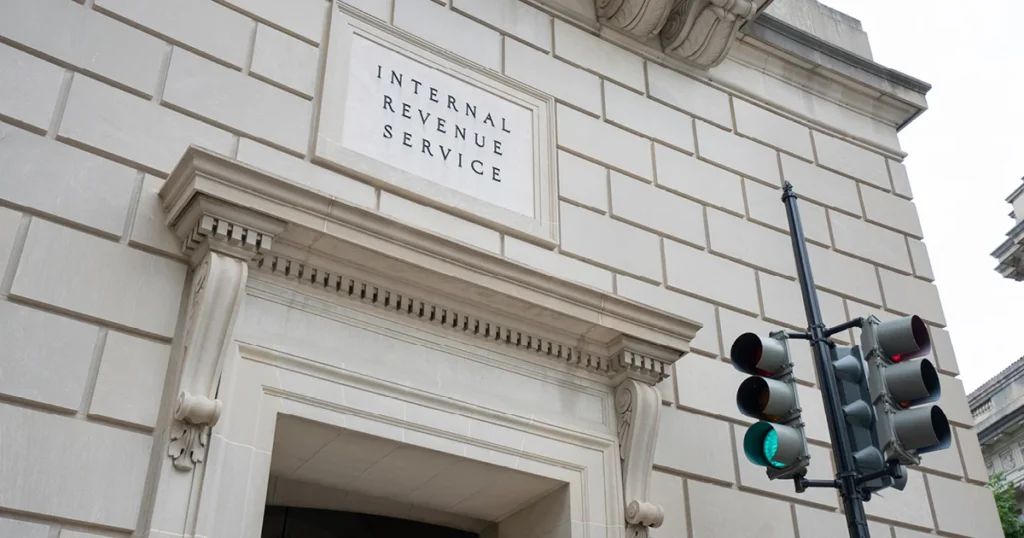
WASHINGTON — In a fiscal paradox that highlights the complex relationship between tax administration resources and federal revenue collection, a new federal watchdog report reveals that Internal Revenue Service (IRS) enforcement activities plummeted during fiscal year 2025. This steep decline occurred despite taxpayers shelling out a historic $5.3 trillion in federal tax revenue.
According to a report released Monday by the Treasury Inspector General for Tax Administration (TIGTA), the agency’s ability to audit returns and pursue delinquent accounts was severely hamstrung by a sharp drop in staffing levels and the total exhaustion of supplemental enforcement funding provided by the landmark 2022 Inflation Reduction Act.
The report underscores a critical administrative vulnerability: while macroeconomic factors and automated systems continue to drive record-breaking tax receipts into federal coffers, the human capital required to police high-net-worth individuals, complex corporate structures, and sophisticated tax shelters has experienced a historic, precipitous contraction.
Main Facts
The core findings of the TIGTA report paint a stark picture of an agency caught between record inflows of capital and a rapidly eroding workforce.
During fiscal year 2025, the IRS collected a record $5.3 trillion in federal tax revenue—a staggering 13.2% increase compared to fiscal year 2023 levels. This revenue growth was powered primarily by a 17% surge in individual income tax collections.
However, this financial bounty masked a deep, systemic regression in enforcement capabilities. As tax collections hit record highs, the IRS examination and collection workforce cratered. From fiscal year 2024 to fiscal year 2025, the agency lost roughly 27% of its specialized enforcement personnel.
The consequences of this staffing drain were immediate and measurable:
- Fewer Audits: Individual examination starts dropped by 30% between fiscal year 2024 and fiscal year 2025.
- High-Earner Impact: Audits targeting taxpayers with incomes exceeding $400,000 fell by 27% over the same period.
- Falling Assessments: Proposed additional taxes resulting from IRS examinations dropped from a peak of $31.9 billion in fiscal year 2023 down to $26.8 billion by fiscal year 2025.
- Enforcement Revenue Slump: Total enforcement revenue collected by the agency peaked at an all-time high of $98.7 billion in fiscal year 2024 before sliding back to $93.8 billion in fiscal year 2025.
TIGTA noted that while overall enforcement revenue in fiscal 2025 remained slightly above fiscal 2023 benchmarks—largely propped up by automated collection mechanisms—the trajectory points sharply downward. Most critically, the report verified that the IRS officially exhausted all remaining supplemental enforcement funding authorized under the Inflation Reduction Act of 2022 (P.L. 117-169) as of December 31, 2025.
Chronology of Events and Staffing Shifts
To understand how the IRS arrived at its current enforcement deficit, it is necessary to examine the volatile trajectory of the agency’s headcount and funding over the past several years. The narrative is one of rapid expansion followed by an equally dramatic contraction.
The Inflation Reduction Act Windfall (2022–2024)
When the Inflation Reduction Act was signed into law in August 2022, it allocated nearly $80 billion in mandatory, multi-year funding to the IRS. This financial injection was explicitly designed to modernize agency technology, improve customer service, and rebuild a depleted enforcement workforce capable of tackling complex tax evasion by corporations and high-wealth individuals.
For a brief window, the strategy appeared to work. At the end of fiscal year 2023, the IRS’s examination and collection workforce stood at a modest 20,098 employees. Bolstered by the influx of IRA funds, the agency launched an aggressive hiring blitz. By the close of fiscal year 2024, that specialized workforce had expanded by more than 35%, swelling to 27,217 employees.
During this peak window, the agency heavily emphasized audits of high-income earners, large corporations, and complex partnerships, yielding immediate fruit: revenue attributed directly to IRS examination activities jumped 41% between fiscal 2023 and fiscal 2024.
The Cliff and Post-Funding Retrenchment (2025–2026)
The momentum was short-lived. Budgetary pressures, political headwinds, and shifting legislative priorities conspired to halt the agency’s expansion.
By the end of fiscal year 2025, the examination and collection workforce had plummeted back down to 19,612 employees—wiping out nearly all the staffing gains achieved under the initial wave of IRA funding. The bleeding did not stop there. According to TIGTA data, the headcount continued to shrink into the new calendar year, dropping further to 17,517 employees as of January 10, 2026.
Simultaneously, the financial clock ran out. The IRS officially exhausted its remaining supplemental enforcement funding from the 2022 law on December 31, 2025, leaving the agency heavily reliant on its traditional annual appropriations and facing a severely constrained fiscal horizon.
Supporting Data and Financial Metrics
A granular review of the TIGTA report reveals a striking divergence between two pillars of IRS operations: passive revenue collection versus active compliance enforcement.
The Revenue Paradox
While federal tax receipts soared to $5.3 trillion in fiscal 2025—up 13.2% from fiscal 2023—this influx was primarily driven by macroeconomic factors, wage growth, and automated systems rather than direct human intervention by IRS auditors.
The breakdown of revenue sources highlights this operational split:
| Metric | Fiscal Year 2023 | Fiscal Year 2024 | Fiscal Year 2025 |
|---|---|---|---|
| Total Federal Tax Revenue | ~$4.68 Trillion | ~$4.92 Trillion | $5.30 Trillion |
| Examination Staffing Headcount | 20,098 | 27,217 | 19,612 |
| Individual Examination Starts | Baseline | Peak Period | -30% (from FY24) |
| Audit Revenue Generated | Baseline | +41% Growth | -35% Drop |
| Proposed Additional Taxes | $31.9 Billion | Not Specified | $26.8 Billion |
| Total Enforcement Revenue | Baseline | $98.7 Billion (Peak) | $93.8 Billion |
The Power of Automation
Although active examinations suffered steep declines due to the 27% drop in specialized personnel, overall enforcement revenue remained historically resilient, landing at $93.8 billion in fiscal 2025 compared to $98.7 billion in fiscal 2024.
TIGTA attributed this relative stability to collection activities rather than audits. Specifically, collection revenue increased by 17% overall between fiscal 2023 and fiscal 2025. This was largely made possible by the agency’s post-pandemic normalization of operations—most notably the resumption of automated collection notices that had been paused intermittently during the COVID-19 public health emergency.
The restart of these automated mailings flooded nonfiler and routine compliance programs with activity, capturing billions in back taxes without requiring intensive human labor from specialized revenue agents. However, watchdogs warn that automation alone cannot substitute for deep-dive audits when dealing with sophisticated tax shelters, shell companies, and ultra-high-net-worth tax evasion.
Official Responses and Watchdog Insights
The release of the TIGTA report has reignited long-running debates in Washington over the funding, scope, and operational efficacy of the nation’s tax collection agency.
Because the report was issued directly by the Treasury Inspector General for Tax Administration as an analytical oversight document rather than an operational audit requiring corrective action plans, TIGTA made no formal recommendations to IRS leadership. Instead, the watchdog focused on mapping out the undeniable correlation between legislative funding, human capital retention, and tax enforcement outcomes.
In its commentary, TIGTA emphasized that the full repercussions of the 2025 staffing cuts have likely not yet manifested in their entirety.
"While the workforce reductions influenced metrics in FY 2025, the downstream effects of these reductions are likely to become more apparent over time," TIGTA warned in the text of the report.
Tax administration experts and fiscal analysts note that tax enforcement operates on a delayed timeline. Audits initiated in a given fiscal year often involve complex returns from prior tax years, and the pipeline of cases takes months—or years—to develop, litigate, and resolve. Consequently, a sharp contraction in examination starts in 2025 implies a corresponding drop in audit-derived revenue and deterrence capability for fiscal years 2026, 2027, and beyond.
Meanwhile, congressional reactions split along familiar partisan lines. Proponents of robust IRS funding pointed to the TIGTA report as definitive proof that starving the agency of resources directly undermines tax compliance, leaving billions of dollars in legally owed taxes on the table. Conversely, fiscal conservatives argued that the record $5.3 trillion revenue haul proves the agency can function efficiently without massive, multi-billion-dollar infusions of supplemental funding, contending that heavy-handed enforcement burdens ordinary taxpayers and small businesses.
Long-Term Implications for Taxpayers and the Federal Budget
As the IRS navigates its post-Inflation Reduction Act reality with a skeleton crew of examination and collection personnel, the long-term implications stretch across several critical fronts:
1. The Widening Tax Gap
The "tax gap"—the difference between true tax liability and what is actually paid voluntarily and on time—has historically hovered around $600 billion annually in the United States. A weakened enforcement division directly impacts the IRS’s ability to police high-end noncompliance. When audits of taxpayers making over $400,000 drop by nearly 30%, the deterrent effect—often referred to by economists as "deterrence capital"—erodes rapidly, potentially encouraging more aggressive tax sheltering and evasion among wealthy demographics.
2. Shift Toward Algorithmic Compliance
With human staffing levels having fallen to 17,517 as of January 2026, the IRS will inevitably be forced to lean even more heavily on artificial intelligence, machine learning, and automated compliance notices. While automation is cost-effective for catching simple discrepancies, W-2 omissions, or basic nonfilers, it is notoriously ill-equipped to untangle complex corporate tax avoidance schemes, tiered partnerships, and offshore trust accounts that require forensic accounting.
3. Budgetary Pressures on Capitol Hill
With the supplemental enforcement funds officially exhausted as of December 31, 2025, federal lawmakers face difficult choices during future appropriations cycles. If Congress wishes to maintain or expand high-end tax enforcement, it will have to decide whether to provide new mandatory or discretionary funding through regular legislative channels—a prospect complicated by ongoing deficit reduction debates in Washington.
4. What This Means for Everyday Taxpayers
For the average W-2 wage earner, the shifting landscape means the IRS will likely continue relying on automated matching systems to ensure compliance. However, for high-net-worth individuals and corporate entities, the drop in examination starts creates a more permissive tax environment, reducing the immediate statistical probability of being selected for a comprehensive audit.
As the federal government grapples with mounting national debt and complex fiscal demands, the TIGTA report serves as a sobering reminder: collecting trillions in revenue is achievable through broad economic activity, but ensuring fairness and compliance across the entire tax spectrum requires sustained, stable investments in human expertise.
To comment on this article or to suggest an idea for future reporting, contact Martha Waggoner at [email protected].