Anatomy of a Misunderstood Market: Why the Post-2020 Housing Boom Defied Bubble Predictions
Main Facts
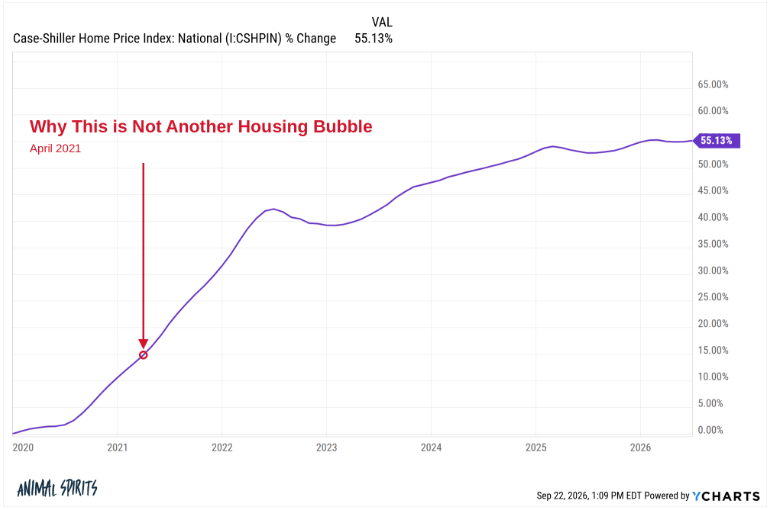
In the spring of 2021, amidst a rapidly shifting global economy, financial commentators and everyday buyers alike cast a wary eye toward the American residential real estate market. When the Case-Shiller National Home Price Index surged by a cumulative 16% through the early phase of the decade, alarms sounded across financial media. Many drew immediate parallels to the mid-2000s, warning of an imminent, catastrophic collapse.
Yet, looking back from the mid-2020s, that predicted collapse never materialized. Instead, nationwide housing prices climbed an additional 33% following those initial warnings, pushing total gains to more than 55% for the decade.
Despite one of the most leveraged financial assets on the planet experiencing an unprecedented historical price acceleration in a remarkably short window, the market did not implode. Rather than collapsing under the weight of speculative mania, the housing ecosystem absorbed the price shocks, creating an era defined not by falling home values, but by record-breaking home equity gains and a prolonged freeze in transactional activity.
Chronology: From Pandemic Shockwaves to Market Freeze
Understanding how the modern housing landscape reached this point requires tracing the timeline of economic pressures that began shaping the sector in 2020:
- The 2020–2021 Inflection Point: As the global economy reopened, monetary policy drove interest rates to historic lows. Borrowing costs hovering near 3% unlocked unprecedented purchasing power, sparking a fierce demand for single-family homes.
- The 2021 Early Warnings: In April 2021, as prices continued upward trajectories, early analyses pointed out that fundamental supply-and-demand dynamics—rather than predatory lending—were driving the surge. Skeptics, however, dismissed these views, pointing to historical precedent to warn of an impending bubble.
- The 2022 Rate Shock: The Federal Reserve aggressively hiked interest rates to combat 40-year high inflation. Mortgage rates doubled seemingly overnight, leaping from roughly 3% to 6% and higher. This sudden monetary tightening abruptly altered the landscape for real estate investors and prospective buyers alike, freezing multi-property acquisition plans.
- The 2023–Present Housing Recession: While home prices resisted downward pressure, transaction volumes plummeted. Existing home sales stagnated, matching the dismal activity depths last seen during the Great Financial Crisis. The market entered what economists now classify as a multi-year housing market recession—characterized by a severe shortage of inventory and locked-in homeowners, rather than falling home values.
Supporting Data: Breaking Down the Fundamentals
A deep dive into macroeconomic indicators reveals why the 2020s housing trajectory fundamentally diverged from the subprime crisis of 2008.
1. Absence of an Inventory Glut
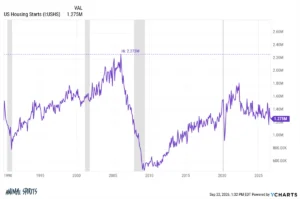
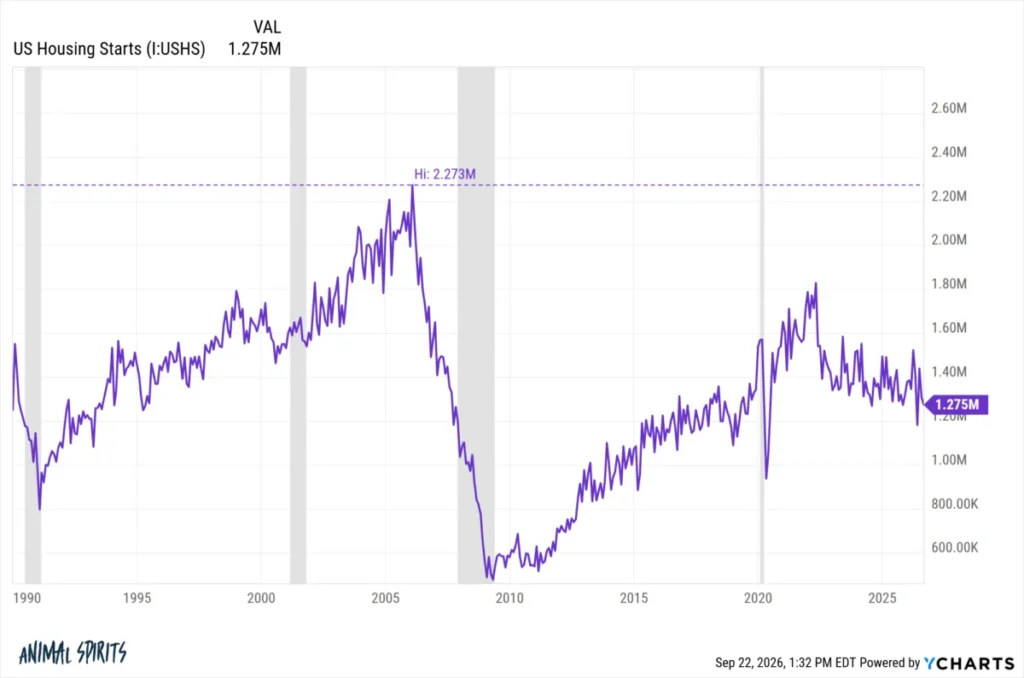
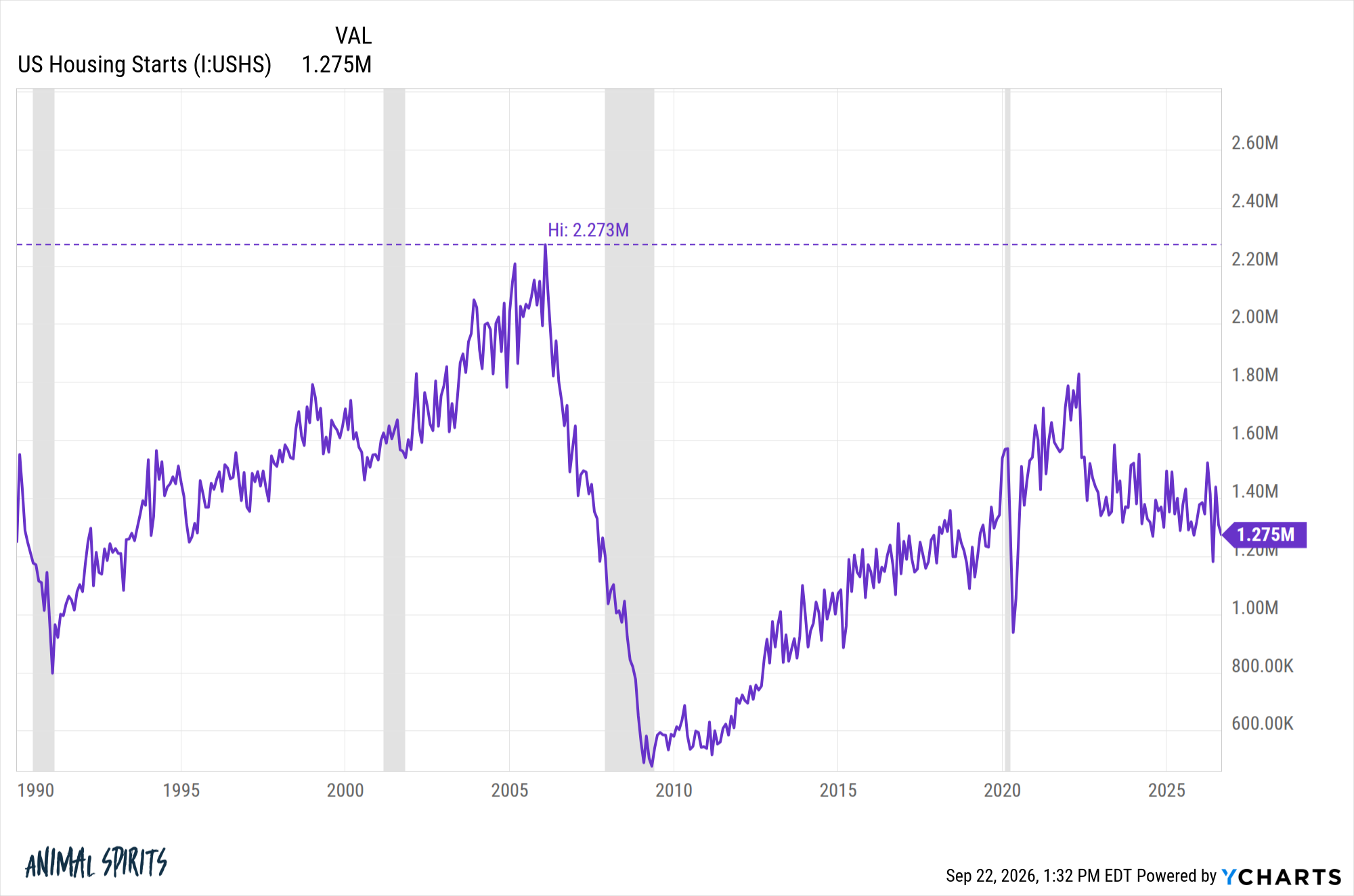
During the mid-2000s housing bubble, U.S. housing starts reached frantic, unsustainable peaks. Developers overbuilt massively, leaving millions of vacant properties when demand dried up. In contrast, U.S. housing starts during the 2020s remained relatively subdued, never approaching mid-2000s levels—even as the U.S. population grew by more than 40 million people. Without overbuilding, there was no foundational surplus to crash prices.
2. Speculation vs. Sobber Lending Standards
The pre-2008 era was characterized by rampant speculative activity: low-documentation loans, teaser rates, lax credit standards, and widespread home-flipping culture popularized by reality television. The 2020s market operated under a much stricter, more sober framework. Lending standards remained robust, preventing under-qualified borrowers from taking on unsustainable leverage.
3. The Power of Fixed Rates and Demographic Tailwinds
Monetary policy played a crucial protective role. Millions of homeowners secured long-term mortgages at or below 3% right before inflation spiked. Because housing is typically a household’s largest fixed expense, locking in these ultra-low rates created a powerful incentive to stay put.
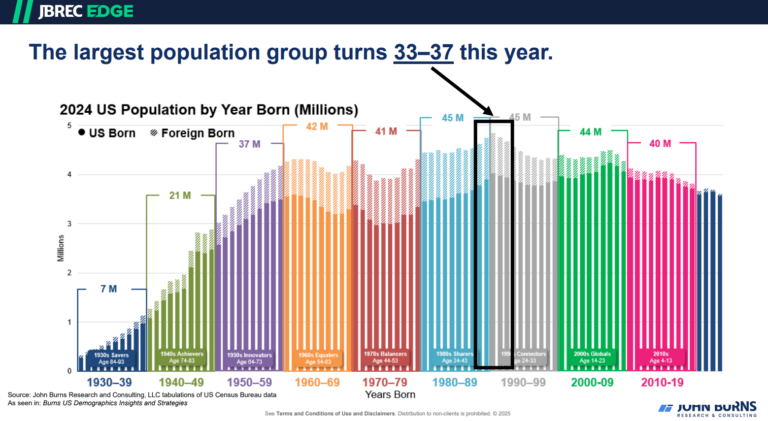
Furthermore, demographic data underpins long-term stability. Approximately 40% of all American homeowners own their properties free and clear, completely insulated from interest rate fluctuations. Meanwhile, the largest age cohort in the United States—individuals aged 33 to 37—occupies prime home-buying years. This structural combination ensures a persistent baseline of demand alongside a cohort of homeowners who will never be forced sellers.
Official Responses and Expert Perspectives
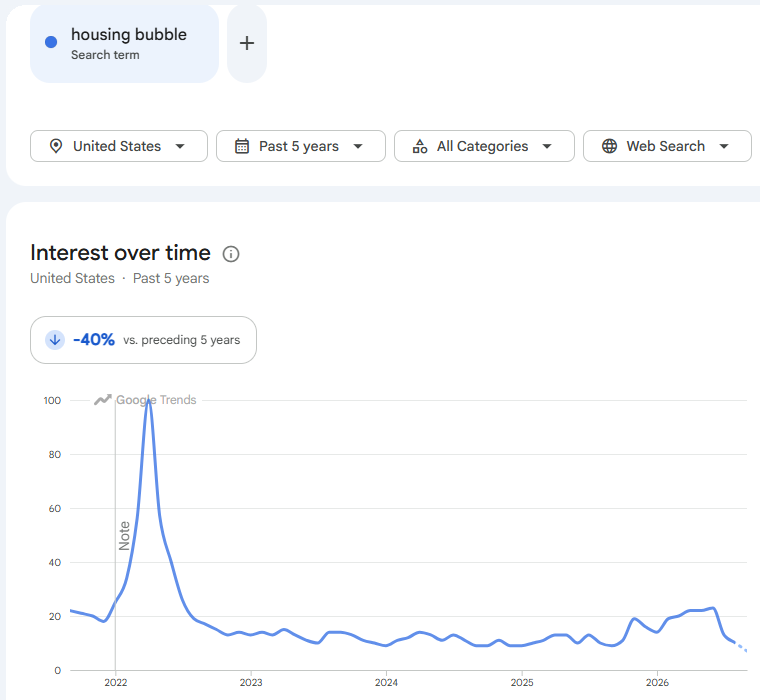
When the post-pandemic housing surge began, consensus among mainstream financial commentators leaned heavily toward caution. Many analysts conflated rapid price growth with speculative asset bubbles, arguing that what goes up must inevitably crash down.
Financial analysts who correctly anticipated the resilience of the market pointed out a fundamental economic distinction: a rapid rise in price is not synonymous with a bubble. Bubbles require specific ingredients—excessive leverage, loose lending standards, speculative over-construction, and forced liquidations. None of these core elements defined the 2020s market surge.
Instead, regulatory agencies and banking watchdogs repeatedly highlighted that household balance sheets entering the mid-2020s were vastly healthier than they were prior to the 2008 financial crisis. Debt service ratios for mortgage holders remained historically low, insulating the broader financial system from systemic default risks even as affordability metrics deteriorated.
Implications: The Legacy of Record Equity and the Path Forward
The divergence between housing prices and transaction volume has left distinct, lasting implications for the American economy.
First, the lack of a price crash has resulted in one of the most massive accumulations of home equity in history. Homeowners possess an unprecedented financial cushion. Even if localized corrections or economic headwinds materialize in the future, household net worth remains exceptionally well-supported by these accumulated gains.
Second, the "housing market recession" has severely strained housing affordability and mobility. Because current homeowners are locked into low mortgage rates, inventory remains artificially restricted. This "lock-in effect" has sidelined first-time buyers and depressed overall market liquidity, creating an environment where prices remain stubbornly high despite depressed transaction volumes.
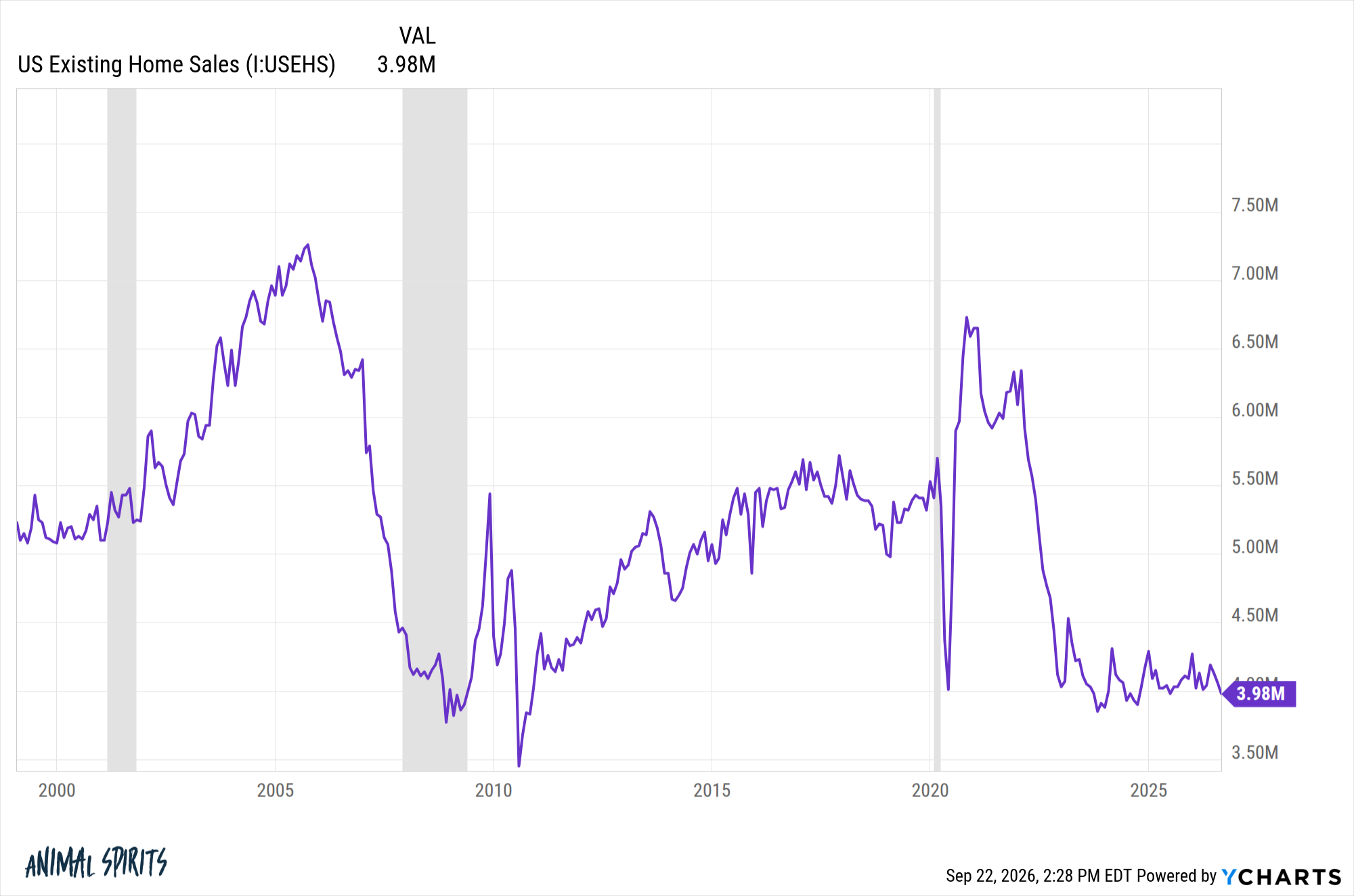
Ultimately, the post-2020 housing market serves as a masterclass in market mechanics. It demonstrates that massive price appreciation, driven by demographic demand, structurally low inventory, and disciplined lending, can occur without devolving into a speculative bubble. While affordability challenges persist, the structural integrity of the American housing market proved remarkably durable against historic economic shocks.
Disclaimer: This content, which contains security-related opinions and/or information, is provided for informational purposes only and should not be relied upon in any manner as professional advice, or an endorsement of any practices, products, or services. Readers should consult their own advisors regarding legal, business, tax, and other related matters concerning any investment decisions. Past performance is not indicative of future results.