Scaling the Mountain: Is the “Slow and Steady” Real Estate Strategy Obsolete?
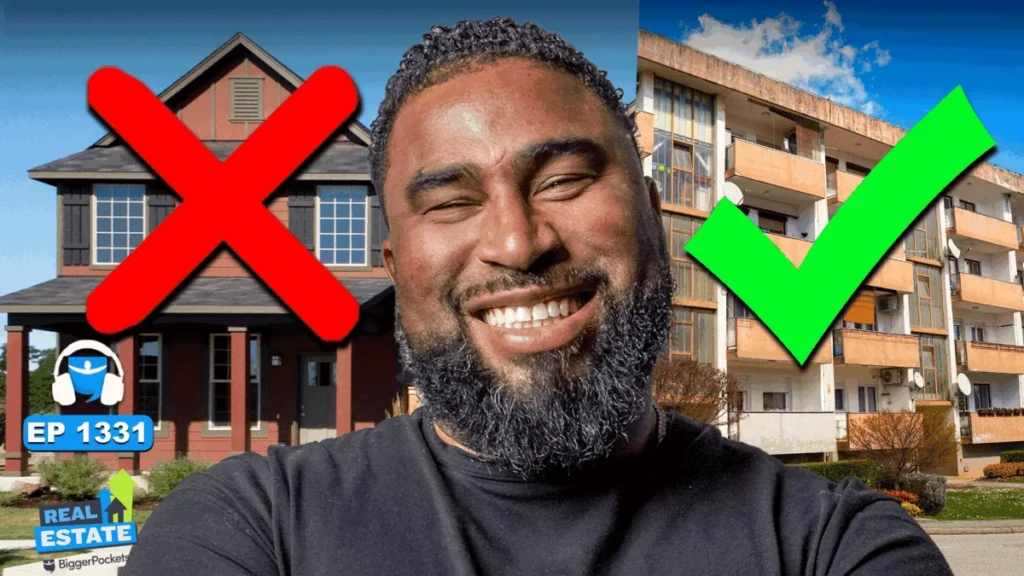
For decades, the standard playbook for aspiring real estate investors has remained remarkably consistent: purchase a single-family home, navigate the challenges of property management and basic maintenance, build equity, and eventually graduate to small multifamily units. It is the “crawl-walk-run” philosophy—a rite of passage designed to minimize risk while teaching the fundamental mechanics of the trade.
But in an increasingly competitive market, a new generation of investors is challenging this conventional wisdom. They are asking: Why spend years in the minor leagues when you have the capital and the ambition to jump straight into a 16-unit apartment complex?
In a recent session of the BiggerPockets podcast, host Henry Washington and guest expert Chauncey Pham—a veteran investor and brokerage owner—tackled this debate head-on. The discussion revealed a stark divide in philosophy: one side advocates for the safety of incremental growth, while the other suggests that "slow and steady" is merely a form of groupthink for those afraid to scale.
The Great Debate: Skipping the Starter Home
The fundamental dilemma presented by listener Nekesh from Charlotte is one of opportunity cost versus risk. With enough capital to potentially acquire a 16-unit property, Nekesh wondered if starting with a single-family home was a waste of time.
The Case for the "Big Leap"
Chauncey Pham, who has spent over a decade mastering the Dallas-Fort Worth market, argues that the "crawl-walk-run" mentality is often a product of risk-averse voices in online forums.
"If you have the resources, the liquidity, and an understanding of the risk involved in a 16-unit acquisition, then do it," Pham argues. According to Pham, purchasing a larger asset allows an investor to secure a commercial loan, achieve economies of scale, and bypass the exhausting process of accumulating 16 individual single-family properties one by one. Her stance is clear: if the math works and the systems are in place, there is no inherent moral requirement to start small.
The Case for "Bumps and Bruises"
Henry Washington offers a more cautious counterpoint. While acknowledging that multifamily units offer greater profitability, he warns that "one bad deal at that size could totally wipe you out."
Washington emphasizes that for the uninitiated, the complexity of a 16-unit building—ranging from tenant relations to large-scale renovations—is exponentially higher than a single-family home. His recommendation is not necessarily to spend years in single-family rentals, but to use that first, smaller deal as a "lab" to discover one’s strengths and weaknesses before taking on the massive financial liability of a commercial complex.
Strategy for the Young Investor: Navigating Capital Constraints
The conversation shifted to a 19-year-old listener with $20,000 in savings and a background in construction. He is looking for a path toward long-term wealth that minimizes the risk of total failure.
The Power of Skills
Pham suggests that at 19, failure is "the cheapest it will ever be." However, she advises against rushing into an investment property. Instead, she advocates for a strategy that leverages his construction expertise:
- Wholesaling: Identify deals for other investors to generate quick assignment fees.
- Vertical Integration: Offer his construction services to fix up the properties he wholesales.
- Capital Stacking: By accumulating fees and construction profits, he can grow his $20,000 reserve into $100,000, significantly de-risking his eventual entry into the ownership market.
Washington, while agreeing with the value of construction skills, remains a proponent of "house hacking." He argues that by living in a unit while renting out the others, a young investor can drastically reduce living expenses—the ultimate form of capital preservation—while learning the intricacies of property management.
The Art of the Renovation: Transparency vs. Strategy
A perennial source of tension in real estate is the relationship between investors and contractors. Listener Ali from Houston asked a pointed question: Should you reveal your budget to a contractor before they bid?
The "Design First" Requirement
Pham, who runs a construction company, argues that the budget is secondary to the "scope of work." She notes that investors often get frustrated when costs balloon, but this is usually because they lack a finalized design.
"Investors often have wine taste and beer money," Pham noted. If you don’t define whether you want a vessel sink or an undermount sink, you cannot expect an accurate bid. Her advice is to be transparent about the budget only after a highly detailed scope of work is finalized.
Washington adds that honesty breeds honesty. In his experience, showing a contractor the budget acts as a roadmap rather than a target for price-gouging. If a contractor knows the constraints, they can advise on where to trim costs to ensure the project remains profitable.
The Essential Ecosystem: Who Should Be on Your Team?
When asked which professional is most critical to an investor’s success, the panel offered distinct perspectives:
- The Project Manager (Pham’s Pick): Pham favors a project manager who is also a licensed realtor. By incentivizing them with a percentage of the savings under budget, she ensures her team’s goals are perfectly aligned with her own bottom line.
- The Investor-Friendly Agent (Washington’s Pick): Washington views the real estate agent as the "hub" of the wheel. A good agent doesn’t just show houses; they provide access to contractors, lenders, and off-market deals that are otherwise inaccessible.
- The CPA/Bookkeeper (The Overlooked MVP): Both agreed that the accountant is the most under-utilized asset. Without clean bookkeeping and P&L statements, an investor is essentially flying blind.
The License Debate: Is it Worth It?
One of the most contentious topics in the real estate world is whether an investor should obtain their real estate license.
The Consumer Perspective
Pham is a firm proponent of getting the license. She argues that the greatest weakness of most investors is that they treat real estate like a math problem on a spreadsheet, forgetting that they are creating a product for a human consumer. Becoming an agent provides invaluable insight into consumer psychology, which leads to better-designed, more marketable properties.
The Distraction Factor
Washington offers a word of warning: for many, "getting licensed" becomes a form of procrastination. "You don’t need to do that; just go do a deal," he suggests. While he concedes that the knowledge is helpful, he fears that aspiring investors use education as a shield against the reality of the market.
Implications: The Reality of Entrepreneurship
The session concluded with a stark reality check for those entering the brokerage space. Listener Sophia noted that she felt "let down" by her brokerage’s lack of training.
Pham, in a moment of brutal honesty, compared a brokerage to a "strip mall." The brokerage provides the space, the legal umbrella, and the administrative support, but it is not a business school. "Your brokerage sells agents; agents sell houses," she reminded listeners.
The implication is clear: the path to wealth in real estate is not through institutional hand-holding or finding the perfect mentor who will gift you leads. It is through personal accountability. Whether you start with one single-family home or a 16-unit complex, the principles remain the same:
- Understand your scope of work.
- Build a team that is incentivized by your success.
- Accept that you are the CEO of your own enterprise.
For the modern investor, the era of the "safe, slow path" is not necessarily over, but it is no longer the only route to the summit. Success now demands more than just patience; it requires high-level business acumen, rigorous networking, and the courage to take calculated risks while everyone else is still waiting for the perfect time to start.