The Great Climate Paradox: Why Economic Injustice Threatens the Global Green Transition
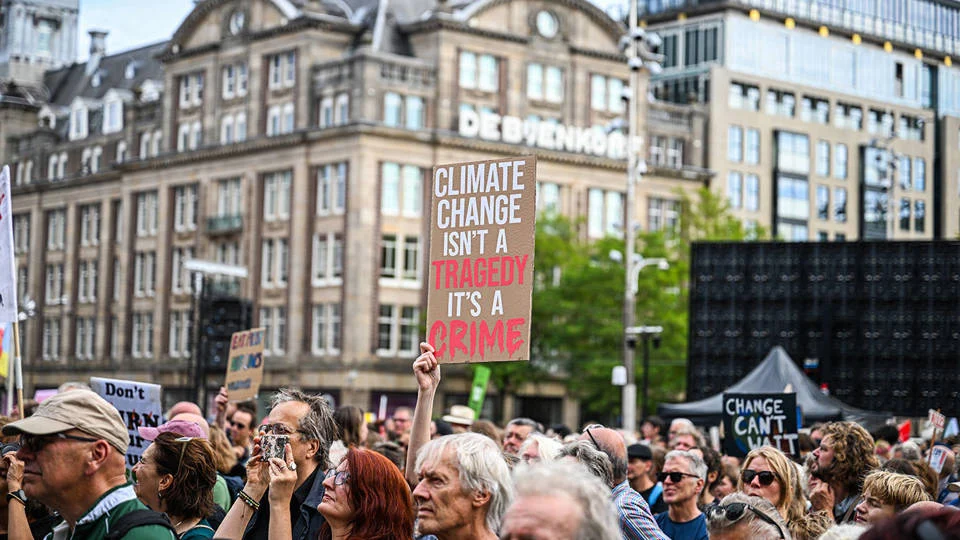
NEW DELHI / STOCKHOLM — At the epicenter of modern geopolitical discourse lies a profound and dangerous contradiction: an overwhelming global majority of citizens desperately want their governments to take decisive action against climate change, yet voters across many of the world’s largest economies are increasingly throwing their weight behind political factions that actively deny, delay, or downplay the ecological crisis.
This widening chasm between public environmental consciousness and electoral outcomes is not merely a failure of political communication. Instead, it is the symptom of a much deeper, systemic malaise rooted in widespread economic insecurity, institutional decay, and a pervasive, well-founded sense of economic unfairness.
New data from a comprehensive international study highlights that unless political leaders fundamentally restructure how green transitions are financed and implemented—ensuring that the ultra-wealthy and major corporate polluters bear the heaviest financial burdens—the mandate for climate action will inevitably fracture.
1. Main Facts: The Anatomy of the Global Climate Paradox
The core tension driving modern climate politics is the friction between existential ecological threats and immediate, desperate economic survival. While scientists warn of irreversible tipping points, everyday citizens are caught in a daily struggle against rising costs of living.
According to a landmark survey conducted by Ipsos for the global initiative Earth4All, economic anxiety is at a fever pitch. The survey, which polled 13,516 individuals across 17 major economies (comprising G20 members plus Sweden, but excluding China, Russia, and Saudi Arabia), revealed that four in ten people fear their households will be entirely unable to afford basic human needs within the next 12 months. In developing and lower-income nations, this insecurity is even more acute, shaping a lens through which all top-down government mandates are viewed.
This anxiety unfolds against a backdrop of staggering wealth concentration. Earlier this year, as the staggering accumulation of wealth reached historic milestones—symbolized by figures like Elon Musk briefly touching trillionaire status—ordinary families faced stagnant wages, crumbling public services, and inflationary pressures.
Consequently, public support for climate policies is heavily conditional. While a slim majority (54%) across the surveyed countries support aggressive government intervention to slash greenhouse gas emissions even if it causes short-term price hikes, this backing drastically erodes among lower-income demographics and right-leaning voters globally. People are unwilling to finance a green transition when they feel the existing economic model is fundamentally rigged against them.
2. Chronology: Four Decades of Broken Promises and Institutional Erosion
To understand how global societies arrived at this precarious juncture, it is necessary to examine the historical trajectory of neoliberal economic policies over the last forty years.
The Neoliberal Era and the Trickle-Down Fallacy (1980s–2000s)
For roughly four decades, mainstream economic policy in the West and much of the developing world was dominated by deregulation, privatization, and the unwritten promise of "trickle-down" economics—the theory that enriching corporations and high earners would organically benefit all strata of society. Throughout the 1980s and 1990s, governments steadily dismantled labor protections, weakened unions, and rolled back state investments in public housing, infrastructure, and social safety nets.
The Great Financial Crisis and the Socialization of Risk (2008–2010s)
The systemic vulnerabilities of this model were brutally exposed by the 2008 global financial crisis. When reckless financial speculation nearly collapsed the global economy, governments rushed to bail out Wall Street and major financial institutions using public funds. The aftermath cemented a cynical reality in the public consciousness: corporate profits were aggressively privatized, while catastrophic financial risks were socialized onto the backs of taxpayers. Austerity measures followed, hitting public health, education, and social welfare programs, while the ultra-wealthy rapidly recovered and surpassed pre-crisis fortunes.
The Contemporary Legitimacy Crisis (2020s–Present)
Today, citizens who bore the brunt of past economic shocks are being asked by the very same governments to trust assurances that the green transition—a massive, far-reaching societal overhaul—will be equitable. Having experienced decades of broken promises, the public views these assurances with profound skepticism. The erosion of social trust has reached a tipping point, leaving democratic institutions ill-equipped to spearhead complex, multi-decade transformation projects.
3. Supporting Data: What the Earth4All Survey Reveals
The Earth4All and Ipsos survey provides empirical weight to the crisis of legitimacy facing modern nation-states. The data paints a clear picture of a global populace that recognizes structural corruption within contemporary capitalism:
- 70% of respondents believe that economic inequality within their respective countries has risen to unacceptable, excessive levels.
- 65% explicitly state that the global economic system is "rigged to benefit the rich and powerful."
- More than two-thirds of participants demand sweeping, fundamental changes to the economic architecture, contrasted with a mere 8% who believe the current system functions adequately.
- 67% of individuals feel their societies are significantly more socially and politically polarized than they were ten years ago.
- 71% identify severe political polarization—hostility between supporters of opposing political parties—as the most profound societal divide, overshadowing economic, racial, or climate-focused fractures.
- 31%—fewer than one in three people—express trust that their national governments are capable of making long-term policy decisions that will benefit the majority over a 20- to 30-year horizon.
- 40% of respondents globally suggest their nation would be better governed by a "strong leader" who operates unconstrained by parliaments, checks, balances, and elections. Alarmingly, in several pivotal middle-income democracies—including India, Indonesia, South Africa, and Brazil—this sentiment commands a majority of over 50%.
Despite these authoritarian leanings born of desperation, commitment to democracy persists on paper: 68% still agree that free and fair elections remain the optimal way to govern a nation. However, the report cautions that democratic survival is contingent on tangible material outcomes.
4. Official Responses and Analytical Perspectives
Policy experts, sociologists, and international economists have begun sounding the alarm, urging a radical pivot in how climate strategies are framed and financed.
Progressive economists emphasize that fighting climate change can no longer be marketed purely as an existential environmental duty divorced from material class realities. When carbon taxes or energy efficiency mandates raise utility bills without shielding vulnerable households, they act as regressive levies that punish the poor while sparing corporate polluters.
International climate diplomats note that political pushback—exemplified in the United States by the deliberate dismantling of federal climate frameworks under figures like Donald Trump—finds fertile ground precisely because working-class voters feel alienated by policies crafted by urban elites.
"You cannot preach decarbonization to someone who cannot afford to heat their home this winter," noted one senior European policy analyst. "When major corporations and high-emitting billionaires are permitted to maintain business-as-usual while the working class is handed the bill for solar panels and electric vehicles, the social contract breaks down completely."
Think-tank leaders contributing to the Earth4All findings argue that governments must abandon the strategy of attempting to "manufacture consent" through green PR campaigns. Instead, they must actively redesign economic policy so that decarbonization directly improves the daily standard of living for the bottom 50% of earners.
5. Implications: Rebuilding the Social Contract for Survival
The implications of the Earth4All findings extend far beyond environmental policy; they strike at the heart of the survival of representative democracy and global stability.
If governments fail to address the underlying drivers of economic insecurity, the political backlash will only intensify. Voters will continue to gravitate toward populist, nationalist, or anti-establishment leaders who exploit legitimate grievances, often by scapegoating marginalized groups or denying ecological realities altogether.
To reverse this trajectory, policymakers must embrace a transformative agenda built on three foundational pillars:
- Immediate Material Relief: Green policies must be deliberately structured to lower household bills. Expanding access to cheap, localized renewable energy, retrofitting low-income housing for energy efficiency, and subsidizing public transit must take precedence over market-based mechanisms that disproportionately burden consumers.
- Decent, Secure Jobs: The transition away from fossil fuels must incorporate robust, guaranteed labor transitions. Workers in traditional energy sectors must be provided with union-backed, well-paying jobs in green industries, ensuring that decarbonization is synonymous with regional economic renewal rather than rust-belt devastation.
- Progressive Taxation and Accountability: The costs of the climate transition cannot be socialized while profits remain private. Governments must implement aggressive wealth taxes, close corporate tax loopholes, and enforce strict polluter-pays principles. The largest corporate emitters and ultra-wealthy individuals must bear the financial brunt of restructuring global infrastructure.
Ultimately, democracy’s viability depends on its ability to deliver security, dignity, and a shared stake in the future. The climate mandate will only endure if the transition is demonstrably, unequivocally fair. When public investments secure jobs, clean energy lowers the cost of living, and the most affluent pay their fair share, public resistance will dissolve—paving the way for a resilient social contract capable of weathering the crises of the 21st century.