The $750 Billion Gamble: JPMorgan Chase’s Massive Bet on the Future of American Housing
In a landscape defined by economic uncertainty, shifting interest rates, and a palpable "wait-and-see" attitude from prospective buyers, America’s largest financial institution is making a definitive statement. JPMorgan Chase has announced a staggering $750 billion capital deployment strategy aimed at the housing market through 2035. This initiative, part of the firm’s expanded "American Dream Initiative," represents a 40% increase over the bank’s housing capital deployment from the previous decade, signaling a robust long-term confidence in the stability and necessity of the U.S. real estate sector.
As the market grapples with the lingering effects of high inflation and the Federal Reserve’s monetary tightening, this massive injection of liquidity serves as a polarizing beacon for investors. Is this a calculated signal that the market has bottomed out, or is it a defensive play to corner the market on essential infrastructure?
The Current State of the Market: A Mid-2026 Assessment
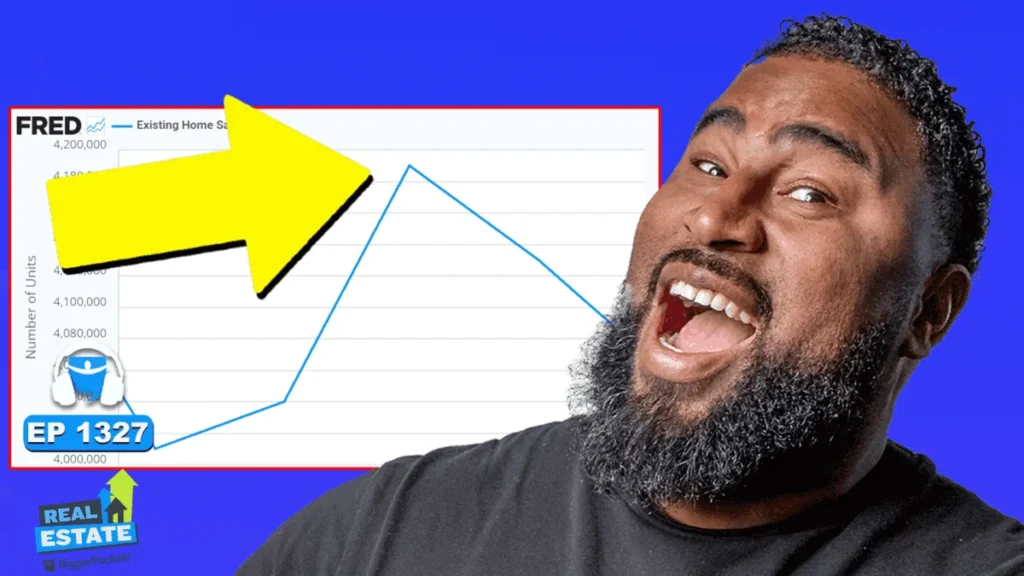
To understand why JPMorgan’s commitment is drawing such significant attention, one must first analyze the current climate. As of August 2026, the national housing market is showing distinct signs of fatigue. Data indicates that existing home sales dipped 1.7% in July to a seasonally adjusted annual rate of 4.06 million. Despite this cooling in volume, median home prices have reached a record high of $434,000—marking the 37th consecutive month of year-over-year price appreciation.
This "stagnant-but-expensive" paradox has created a fractured landscape. Industry experts note a clear bifurcation: while entry-level and first-time buyer activity has slowed significantly due to affordability constraints, the luxury sector remains remarkably resilient. Investors and developers are reporting that, while traditional home flips are sitting on the market longer, "ugly" or outdated, well-maintained properties are moving with surprising velocity. This suggests that buyers are prioritizing affordability and customization potential over turnkey, high-end renovations.
Chronology of the Recent Market Shift
- Early 2026: Market analysts began noting that the post-pandemic housing surge was losing momentum as mortgage rates held steady at elevated levels.
- June 2026: Federal Reserve policy remained restrictive, keeping borrowing costs high and discouraging marginal buyers.
- July 2026: Existing home sales data showed a clear downward trend, confirming that the "hot" summer season was cooling faster than historical averages.
- August 12, 2026: The release of the Consumer Price Index (CPI) provided a glimmer of optimism, showing inflation slowed to an annual rate of 3.4% and core CPI at 2.5%, the lowest since the post-pandemic surge.
- Late August 2026: JPMorgan Chase formally outlined its expanded $750 billion housing commitment, triggering a broader conversation about institutional confidence in the asset class.
Supporting Data: Why the "Big Bet" Matters
JPMorgan’s $750 billion strategy is not merely a single-lane investment. The bank’s approach is categorized into three specific "buckets," each designed to bolster different segments of the housing ecosystem:
- Development Financing: Providing liquidity to developers to increase the supply of multi-family and apartment units, addressing the chronic supply shortage that has kept rental prices elevated.
- Mortgage Expansion: Scaling up mortgage originations to facilitate homeownership for a broader segment of the population, effectively betting on the long-term creditworthiness of American households.
- Affordable Housing Funds: Deploying capital directly into equity and debt funds focused on affordable housing, a move that provides both a social impact and a defensive investment hedge.
From a macroeconomic perspective, this move mirrors the actions of other institutional giants. Berkshire Hathaway has been increasing its presence in the homebuilder space, and various international entities continue to acquire large portfolios of American real estate. For the average investor, this trend is a "north star." As seasoned investors like James Dainard and Kathy Fettke have noted, institutional money rarely bets on a sector it believes is headed for a systemic collapse. Instead, these moves signal an expectation of market stability and a long-term demand curve that remains fundamentally undersupplied.
Official Perspectives and Expert Analysis
The sentiment among market operators is a blend of cautious optimism and strategic pivoting. During a recent analysis on the On the Market podcast, industry veterans highlighted the importance of "following the money."
"When you see a bank of this size deploying that much capital, they aren’t predicting a 20% drop in asset values," noted James Dainard. "They are predicting stability. If they believed the assets would be worth significantly less in three years, they would not be aggressively financing first-time homebuyers."
However, the reality for operators on the ground remains nuanced. While the institutional view is "big picture," the local experience is dictated by "zip code velocity." Developers are finding that they can no longer rely on a "flip and forget" model. Success now requires a deep understanding of local demand, with a focus on reducing holding costs—often through refinancing into Debt Service Coverage Ratio (DSCR) loans—and identifying distressed opportunities from builders who are struggling to maintain their price points.
The Federal Reserve and the Inflation Variable
The CPI report released in mid-August was a turning point for investor sentiment. With annual inflation cooling, the market’s probability of the Federal Reserve maintaining current interest rates—rather than hiking them—jumped to over 60%.
This is the "spinach" that investors need to sustain their confidence. The primary fear for the last two years has been runaway inflation leading to unpredictable, aggressive rate hikes. If the Fed can achieve a "soft landing" or at least a period of rate stability, the volatility that has paralyzed many buyers will subside.
"When inflation is high, and gas is seven dollars a gallon, the average consumer freezes," says Kathy Fettke. "They don’t make decisions. But when they see even a modicum of stability in the grocery store or the gas pump, their confidence returns."
Implications: What Does This Mean for You?
For the individual investor, the entry of JPMorgan into the housing market with such massive capital creates three distinct implications:
1. The Death of the "Easy Flip"
The era of buying any property at a discount, applying a basic renovation, and selling it for a premium is effectively over. The market is currently rewarding those who provide value in the form of affordability. Properties that are "clean and livable" are currently outperforming highly renovated flips because they allow buyers to enter the market at a lower price point. Investors must pivot their strategies to match this reality.
2. A Shift Toward Buy-and-Hold
With selling becoming more complex and costly due to high interest rates, the buy-and-hold strategy is seeing a resurgence. New construction is becoming increasingly attractive for these investors, as builders are often willing to offer deep discounts or rate buydowns to move inventory without ruining their public-facing price comps. For those looking for long-term cash flow, the current climate offers a rare opportunity to acquire high-quality, new assets at below-replacement costs.
3. The Need for Hyper-Local Data
Investors can no longer rely on national headlines to dictate their decisions. The "doom and gloom" reported in national news often fails to capture the pockets of velocity present in specific neighborhoods. Investors should be analyzing their target markets in 10% price blocks to identify where the buyers are actually active.
Conclusion: A Bullish Long-Term Outlook
JPMorgan Chase’s $750 billion commitment is a massive vote of confidence in the American dream. While the current market is undoubtedly "flat" and challenging, it is not a repeat of 2008. The fundamentals—a lack of housing inventory and a persistent demand for shelter—remain intact.
For the active investor, the message is clear: stop waiting for the perfect market conditions. The institutional players are not waiting; they are positioning themselves to capitalize on the stability that follows a period of high inflation. By focusing on debt management, targeting the right price points, and prioritizing affordable housing models, individual investors can navigate the current turbulence. The market is not "dead"; it is simply evolving. Those who adapt to the needs of the modern consumer—rather than clinging to the strategies of the past—will be the ones thanking themselves in the years to come.