The Great Rebalancing: Why China’s Industrial Strategy is Shattering the Post-War Trade Consensus
By Jean-Pierre Landau and Sébastien Jean
July 23, 2026
The global economic architecture, long predicated on the assumption that trade liberalization would inevitably lead to mutual prosperity and macroeconomic equilibrium, is facing an existential stress test. As trade deficits widen and industrial corridors in the West face renewed stagnation, the narrative of "global imbalances" has returned to the forefront of international policy. However, this is not merely a cyclical fluctuation or a failure of central bank coordination. We are witnessing the arrival of what analysts are calling the "Second China Shock"—a structural transformation that signals a definitive departure from the post-World War II commitment to open markets.
The Core Phenomenon: Understanding the Second China Shock
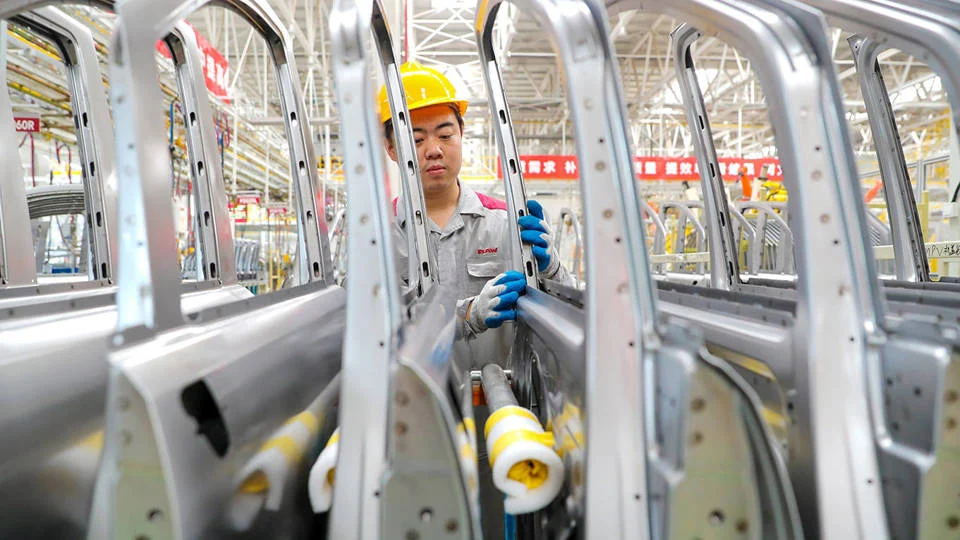
The contemporary global economy is grappling with a paradox: while the world is more interconnected than ever, the mechanisms for balancing trade have become increasingly dysfunctional. At the heart of this friction is China’s manufacturing juggernaut. Unlike the initial surge in the early 2000s, which was characterized by China’s integration into low-end global supply chains, the current "Second China Shock" is driven by a deliberate, state-led push into high-value-added sectors, including electric vehicles (EVs), advanced semiconductors, and green energy infrastructure.
China’s industrial exports have reached unprecedented levels, while its domestic import demand has stagnated. This decoupling—where a nation’s export engine accelerates while its consumption engine remains in neutral—has created a yawning trade surplus that is no longer just a national policy goal for Beijing; it is a source of global systemic instability.
A Chronology of the Disconnect
To understand how we reached this impasse, one must trace the timeline of the shifting global trade order:
- 2001–2010: The Integration Era. China’s accession to the World Trade Organization (WTO) fueled a rapid expansion of the global economy. Imbalances were present, but they were largely absorbed by the flexibility of Western capital markets and the voracious appetite of Western consumers.
- 2015–2018: The Pivot to "Made in China 2025." Beijing formally shifted its industrial policy from being a "factory to the world" to an "innovator for the world." This marked the beginning of state-directed subsidies for advanced technologies, which began to crowd out international competitors.
- 2020–2023: The Pandemic Disruption. COVID-19 exposed the vulnerabilities of just-in-time supply chains. China’s "Zero-COVID" policy and subsequent reopening led to a massive expansion of domestic manufacturing capacity, specifically designed to achieve self-sufficiency in critical tech.
- 2024–2026: The Era of Strategic Realignment. We are currently in a phase where trade is being weaponized. The U.S. and the European Union, fearing the hollowing out of their own industrial bases, have begun implementing aggressive tariff regimes and subsidy programs, effectively abandoning the spirit of the Washington Consensus.
Supporting Data: The Scale of the Imbalance
The numbers tell a sobering story. China’s current account surplus has expanded to levels not seen since the pre-2008 financial crisis.
- Export Saturation: Data from the first half of 2026 indicates that China’s output in key sectors, such as solar panels and EV batteries, now exceeds the total domestic demand of the entire OECD combined.
- Import Stagnation: Despite a massive manufacturing base, China’s imports of high-end machinery and consumer goods from Western partners have seen a steady decline in volume, suggesting a deepening "import substitution" policy.
- The Investment Gap: While global foreign direct investment (FDI) into China has plummeted due to geopolitical risk, Chinese investment in outward manufacturing hubs (the "Belt and Road" industrial zones) has surged, effectively exporting their excess capacity to third-party markets to circumvent tariffs.
This data suggests that China is not playing by the rules of comparative advantage. Instead, it is playing by the rules of "strategic dominance," where the goal is not to trade for mutual benefit but to achieve a monopoly in the technologies that will define the next century.
Official Responses and the Policy Tug-of-War
The response from Western capitals has been fractured but increasingly assertive.
The Washington Approach
In Washington, the consensus is that the post-Cold War era of "engagement" is dead. The implementation of the Inflation Reduction Act (IRA) and the CHIPS Act serves as a defensive wall, designed to decouple critical technology sectors from the Chinese sphere. Treasury officials have increasingly voiced concerns that China’s subsidies create "overcapacity," which forces domestic producers in the U.S. to shutter operations.
The Brussels Dilemma
The European Union finds itself in a more precarious position. Caught between a security alliance with the U.S. and a deep commercial dependence on the Chinese market, Brussels has adopted a policy of "de-risking." However, the recent imposition of countervailing duties on Chinese EVs has signaled that the EU is losing patience with what it terms "distorted competition."
Beijing’s Stance
Beijing maintains that its policies are purely aimed at "high-quality development" and that Western complaints are merely protectionism disguised as economic security. Chinese officials argue that their manufacturing efficiency is a result of years of infrastructure investment and labor productivity, not just subsidies.
Implications: The End of the Open Order?
What are the long-term implications for the global economy? We are moving toward a fractured system defined by three primary risks:
1. The Rise of "Fortress Economies"
As nations prioritize security over efficiency, the global economy is likely to fragment into regional blocs. This will inevitably increase costs for consumers, as the benefits of global specialization are replaced by the higher price points of domestic production.
2. The Inflationary Bias
For decades, global trade acted as a deflationary force, keeping prices low through the optimization of supply chains. As we pivot to "friend-shoring" and "reshoring," the global economy faces a long-term inflationary tailwind. We are effectively paying a "security premium" on every product we buy.
3. The Threat to Multilateralism
The WTO is currently a shell of its former self. With major economies opting out of the dispute settlement process in favor of unilateral sanctions, we risk a return to the "beggar-thy-neighbor" policies of the 1930s. Without a neutral arbiter to resolve trade disputes, global imbalances will increasingly be settled through power dynamics rather than economic principles.
Conclusion: A New Macroeconomic Reality
The "Second China Shock" is not a temporary glitch; it is a fundamental shift in how the world economy functions. For years, policymakers operated under the assumption that trade imbalances would self-correct through currency fluctuations or shifting demand. Today, those mechanisms are inhibited by political constraints and industrial strategies that prioritize national power over global efficiency.
The challenge for the next decade is not simply to "fix" trade deficits, but to define a new framework for coexistence. If the world fails to establish a new set of rules—one that acknowledges the role of state-led capitalism while protecting the integrity of open markets—we are destined to repeat the mistakes of the past. The era of globalization, as we knew it, has concluded. A more guarded, competitive, and precarious era has begun.
For the global economy to survive this transition, leaders must move beyond the rhetoric of "fair trade" and begin the difficult work of reconciling competing models of capitalism. Anything less will result in a global economy that is not only less productive but significantly more volatile.