Global Economic Currents and Societal Shifts: A Mid-2026 Perspective
Posted July 15, 2026, by Ben Carlson
The financial landscape in mid-2026 is a complex tapestry woven with record-breaking market highs, transformative technological advancements, and significant shifts in consumer behavior and public health. As highlighted in the latest "Animal Spirits" discussion, investors and policymakers alike are grappling with unprecedented dynamics, from the burgeoning strength of the global stock market to the surprising trajectory of AI’s impact on employment, and the rapid adoption of new medical breakthroughs.
This analysis delves into the key facts, chronological developments, and far-reaching implications of these intertwined trends, drawing insights from leading financial analysts, tech visionaries, and economic data.
Main Facts: A Snapshot of Mid-2026
The past few weeks have presented a vibrant, albeit multifaceted, picture of the global economy:
- Market Resilience Beyond Tech: The S&P 500 Ex-Technology Index has achieved new all-time highs, signaling broad market strength extending beyond the dominant technology sector. This is further corroborated by fresh all-time highs in the Advance-Decline Lines across the S&P 500, S&P 400, and S&P 600, indicating robust market breadth.
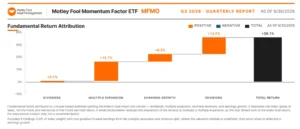
- Momentum Shift: Despite the overall bullish sentiment, the "momentum factor" experienced one of its largest three-week sell-offs on record, suggesting a rotation within investment styles or a re-evaluation of high-flying growth stocks.
- Equities as the Economic Backbone: U.S. household exposure to equities has reached an all-time high, with the stock market now constituting a significantly greater component of total household net worth than real estate. This has led to the compelling argument that "the stock market is the economy," and potentially a critical backstop for social security.
- AI’s Surprising Employment Impact: Contrary to widespread fears, AI has, so far, appeared to be a net job creator, according to tech industry leaders like Sam Altman. However, some economists posit that recent job growth in professional and business services is more a "Pandemic overhiring bullwhip/normalization" effect than a direct consequence of AI.
- Technological Leap: Meta launched Muse Spark 1.1, a powerful new agentic and coding AI model, intensifying the competitive landscape in artificial intelligence.
- Wage Growth Convergence: After-tax wage growth for lower-income households has improved to similar levels as higher-income households, suggesting a potential narrowing of income disparities.
- GLP-1 Medication Surge: The adoption of GLP-1 medications for weight loss has dramatically increased, with 11% of U.S. adults currently using them, up from 3% in 2024.
- Streaming Content Challenges: Audience retention for major streaming platforms like Netflix is proving challenging, with significant drops between seasons for some high-profile shows, contrasting with the sustained success of others like HBO’s "The Last of Us."
- China’s Semiconductor Ascent: China’s semiconductor industry continues its rapid expansion, emerging as one of the fastest-growing global segments, fostering an "empire" of domestic chip production.
Chronology: Key Developments in Early July 2026
The first half of July 2026 has been marked by a series of significant announcements and data releases that paint a dynamic picture of global markets and society:
July 6, 2026:

- Anish Moonka’s analysis on streaming audience retention surfaced, highlighting a stark contrast between Netflix’s declining viewership for shows like "Avatar" and "Beef" (losing 59% and 58% of audiences, respectively) and HBO’s "The Last of Us," which returned after a two-year hiatus with increased viewership. This underscored the evolving challenges in content strategy and subscriber loyalty in the fiercely competitive streaming wars.
July 7, 2026:
- Eric Balchunas, a prominent market analyst, published a widely discussed note arguing that the U.S. stock market has become "too big and too important to fail." He posited that the market is now effectively "America’s retirement fund" and could even serve as a "savior of social security," which faces long-term funding challenges. This commentary reflected growing awareness of equities’ central role in household wealth and national economic stability.
July 9, 2026:
- Mark Zuckerberg, CEO of Meta, announced the release of Muse Spark 1.1. Described as a "strong agentic and coding model at a very low price," its availability through Meta’s new Meta Model API and within Meta AI marked a significant competitive move in the rapidly accelerating AI sector, promising enhanced capabilities for developers and users.
July 10, 2026:

- Joe Weisenthal from Bloomberg articulated a powerful observation: "The stock market is the economy." His comments were spurred by charts revealing that U.S. household exposure to equities had reached record highs, making the stock market a "SIGNIFICANTLY greater component of total household net worth than real estate." This shift represents a fundamental change in how Americans accumulate and perceive wealth.
- Concurrently, Mike Zaccardi, CFA, CMT, reported on a positive economic trend: the convergence of wage growth. In June, higher-income households saw their after-tax wage growth ease to 4.2% year-over-year, while the lower-income cohort’s growth improved to a similar level. This suggested a potential rebalancing in the labor market and a more equitable distribution of recent economic gains.
July 11, 2026:
- Sam Altman, CEO of OpenAI, shared a surprising insight on the impact of artificial intelligence, stating, "so far at least, i’m pretty sure AI has been net job-creating." He admitted this was not his initial expectation, noting that "by this level of capability we’d have seen some impact," but optimistically suggested that "it is possible this direction keeps going!" His remarks offered a counter-narrative to widespread fears of AI-driven job displacement.
- However, Conor Sen offered a different perspective on job trends, arguing that the year-over-year growth in professional and business services jobs more closely resembled a "Pandemic overhiring bullwhip/normalization" effect than a direct result of AI. This highlighted the complexity of attributing labor market shifts solely to emerging technologies.
July 12, 2026:
- Kevin Gordon released findings from a Gallup survey indicating a dramatic surge in the adoption of GLP-1 medications for weight loss. The survey showed that 11% of U.S. adults currently take these medications, a substantial increase from 3% in 2024. Furthermore, 15% reported having used the medicine at some point, marking a 9 percentage point rise, underscoring a major public health and pharmaceutical trend.
July 13, 2026:
- Mike Zaccardi also noted a significant event in market mechanics: "The momentum factor had one of the largest 3-week sell-offs on record." This indicated a notable rotation or profit-taking among investors, particularly those focused on trend-following strategies.
- Alfonso De Pablos, CMT, provided positive market breadth indicators, reporting that "The S&P 500 Ex-Technology Index closed the week at new all-time highs." He further added that "The Advance-Decline Lines for the S&P 500, S&P 400, and S&P 600 have all pushed to fresh all-time highs," reinforcing the idea of a broad-based rally rather than one concentrated in a few mega-cap stocks.
Supporting Data: Unpacking the Trends
While the original article presents charts without specific descriptions, the context provided by the accompanying social media posts allows us to infer the critical data points they likely illustrate.
Market Breadth and Sector Performance
The charts would undoubtedly demonstrate the robust performance of the broader market. One chart likely depicted the S&P 500 Ex-Technology Index surging to new all-time highs. This visual evidence would underscore the narrative that market gains are not solely driven by the mega-cap tech sector, but rather by a more diversified base of companies across various industries. This suggests underlying economic strength and investor confidence that extends beyond the "Magnificent Seven" or similar tech darlings.
Another set of charts would illustrate the Advance-Decline Lines for the S&P 500, S&P 400 (Mid-Cap), and S&P 600 (Small-Cap) indices. These lines, showing the cumulative difference between the number of advancing and declining stocks, reaching new all-time highs, would visually confirm the widespread participation in the current market rally. This is a crucial indicator of market health, as broad participation suggests a more sustainable uptrend compared to one driven by a narrow set of stocks.
Conversely, a chart from Goldman Sachs, referenced by Mike Zaccardi, would have highlighted the "momentum factor" sell-off, visually representing the steep decline in stocks that have recently shown strong upward price trends. This chart would depict a sharp, downward slope over the three-week period, indicating a significant rotation out of these high-momentum assets. This could be interpreted as investors rebalancing portfolios, taking profits, or shifting towards value or other factor-based strategies.
Household Wealth and Economic Structure
Several charts would provide compelling visual evidence for Joe Weisenthal’s assertion that "the stock market is the economy" and Eric Balchunas’s "too big to fail" argument. One key chart would likely illustrate the composition of U.S. household net worth over time. This chart would show a clear divergence, with the proportion of net worth held in equities now significantly surpassing that held in real estate. The rising curve for equity holdings, reaching a record high, would underscore the increasing reliance of American households on the stock market for wealth accumulation and retirement security.
This visual would be critical to understanding the implications for national economic policy, particularly regarding social security and the stability of retirement funds.
Labor Market Dynamics
The discussion around AI and job creation would be supported by charts showing employment trends. One chart might display the overall net job creation across various sectors, attempting to isolate the impact of AI. However, Conor Sen’s counterpoint would likely be illustrated by a chart showing the year-over-year growth in professional and business services jobs. This chart would reveal a pattern consistent with a "bullwhip effect"—a sharp increase during the pandemic-driven hiring spree, followed by a period of normalization or even contraction, which he argues is distinct from direct AI-driven job displacement. The volatility and subsequent leveling off of this curve would support his interpretation.
Another chart, related to wage growth, would visually represent the after-tax wage growth for different income cohorts (higher vs. lower-income households). This chart would show two distinct lines, initially perhaps diverging or maintaining a gap, but then converging in June 2026 to similar year-over-year growth rates around 4.2%. This convergence would be a powerful visual for the narrative of improving income equality.
Public Health and Consumer Trends
The dramatic rise in GLP-1 medication usage would be depicted in a chart showing the percentage of U.S. adults using GLP-1 medications for weight loss over time. This chart would illustrate a steep upward trajectory, with a particularly sharp increase from 3% in 2024 to 11% in 2026. This stark visual would highlight the rapid societal adoption and significant market penetration of these new pharmaceuticals.
Finally, charts related to streaming audience retention would show viewer metrics for specific shows across platforms. For instance, a bar chart comparing season-to-season audience drops for Netflix titles like "Avatar" and "Beef" (59% and 58% respectively) against the audience increase for HBO’s "The Last of Us" despite a two-year hiatus, would vividly demonstrate the differing dynamics of subscriber engagement and content loyalty.
Official Responses and Expert Commentary
While no "official government responses" are directly cited, the article features influential voices from the financial and tech sectors, whose statements carry significant weight and shape public discourse.
Mark Zuckerberg’s announcement of Muse Spark 1.1 represents a strategic "official response" from Meta to the intense competition in the AI space. His emphasis on its "agentic and coding model" capabilities and "very low price" signals Meta’s intent to democratize access to advanced AI tools, potentially disrupting the market and fostering a wider ecosystem of AI development. This move is a direct response to the rapid advancements by competitors and an affirmation of Meta’s commitment to leading the AI frontier.
Sam Altman’s surprising observation about AI being "net job-creating" is a critical "official response" from a leader at the forefront of AI development. His remarks, though cautiously optimistic, provide a nuanced perspective that challenges the prevailing narrative of AI as a job destroyer. This statement, coming from the CEO of OpenAI, serves to temper anxieties and guide public perception regarding AI’s immediate economic impact, even as he acknowledges previous personal pessimism.
The analyses from financial experts like Joe Weisenthal, Eric Balchunas, Mike Zaccardi, and Alfonso De Pablos collectively form a comprehensive "official response" from the investment community to the current market conditions. Weisenthal’s "stock market is the economy" claim and Balchunas’s "too big to fail" argument reflect a growing consensus on the systemic importance of equity markets. Their views provide a framework for understanding current valuation levels and the potential political and economic ramifications if markets were to experience significant downturns.
Similarly, the detailed reports on momentum factor sell-offs, S&P 500 Ex-Technology highs, and strong Advance-Decline Lines from Zaccardi and De Pablos offer crucial "official responses" in terms of market technicals and investor sentiment. These observations are vital for professional investors and institutional clients seeking to understand the underlying mechanics and health of the current rally.
Implications: Navigating the Future Landscape
The convergence of these trends carries profound implications across economic, social, and technological spheres.
Economic Stability and Investor Strategy
The U.S. stock market’s record high exposure in household net worth suggests a stronger link between market performance and overall consumer confidence and spending. This could mean increased volatility in consumer behavior if markets falter, but also a more robust economic recovery post-downturns due to the wealth effect. The "too big to fail" narrative for the stock market implies potential government intervention or policy support in severe market crises, akin to past bailouts, to protect retirement savings and economic stability. For investors, the broad market strength (S&P Ex-Technology, A/D lines) suggests a healthy, diversified rally, but the momentum factor sell-off indicates a need for dynamic strategies and an awareness of potential rotations from growth to value or other styles. The rise of China’s semiconductor industry presents both opportunities and risks, highlighting the increasing importance of global diversification and understanding geopolitical supply chain dynamics. Investors in the VanEck China Semiconductor ETF (SMHC) are directly exposed to this burgeoning sector, underscoring a strategic shift in global tech leadership.
The Future of Work and AI Integration
Sam Altman’s observation that AI has been "net job-creating" challenges conventional wisdom and offers a more optimistic outlook on technological unemployment. This could imply that AI’s primary role, at least initially, is augmenting human capabilities and creating new roles rather than outright replacing existing ones. However, Conor Sen’s counter-argument reminds us that economic cycles and post-pandemic adjustments still play a significant role in labor market dynamics. The continued development of powerful AI models like Muse Spark 1.1 will accelerate this integration, requiring businesses and individuals to adapt. Educational institutions and workforce development programs will need to rapidly evolve to equip the labor force with the skills required for an AI-augmented economy, focusing on creativity, critical thinking, and complex problem-solving.
Societal Health and Consumer Trends
The dramatic increase in GLP-1 medication usage is a significant public health event with far-reaching implications. Beyond individual health benefits, this trend could profoundly impact the healthcare industry, pharmaceutical companies, and even the food and beverage sectors. A healthier population might lead to reduced long-term healthcare costs for obesity-related conditions, but also raise questions about equitable access and the broader societal implications of pharmaceutical interventions for lifestyle management. The convergence of wage growth, though positive for reducing income inequality, will need sustained policy support and economic growth to become a permanent feature of the labor market. In the entertainment sector, the contrasting performance of streaming shows highlights a maturing market where content quality, unique storytelling, and strong audience engagement strategies are paramount. Mere brand recognition or large budgets may no longer guarantee success, forcing platforms to innovate further in content creation and viewer retention.
In conclusion, mid-2026 is a period of dynamic evolution across multiple fronts. The robust performance of equity markets, the surprising trajectory of AI’s economic impact, and transformative shifts in public health and consumer behavior collectively present a complex but opportunity-rich environment. Understanding these interconnected trends, as explored in "Animal Spirits," is crucial for making informed decisions, whether in investment, policy, or personal well-being. The narrative is one of adaptation and strategic foresight, as global economies and societies navigate an era of accelerated change.