Beyond Aesthetics: Alibaba’s Qwen Image 3.0 Pivots Toward Enterprise Utility
The landscape of generative AI is currently undergoing a significant paradigm shift. For the past two years, the industry has been locked in an "arms race of beauty," where the primary metric for success has been the aesthetic fidelity of AI-generated art—how closely a model can mimic a photograph or how surrealistically it can render a dreamscape. However, Alibaba’s Qwen team has signaled a departure from this trend with the Tuesday launch of Qwen Image 3.0.
Rather than chasing the hyper-realistic polish seen in competitors like Midjourney or OpenAI’s DALL-E, Alibaba is positioning its latest model as a "productivity engine." The pitch is simple: for the modern professional, an image that looks beautiful but fails to communicate accurate information is useless. Qwen Image 3.0 is built to be a deployable, high-utility tool for workplaces, design studios, and educational institutions.
Main Facts: A New Definition of AI Performance
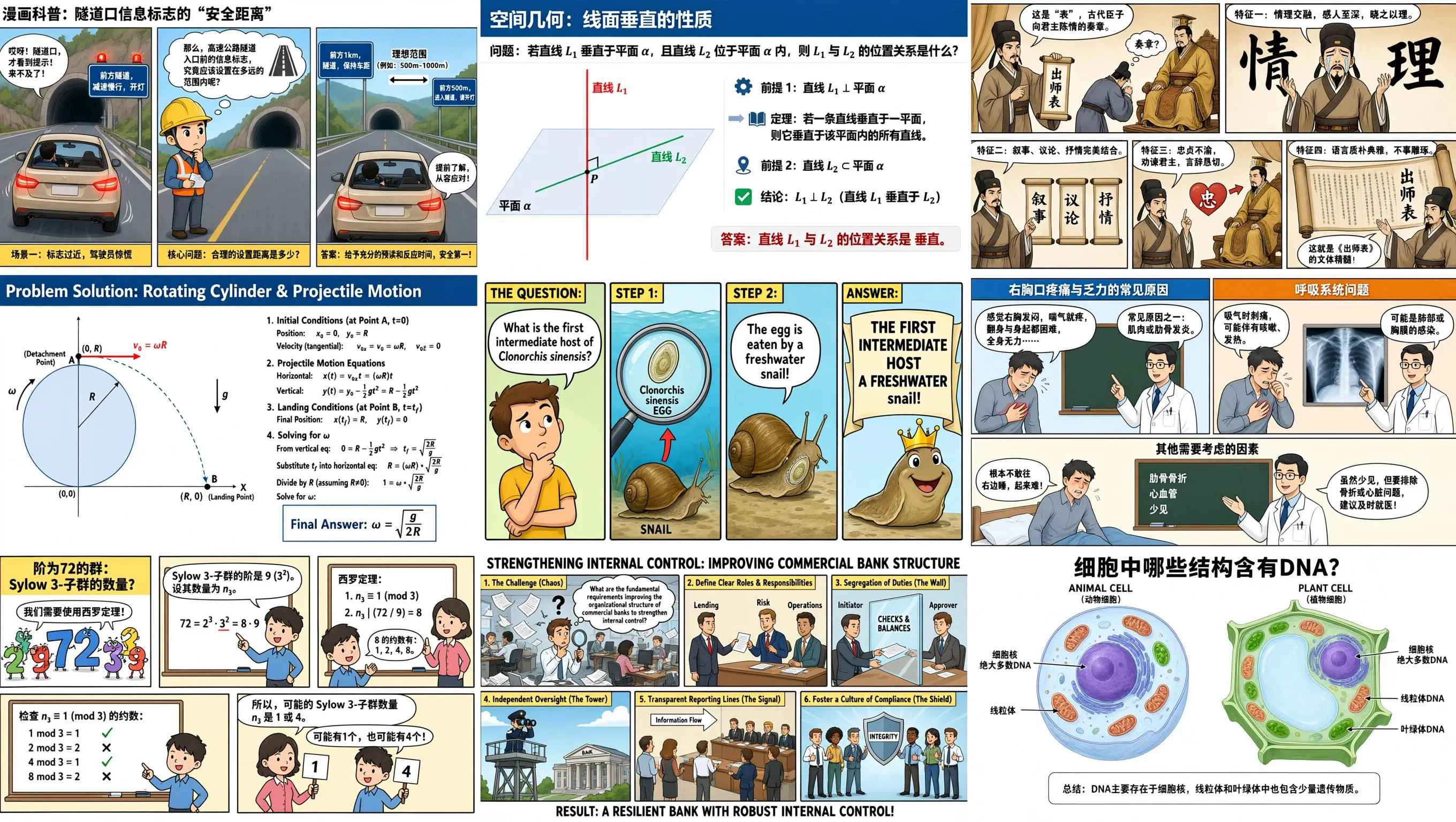
At its core, Qwen Image 3.0 is designed to handle "rich content." While most image generators struggle to render text, charts, or complex layouts without artifacts or "hallucinations," Qwen Image 3.0 utilizes an expanded context window of 4,500 tokens—a 4.5-fold increase over its predecessor. In the lexicon of LLMs and image models, tokens represent the building blocks of data; by increasing this capacity, the model can process massive, granular instructional sets that allow it to construct complex, multi-panel infographics in a single generation pass.
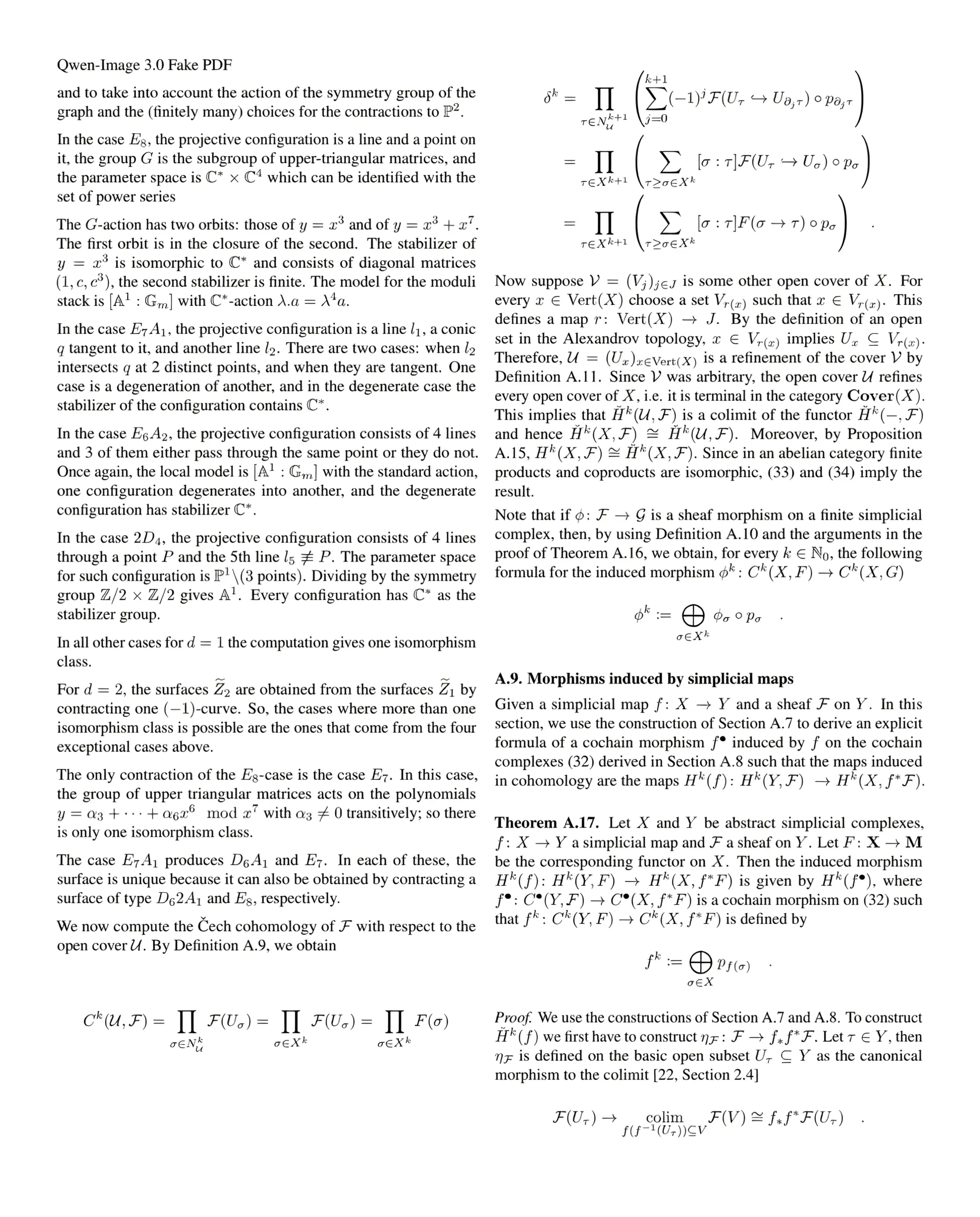
The model’s capability extends to the micro-level. It supports high-fidelity rendering for text as small as 10 pixels, making it theoretically viable for generating professional pharmaceutical labels, technical manuals, or academic mockups featuring complex LaTeX mathematical notation. By enabling native rendering across 12 languages and integrating real-time internet data, Alibaba is moving away from the "random generation" style of current AI and toward a model that behaves more like a digital draftsman.
Chronology: The Evolution of the Qwen Ecosystem
The journey to Qwen Image 3.0 is part of a broader, aggressive strategy by Alibaba to cement its dominance in the AI space.
- The Early Days (Qwen 1.0): When Alibaba first unveiled its Qwen model suite, it did so with a focus on openness. Qwen 1.0 was released with open-source weights under an Apache 2.0 license, accompanied by comprehensive technical documentation. This established trust within the developer community and set a standard for transparency.
- The Scaling Phase: As Alibaba ramped up its compute infrastructure, the focus shifted toward multimodal capabilities. The release of Qwen-Omni and subsequent iterations of the "Pro" series saw the company climbing the global leaderboards, eventually placing fifth in the rigorous Qwen-Image-Bench, a benchmark evaluating aesthetics and real-world fidelity against 18 global models.
- The Utility Pivot (July 2026): With the launch of Qwen Image 3.0, the company has explicitly moved away from the "art-first" philosophy. This release marks a strategic pivot toward enterprise software integration, focusing on speed, accuracy, and "one-shot" generation—meaning the model produces a finished product in a single prompt rather than requiring iterative "stitching" or manual post-production editing.
Supporting Data: Testing the "Utility" Hypothesis
In evaluating the model’s performance, it is necessary to look at how it handles complex, non-artistic tasks. In internal tests, the model was tasked with generating an entire infographic containing nine distinct panels. Traditional models typically fail this task by either garbling the text or struggling to maintain consistency across the panels. Qwen Image 3.0, however, renders the entire layout, complete with diagrams, formulas, and fine print, in one unified operation.
Furthermore, the model’s integration with live data serves as a distinct competitive advantage. When prompted for a weather forecast visualization, it does not rely on a hallucinated "generic" map. By fetching real-time data, it renders a graphic that is factually accurate to the requested location and timeframe.
However, the "utility" is not without its caveats. In a hands-on review, while the model successfully reproduced an entire article from Decrypt, the execution—while impressive—was not entirely flawless. Fine-print rendering, while vastly improved, occasionally suffers from slight kerning issues or character substitution in highly dense text blocks. The model is currently in a state of rapid evolution, and while it outperforms most peers in information density, it remains a tool that requires human oversight.
Official Responses and Strategic Positioning
Alibaba’s messaging regarding this release has been intentionally provocative. In their official announcement, the Qwen team explicitly stated: "Qwen-Image-3.0 is not just pursuing ‘good-looking’—it is pursuing ‘useful,’ making image generation a truly deployable productivity tool."
This statement serves as a critique of the current market. By calling out the industry’s obsession with aesthetics, Alibaba is attempting to redefine the value proposition of AI. They are courting the B2B sector—specifically e-commerce operations that need to generate product catalogs, design studios that need rapid storyboarding, and educators who need to create custom instructional materials at scale.
However, there is a notable silence regarding the technical specifications of this version. Unlike the 1.0 release, Qwen 3.0 has arrived without a detailed technical report or downloadable weights. This move has raised eyebrows among researchers and the open-source community. By keeping the model behind a proprietary API, Alibaba is shifting from an "open-science" approach to a "product-service" model. This change is reflective of the heightened competitive environment in China and the global race to monetize AI assets before the next wave of innovation renders current models obsolete.
Implications: The Future of the Creative Workforce
The arrival of Qwen Image 3.0 suggests a future where the "Prompt Engineer" is replaced by the "Visual Architect." As AI models become more adept at rendering specific layouts, text, and data, the skill set required to use them will transition from "creative intuition" to "technical instruction."
The Death of the "Stitch-Up"
For decades, professional design has relied on compositing—taking a background from one source, text from another, and a graphic from a third. Qwen Image 3.0’s ability to generate a multi-panel, content-rich image in a single pass threatens to automate the "layout" phase of design. This could drastically reduce the time-to-market for marketing agencies and content teams.
The Accuracy Gap
The most profound implication is the blurring line between "content" and "data." When an AI can accurately represent a pharmaceutical label or a complex mathematical formula, the threshold for error becomes much higher. If a user asks for a specific legal disclaimer and the AI renders it incorrectly, the liability issues for corporations will be massive. Alibaba’s push for "authentic details" suggests that they are betting on their ability to minimize these hallucinations, but the industry remains skeptical until more transparent benchmarks are provided.
The Competitive Landscape
If Qwen Image 3.0 becomes the standard for enterprise productivity, it will force companies like OpenAI and Google to reconsider their own image-generation roadmaps. Currently, DALL-E and other models are primarily used for creative or illustrative purposes. If the demand shifts toward "business-ready" generation, we can expect a flurry of enterprise-focused updates across the board.
Conclusion: A Tool for the Office, Not the Gallery
Qwen Image 3.0 is a significant milestone, not because it creates the most beautiful images, but because it is the first to prioritize the "document" over the "painting." By focusing on 10px text, LaTeX integration, and multi-panel coherence, Alibaba has successfully identified a gap in the market: the professional who needs a tool, not a toy.

While the lack of open-source documentation remains a point of contention, the model’s performance in early trials suggests that for businesses, the trade-off may be worth it. As the model moves into wider API availability, its success will not be measured by the number of likes its outputs receive on social media, but by the efficiency it brings to the desks of the people who use it. The age of the "pretty" AI image is far from over, but the age of the "useful" AI image has officially begun.