The Burnham Gambit: A Strategic Pivot for the British Economy
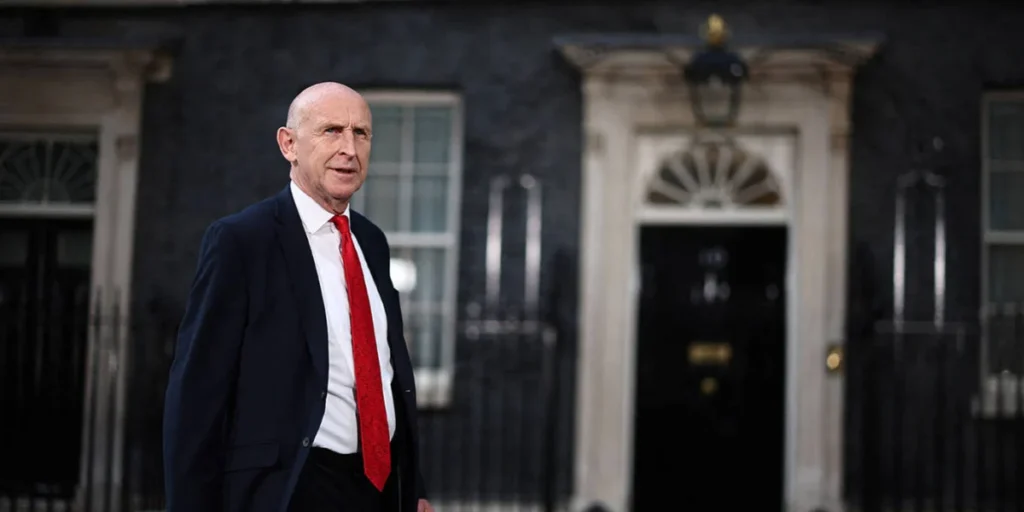
By Mohamed A. El-Erian
July 22, 2026
NEW YORK — In a move that has sent tremors through the hallowed halls of Westminster and caught global financial markets off-guard, British Prime Minister Andy Burnham has executed a maneuver that defies the conventional political playbook. By appointing John Healey, the former Secretary of State for Defence, as the new Chancellor of the Exchequer, Burnham has signaled an intention to prioritize structural reform and national resilience over the traditional, incrementalist approach to economic management.
This decision, announced earlier today, represents a calculated gamble—one that hinges on the premise that the UK’s stagnant growth trajectory requires a fundamental recalibration of the Treasury’s relationship with the wider state.
The Core Strategic Shift: Why Healey?
The appointment of John Healey is, by any standard, unconventional. Historically, the post of Chancellor of the Exchequer is reserved for individuals with deep-seated ties to the City of London, veteran parliamentarians with backgrounds in trade or industry, or seasoned economic theorists. Healey’s pedigree, by contrast, is rooted in the Ministry of Defence.
However, Prime Minister Burnham’s rationale appears to be rooted in the concept of "National Security Economics." In an era defined by geopolitical instability, supply chain vulnerabilities, and the urgent need for a transition to green energy, Burnham seems to have concluded that the Treasury can no longer function as a siloed accounting firm. He requires a Chancellor who views the economy through the lens of strategic defense and long-term infrastructure viability.
Healey’s insider knowledge of the Treasury—gained through years of navigating the complex budgetary requirements of the defense sector—is his greatest asset. He is intimately familiar with the machinery of Whitehall, and he understands the limitations of the current fiscal framework. Whether he can pivot from managing defense procurement to managing the complexities of the British macro-economy remains the central question facing the new administration.
A Chronology of the Transition
The events leading to this appointment were marked by rapid shifts in British political sentiment.
- June 2026: Following a series of disappointing GDP growth figures, pressure mounted on the incumbent government to move away from the prevailing "austerity-light" model.
- Early July 2026: Andy Burnham emerged as the consensus candidate for the leadership, running on a platform of "National Renewal" and "Economic Mobilization."
- July 15, 2026: Burnham officially assumed the premiership, promising a "bold" cabinet to tackle the UK’s productivity crisis.
- July 20, 2026: Late-night consultations occurred between Downing Street and senior Treasury officials, where the consensus shifted toward a candidate who could bridge the gap between national defense and industrial policy.
- July 22, 2026: The official announcement of John Healey as Chancellor of the Exchequer stunned the London Stock Exchange, triggering a temporary cooling of gilt markets as investors parsed the implications of a "defense-first" economic agenda.
Supporting Data: The Economic Backdrop
The UK economy remains at a critical juncture. For the past four years, the country has struggled with the "triple threat" of low productivity, high interest rates, and stagnant capital investment.
The Productivity Gap
Data from the Office for National Statistics (ONS) released last quarter indicated that the UK’s labor productivity remains stubbornly below the G7 average. Since 2022, business investment as a percentage of GDP has plateaued, failing to recover to pre-pandemic levels. The central challenge for Healey will be to incentivize private sector capital deployment in sectors that have historically been overlooked by domestic financiers.
Fiscal Headroom
The fiscal deficit, while narrowing, remains sensitive to fluctuations in global energy prices and the cost of debt servicing. The previous administration left a legacy of high public debt—now exceeding 100% of GDP—which severely limits the "fiscal space" available for the massive infrastructure projects Healey is rumored to favor.
Inflationary Pressures
While headline inflation has stabilized, core inflation remains sticky, largely driven by service-sector wage growth. Any attempt by the new Chancellor to stimulate growth via government spending will be scrutinized by the Bank of England for potential inflationary side effects.
Official Responses and Political Repercussions
The reaction from the political establishment has been bifurcated. Supporters of the Prime Minister characterize the move as a visionary embrace of "State-led Capitalism," arguing that the UK must protect its industrial base if it is to remain competitive in a fragmented global economy.
"Healey is a pragmatist," a spokesperson for the Prime Minister stated shortly after the announcement. "He understands that the strength of our currency and the stability of our markets are inextricably linked to the strength of our national infrastructure. He is the right man to align the Treasury with the modern reality of global power."
Conversely, the opposition has been scathing. The Shadow Chancellor, in a brief press conference, described the appointment as "a reckless experiment that puts the nation’s purse strings in the hands of a man who has never balanced a business budget." The City of London has expressed cautious concern, with several major banking houses issuing memos questioning whether Healey’s background in defense will lead to "crowding out" private investment in favor of state-backed defense-adjacent projects.
Implications: The Road Ahead
What does a "Healey Treasury" look like? Based on his past statements and his work in the Ministry of Defence, three pillars of his potential policy agenda are already emerging:
1. The Weaponization of Industrial Policy
Healey is expected to advocate for tax credits and subsidies specifically targeted at "dual-use" industries—sectors that contribute both to national security and civilian economic growth, such as advanced manufacturing, aerospace, and cybersecurity.
2. Streamlining Regulatory Hurdles
One of Healey’s primary tasks will be to dismantle the "red tape" that has historically hampered large-scale infrastructure projects. His experience in defense procurement—where speed is often a matter of national survival—may translate into a more aggressive approach to planning reform, particularly in the energy and transport sectors.
3. Managing the Defense-Economy Tension
The inherent risk is that Healey may prioritize defense spending at the expense of other public services, or conversely, struggle to rein in the ballooning costs of the Ministry of Defence while serving as the guardian of the nation’s fiscal health. He will need to balance the mandate of the Treasury to maintain fiscal discipline with the Prime Minister’s mandate to invest in the nation’s future.
Conclusion
The appointment of John Healey is a defining moment for the Burnham administration. It represents a pivot away from the traditional, technocratic management of the UK economy toward a more muscular, interventionist, and security-focused model.
For the British public, the stakes could not be higher. If Healey succeeds in leveraging his unique background to drive growth and modernize the UK’s industrial capacity, he may well be remembered as the Chancellor who revitalized the British economy. If he fails, however, the gamble will be seen as a classic example of overreach—an attempt to force the square peg of defense strategy into the round hole of complex fiscal management.
As the markets settle and the initial shock of the announcement subsides, the eyes of the world are now fixed on the Treasury. The "Burnham Gambit" is underway; in the coming months, we will see whether it leads to the structural renewal the UK so desperately needs, or if it exacerbates the very instabilities it seeks to solve. For now, the only certainty is that the status quo is a thing of the past.