Navigating the Conflict: Brian Johnson’s Path to CFPB Leadership Amid Ethics Scrutiny

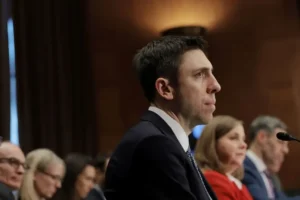
As the Senate Banking Committee prepares for a high-stakes confirmation hearing this Thursday, Brian Johnson, President Donald Trump’s nominee to lead the Consumer Financial Protection Bureau (CFPB), finds himself at the center of a brewing controversy regarding corporate entanglements. With the agency currently undergoing a period of intense ideological and structural transition, Johnson’s nomination has become a focal point for lawmakers concerned about the "revolving door" between the financial industry and the federal regulators tasked with overseeing it.
To address mounting concerns over potential conflicts of interest, Johnson has formally pledged to recuse himself from any matters involving Capital One—his current employer—for a period of two years. However, for many observers and critics, this ethics agreement is only the beginning of a much larger debate over the future of the nation’s top consumer watchdog.
The Ethics Agreement: A Broad Divestment Strategy
In a signed ethics agreement released last week, Johnson outlined a comprehensive plan to distance himself from the financial interests that have defined his professional life since leaving the government in 2020. Beyond the two-year recusal regarding Capital One, where he has served as a vice president and U.S. card compliance officer since November 2024, Johnson has committed to significant personal financial divestments.
According to the documentation, Johnson has pledged to forfeit all unvested restricted stock units in Capital One and has committed to liquidating his remaining equity holdings in the firm within 90 days of confirmation. The scope of his divestment extends far beyond his current employer; he has agreed to shed financial interests in a suite of major industry players, including JPMorgan Chase, Goldman Sachs, Morgan Stanley, BNY, PNC, Visa, Mastercard, American Express, Charles Schwab, and BlackRock.
Furthermore, the agreement stipulates that should Johnson be confirmed, he will be prohibited from repurchasing any of these assets without prior consultation with both the CFPB’s internal ethics officials and the Office of Government Ethics.
Interestingly, the agreement also touched upon the intricacies of his compensation packages. Johnson disclosed that he had agreed to repay both an anniversary bonus from the previous year and 50% of his 2024 sign-on bonus to Capital One. However, in a move that has raised eyebrows, he noted that the bank "has determined that I will not be required to repay any portion." While the bank’s waiver of repayment may have been framed as a standard corporate policy, it provides fresh fodder for critics who argue that the relationship between industry executives and the CFPB is far too cozy.
A Timeline of Contention: The Capital One Connection
The scrutiny surrounding Johnson is inextricably linked to the agency’s recent, highly controversial decision to drop a lawsuit against Capital One. The timeline of these events suggests a pattern that has deeply unsettled members of the Senate Banking Committee.
- January 2025: Six days before President Trump’s inauguration, the CFPB filed a lawsuit against Capital One, alleging the bank obscured the release of a savings account product, effectively denying existing customers access to higher interest rates.
- February 2025: Just one month after the litigation commenced, the CFPB abruptly reversed course and dropped the lawsuit, a move that stunned consumer advocates and drew immediate fire from congressional Democrats.
- June 2026: President Trump officially nominated Brian Johnson to lead the CFPB, aiming to replace the outgoing acting director, Russ Vought.
- July 2026: Senator Elizabeth Warren (D-MA), the ranking member of the Senate Banking Committee, initiated a formal inquiry into the relationship between Johnson, Capital One, and the CFPB’s sudden decision to abandon the litigation.
Senator Warren has requested copies of all correspondence between Johnson and the CFPB during the period surrounding the lawsuit’s dismissal. Her inquiry specifically asks the bank’s CEO, Richard Fairbank, to detail any internal advice Johnson may have provided regarding CFPB enforcement actions. The goal, according to Warren’s office, is to determine whether Johnson—who previously served as deputy director of the CFPB between 2018 and 2020—was involved in orchestrating a policy shift that ultimately benefited his future employer.
The Broader Context: The Vought Era and Agency Instability
Brian Johnson’s nomination arrives at a time of unprecedented instability within the CFPB. The agency’s current acting director, Russ Vought, has spent his tenure overseeing a radical transformation of the bureau’s operations. His approach has been characterized by deep skepticism of the agency’s traditional oversight mission, leading to what critics describe as the systematic dismantling of the CFPB’s regulatory teeth.
Vought’s tenure has been marked by a series of aggressive actions:
- Workforce Reduction: The agency has faced intense criticism for planned layoffs of long-time staff and career professionals.
- Guidance Rescission: Under Vought, the bureau has rescinded 67 pieces of guidance that were previously used to clarify compliance expectations for financial institutions.
- The "Clean Slate" Policy: The bureau has actively dropped numerous enforcement actions and pending lawsuits, effectively granting amnesty to companies that were previously under investigation.
- Digital Erasure: In a move that has drawn the ire of lawmakers, the bureau has deleted a vast archive of press releases and speeches from previous administrations, a move that critics suggest is an attempt to rewrite the agency’s historical record.
During a recent appearance before the Senate Banking Committee and the House Financial Services Committee, Vought faced a barrage of questions regarding these actions. Representative Maxine Waters (D-CA) was particularly pointed in her warning to the acting director: "You should preserve all of your emails, text messages, and other forms of communication with respect to your CFPB work. While your work may be done and a new director may be confirmed, let me be clear, we are not done with you."
Implications for the Financial Sector and Consumers
The nomination of Johnson is widely viewed as a signal that the administration intends to continue the trajectory set by Vought. If confirmed, Johnson will inherit an agency that has been significantly weakened in its enforcement capabilities, with a staff morale crisis and a heavily altered regulatory philosophy.
Regulatory Capture vs. Industry Expertise
The central tension in the upcoming hearing will be the debate over "regulatory capture." Proponents of the nomination argue that individuals with deep industry experience, such as Johnson, are uniquely qualified to oversee complex financial markets. They argue that he understands the intricacies of compliance from the inside, which can lead to more efficient and less burdensome regulation.
Conversely, skeptics argue that the "revolving door" phenomenon undermines the integrity of the agency. When a regulator has spent years working for a firm they are now tasked with supervising—or intends to return to such a firm—the temptation to prioritize industry-friendly outcomes over consumer protection becomes a structural hazard. The two-year recusal period, while a standard ethics practice, is viewed by some as an insufficient safeguard against the influence of long-standing professional relationships and the cultural alignment that occurs when regulators move between the private and public sectors.
The Impact on Consumer Protection
For the average consumer, the shift in leadership carries significant implications. The CFPB was created in the wake of the 2008 financial crisis to serve as a check on the power of large financial institutions. If the agency shifts toward a policy of "light-touch" regulation, consumers may find themselves with fewer avenues for recourse when faced with predatory lending, hidden fees, or discriminatory practices.
The specific case of the Capital One savings account lawsuit serves as a litmus test. If the agency continues to prioritize the mitigation of enforcement actions against major banks, the deterrent effect of the CFPB will effectively vanish. Market participants will likely interpret this as a green light to take greater risks, knowing that the likelihood of a high-stakes, well-funded enforcement action is diminishing.
Conclusion: A Senate Divided
As Thursday’s hearing approaches, the political divide is clear. Republicans are likely to emphasize Johnson’s technical expertise and his commitment to streamlining the agency’s bureaucracy, framing his nomination as a necessary step toward rationalizing the government’s role in the financial sector.
Democrats, led by Warren and Waters, are prepared to grill the nominee on his personal history and the ethical implications of his rapid movement between the regulator and the regulated. The demand for transparency regarding the dropped Capital One lawsuit is not merely a request for documentation; it is a challenge to the legitimacy of the agency’s current leadership.
Ultimately, Brian Johnson’s confirmation will serve as a bellwether for the future of the CFPB. Whether he is seen as an effective steward of the agency or as an instrument of industry interests will depend largely on his performance before the Senate Banking Committee. The outcome will likely define the agency’s identity for years to come, determining whether the CFPB remains a formidable guardian of the consumer or becomes a hollowed-out shell of its original mandate.