The Great Lexical Shift: How AI is Rewriting the Corporate Org Chart
Artificial intelligence may or may not be coming for your livelihood, but it has already staged a hostile takeover of the human resources department. If you have browsed a job board lately, you have likely noticed that the corporate vernacular has undergone a strange, sci-fi-infused metamorphosis. Roles that were once comfortably labeled "Software Engineer" or "Marketing Manager" have been rebranded, injected with artificial urgency, and adorned with titles that sound like they were generated by a hallucinating chatbot.
We are witnessing the birth of the "Forward-Deployed Agentic AI Architect." It is a title that sounds both momentous and inscrutable—a role that might involve building complex neural network infrastructures, or it might simply entail teaching a chatbot to remember what it was asked three prompts ago. Regardless of the actual daily output, one thing is certain: someone in the C-suite approved the business cards, and the hiring market has officially entered a new, linguistic frontier.
The State of the AI Labor Market: A Statistical Overview
The current obsession with AI-centric job titles offers a fascinating counterpoint to the prevailing, gloomier narrative surrounding technology and employment. While much of the public discourse remains fixated on the "Great Displacement"—the fear that AI will render the human workforce obsolete—the actual hiring data paints a far more nuanced, and perhaps more chaotic, picture.
According to data from the Indeed Hiring Lab, the labor market is currently characterized by a sluggish overall environment, punctuated by a small but explosive neighborhood of AI-related activity. By the end of 2025, the number of job postings on Indeed explicitly mentioning AI had surged by 134% compared to February 2020 levels. In stark contrast, total job postings across all sectors were hovering at a mere 6% above that same benchmark. By December 2025, "AI" appeared in a record 4.2% of all postings on the platform.
This trend is not merely a localized phenomenon within Silicon Valley. The terminology is migrating rapidly into traditional industries. At the close of 2025, nearly 45% of data and analytics job postings featured AI-related keywords, as did roughly 15% of marketing listings and 9% of human resources advertisements. A deeper analysis by Business Insider, reflecting data from the first quarter of 2026, revealed that the number of distinct job titles explicitly referencing AI had climbed from 264 in 2022 to a staggering 822. Crucially, nearly two-thirds of these roles were found outside the traditional technology sector.
A Chronology of the "AI-ification" of Work
The rise of the AI job title has not been a gradual evolution; it has been a frantic sprint. We can trace the chronology of this shift through three distinct phases:
Phase 1: The Keyword Pivot (2022–2023)
In the early days of the generative AI boom, the shift was largely performative. Companies sought to signal to investors that they were "AI-forward." This led to a surge in "Prompt Engineer" roles—positions that promised six-figure salaries for those who could master the art of coaxing coherent answers from Large Language Models (LLMs). During this phase, many employers simply appended "AI" to existing roles—AI Marketing Manager, AI Learning Specialist—to gain visibility in algorithm-driven applicant tracking systems.
Phase 2: The Infrastructure Build-Out (2024)
As the novelty of chatbots gave way to the reality of enterprise integration, the demand shifted toward technical infrastructure. This was the era of the "AI Engineer." According to LinkedIn’s 2026 "Jobs on the Rise" report, AI Engineer claimed the top spot as the fastest-growing role in the U.S. over the preceding three years. The focus moved from simply using tools to building them—connecting corporate data pipelines to models and refining performance.
Phase 3: The Era of Specialization and Agentic Workflow (2025–Present)
We have now entered a phase of extreme professional segmentation. The market is no longer just looking for "engineers"; it is looking for "Agentic AI Architects," "Red Teamers," and "Model Behavior Engineers." The complexity of the titles has scaled in direct proportion to the complexity of the systems being deployed.
The Anatomy of Modern AI Roles: What They Actually Do
Despite the dizzying array of titles, most of these roles fall into a few identifiable categories. When we strip away the marketing gloss, the core functions are often surprisingly traditional.
The Builders and Maintainers
At the top of the hierarchy are the AI Engineers and Frontier Research Engineers. These professionals are the backbone of the industry. They build applications, train models, and manage the "inference latency"—the speed at which a model processes a request. They are the ones ensuring the customer service bot doesn’t accidentally offer a full refund for a product the company doesn’t actually sell.
The "Forward-Deployed" Specialists
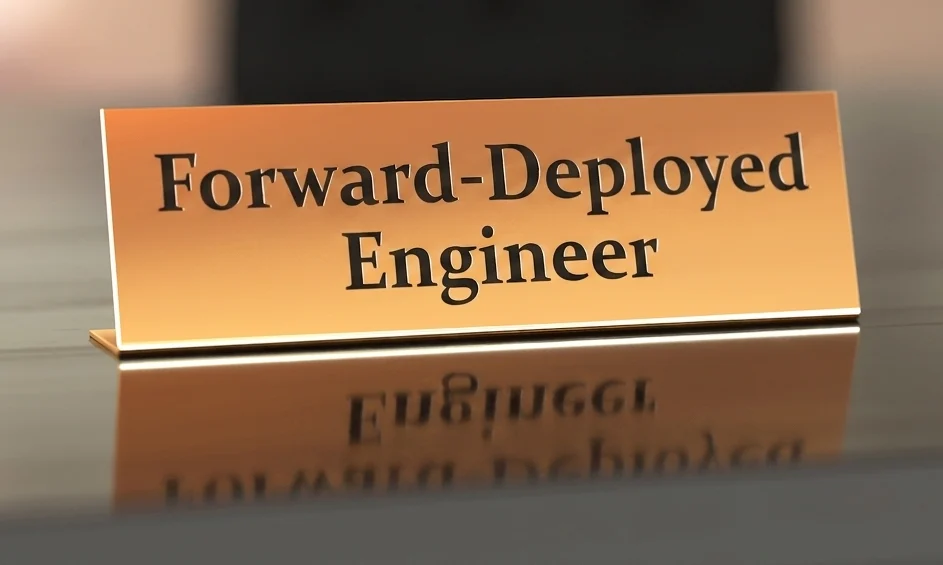
Borrowed from the defense-tech world (notably Palantir), the Forward-Deployed Engineer has become a high-status role. These individuals act as the bridge between the technical team and the boardroom. They translate the vague executive ambition to "do something with AI" into functional, tangible software. Their compensation is often astronomical, reflecting their ability to navigate both the server rack and the boardroom.
The Safety and Governance Layer
As systems become more autonomous, the need for guardrails has created entirely new departments.
- Evals Engineers: Responsible for designing rigorous testing frameworks to ensure models perform reliably under pressure.
- AI Red Teamers: Hired specifically to "break" systems by probing for vulnerabilities, bias, or dangerous outputs before the public can find them.
- AI Governance Leaders: These roles focus on the intersection of technology, law, and ethics, managing the complex regulatory landscape surrounding data privacy and model transparency.
The Economic Implications: Salaries and the "Sports Star" Model
The compensation market for top-tier AI talent has evolved to resemble professional athletics. We are seeing "science-fiction salaries" for individuals who possess rare combinations of high-level machine learning expertise and product-development skills.
A review from Syracuse University indicates that Chief AI Officers can command compensation packages ranging from $200,000 to well over $500,000 annually. However, for specialized research and infrastructure roles, the ceiling is much higher. With the inclusion of equity and performance bonuses, compensation packages for lead engineers at top-tier firms can easily exceed $1 million.
This hyper-competition is fueled by the scarcity of talent. The "CTO guide" from the Signal Through the Noise blog noted that while some of the most lavishly differentiated titles are essentially just rebranding, the market is willing to pay a massive premium for the perceived expertise attached to them. This has led to a "gold rush" mentality, where the title itself becomes a vehicle for salary inflation.
The "Department of Unnecessary Titles"
Not every new title, however, serves a functional purpose. The rapid expansion of the AI lexicon has created a surplus of roles that seem to have been generated during high-stress corporate retreats.
We have seen the rise of the "Claude Evangelist"—a role that blends technical product education with the duties of a brand apostle. Then there are "Vibe Coders" and "Vibe Engineers," roles that characterize a new way of working where developers describe their desired outcome in natural language and oversee the AI’s output. While proponents argue that "vibe engineering" is the future of rapid prototyping, critics see it as little more than a marketing rebrand for a developer who has learned to use coding assistants effectively.
Most concerning to industry veterans is the rise of titles like "Principal Agentic GenAI Forward-Deployed Context Architect." These titles are not only a mouthful; they suggest a level of specialization that may not actually exist. As one industry observer noted, many of these "new" roles are simply old software development jobs that have discovered a highly effective resume keyword.
Conclusion: The Future of the Division of Labor
Has AI created entirely new work? Yes. The emergence of AI safety, model evaluation, and complex data governance are genuine responses to the technical and societal challenges introduced by generative systems. However, the vast majority of the current "AI-ification" of the workforce is a reflection of corporate anxiety. Companies are desperate to prove they are part of the revolution, and if that requires renaming a software developer to an "AI Transformation Lead," they will do it.
The long-term impact on the labor market remains to be seen. The machines will inevitably automate some tasks, generate entirely new ones, and force a radical rethinking of the corporate division of labor. But before any of those fundamental shifts settle into a new status quo, corporate America will continue to do what it does best: form a steering committee, appoint a Chief Agentic Transformation Evangelist, and schedule a three-hour meeting to figure out what that person is actually supposed to do.
Ultimately, the AI revolution is as much a marketing challenge as it is a technological one. In the race to build the future, the companies that succeed will be the ones that look past the trendy titles and focus on the messy, human reality of building reliable, safe, and productive systems.