IRS Tightens Oversight: New Regulations Target Abusive Charitable Remainder Annuity Trust Schemes
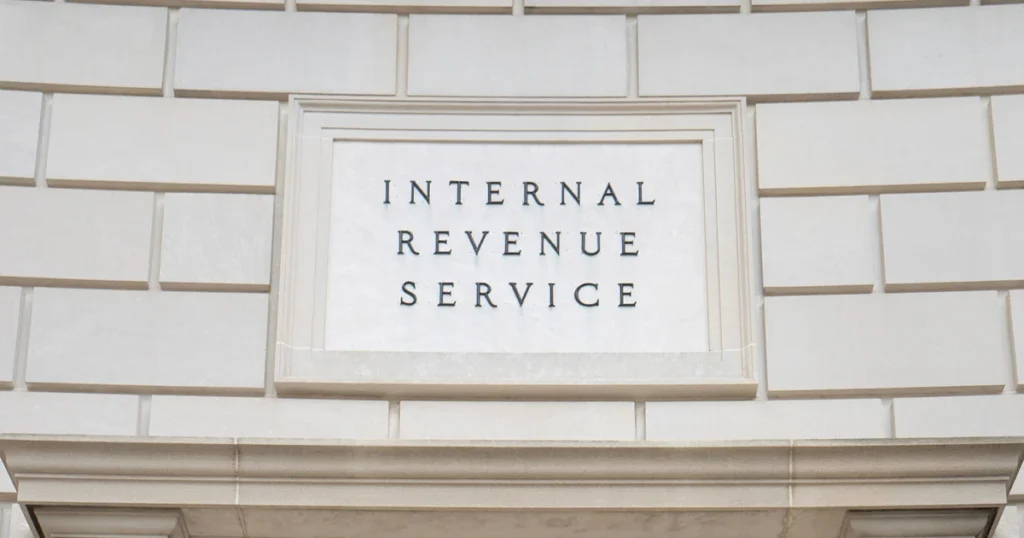
In a definitive move to curb tax avoidance, the Internal Revenue Service (IRS) has issued final regulations (T.D. 10051) formally designating specific, abusive arrangements involving Charitable Remainder Annuity Trusts (CRATs) as "listed transactions." This regulatory action marks a significant escalation in the government’s efforts to police high-net-worth tax shelters, moving away from informal guidance toward the rigorous framework of notice-and-comment rulemaking.
For tax professionals, financial advisors, and high-net-worth individuals, this shift signals a new era of transparency. Under these regulations, material advisers and participants involved in these specific CRAT structures are now subject to stringent mandatory disclosure requirements, with significant financial penalties for non-compliance.
The Anatomy of an Abusive CRAT
To understand the IRS’s focus, one must first distinguish between legitimate charitable planning and the schemes now under fire. A standard CRAT is a legitimate, irrevocable trust structure designed to benefit both a non-charitable beneficiary (typically the donor) and a charitable organization. The donor transfers assets into the trust, receives an annual income stream for a set period or life, and the remainder interest eventually passes to the charity.
However, the IRS has identified a specific, predatory variation of this structure. In these abusive arrangements, taxpayers transfer highly appreciated property—such as interests in closely held businesses or trade assets—into a CRAT. The CRAT subsequently sells the property. Crucially, the trust then uses the net proceeds to purchase a Single Premium Immediate Annuity (SPIA).
The abuse arises in how the tax liability is reported. Participants in these schemes often misapply the rules under Internal Revenue Code Sections 72 and 664. They claim that the annuity payments received from the CRAT are taxable only to the extent of the "income portion" of the SPIA payment, effectively sheltering the bulk of the capital gains generated from the initial asset sale. By doing so, the taxpayer attempts to wipe out ordinary income and capital gains taxes that would otherwise be due upon the sale of the property.
A Shift in Regulatory Strategy
The transition from sub-regulatory "notices" to formal "notice-and-comment" regulations is perhaps the most significant development in this announcement. For years, the IRS utilized administrative notices to identify and shut down tax shelters. However, recent challenges in federal courts have undermined the authority of these notices, with judges often ruling that the IRS bypassed necessary procedural steps.
Ed Zollars, CPA and tax partner at Thomas, Zollars & Lynch Ltd., noted the importance of this shift in his firm’s Current Federal Tax Developments blog. "Crucially, this shift reflects an intentional move away from the use of sub-regulatory ‘notices’ to identify tax shelters—a method that has recently failed in federal courts—toward formal ‘notice-and-comment’ rulemaking." By opting for the full regulatory process, the IRS is insulating its position against future legal challenges, ensuring that these CRAT schemes remain firmly under the umbrella of "listed transactions."
Chronology of the Crackdown
The IRS’s decision to issue T.D. 10051 did not occur in a vacuum. It is the culmination of years of investigative work and escalating enforcement actions:
- February 2022: The Department of Justice took decisive action, filing lawsuits to shut down a major scheme involving at least 70 different CRATs. The government alleged that these arrangements resulted in roughly $40 million in unreported taxable income and an estimated $8 million in lost tax revenue.
- The "Dirty Dozen" Lists: The IRS has repeatedly included abusive CRAT arrangements on its annual "Dirty Dozen" list—a compilation of the most prevalent and harmful tax scams targeting American taxpayers. This recurring inclusion served as a warning to the industry that the agency was monitoring these transactions closely.
- March 2024: The Treasury and the IRS issued proposed regulations that formally identified certain CRAT transactions, as well as substantially similar transactions, as listed transactions. This period allowed for public input and set the stage for the final regulations published in July 2026.
- July 2026: The final regulations (T.D. 10051) were officially published in the Federal Register, finalizing the status of these arrangements as listed transactions and triggering mandatory reporting requirements.
Implications for Taxpayers and Advisers
The designation of these arrangements as "listed transactions" carries heavy consequences. A listed transaction is defined by the IRS as the same or substantially similar to a transaction the agency has identified as a tax-avoidance transaction.
Reporting Requirements
Participants in these schemes—as well as the material advisers who promote or facilitate them—must now file detailed disclosures with the IRS. This includes Form 8886, Reportable Transaction Disclosure Statement. The threshold for "material adviser" is broad, encompassing anyone who provides material aid, assistance, or advice with respect to organizing, managing, promoting, or carrying out a reportable transaction and who derives a threshold level of gross income for such advice.
The Cost of Non-Compliance
Failure to disclose these transactions can lead to severe financial penalties. For individual taxpayers, the penalties can reach as high as $100,000 for failure to disclose a listed transaction. For corporations, that figure can climb to $200,000. Furthermore, there are significant accuracy-related penalties under Section 6662A, which imposes a 20% penalty on understatements of tax attributable to a reportable transaction, potentially rising to 30% if the transaction was not adequately disclosed.
The Broader Landscape of Tax Integrity
The crackdown on CRATs is part of a larger, systemic effort by the IRS to modernize its enforcement capabilities. With increased funding allocated for tax compliance, the agency is leveraging data analytics and artificial intelligence to identify anomalies in tax returns that suggest the use of complex, synthetic tax shelters.
Protecting Legitimate Philanthropy
One of the primary concerns among tax professionals is the potential for these new rules to chill legitimate charitable giving. CRATs have long been a staple of effective estate planning and philanthropy. The IRS has been careful to frame the regulations as targeting the misuse of the structure rather than the structure itself. However, practitioners are advised to exercise extreme caution. Clients who utilize CRATs should ensure that their arrangements are designed for bona fide charitable purposes rather than as a vehicle for tax deferral or elimination.
The Role of Professional Due Diligence
For CPAs, tax attorneys, and financial planners, the IRS’s move underscores the necessity of deep due diligence. Advisors who rely on "off-the-shelf" tax strategies or promotional materials from third-party promoters are now at significantly higher risk. If a strategy sounds too good to be true—promising to eliminate large capital gains through a specific trust structure—advisers are encouraged to verify the arrangement against the IRS’s published guidance in T.D. 10051.
Conclusion: A New Standard of Transparency
The issuance of T.D. 10051 is a warning shot to those who seek to disguise tax avoidance as charitable intent. By transitioning to formal, notice-and-comment rulemaking, the IRS has effectively removed the legal ambiguity that previously allowed these schemes to persist.
For the vast majority of the tax-paying public and legitimate charitable organizations, these regulations provide clarity and protect the integrity of the tax code. As the IRS continues to close the loopholes utilized by high-net-worth tax shelters, the industry must adapt to a landscape where transparency and documentation are paramount. Taxpayers are encouraged to consult with qualified, independent tax counsel to ensure that their financial and charitable planning remains compliant with the evolving standards of the IRS.
The era of "stealth" tax avoidance through complex trust structures is effectively coming to an end. As the IRS continues to populate its list of reportable transactions, the message remains clear: the government is no longer relying on notices—it is building a regulatory fortress to ensure that tax obligations are met in full.