The Suno Breach: How a "Sandworm" Hacker Exposed the Anatomy of AI Music Training
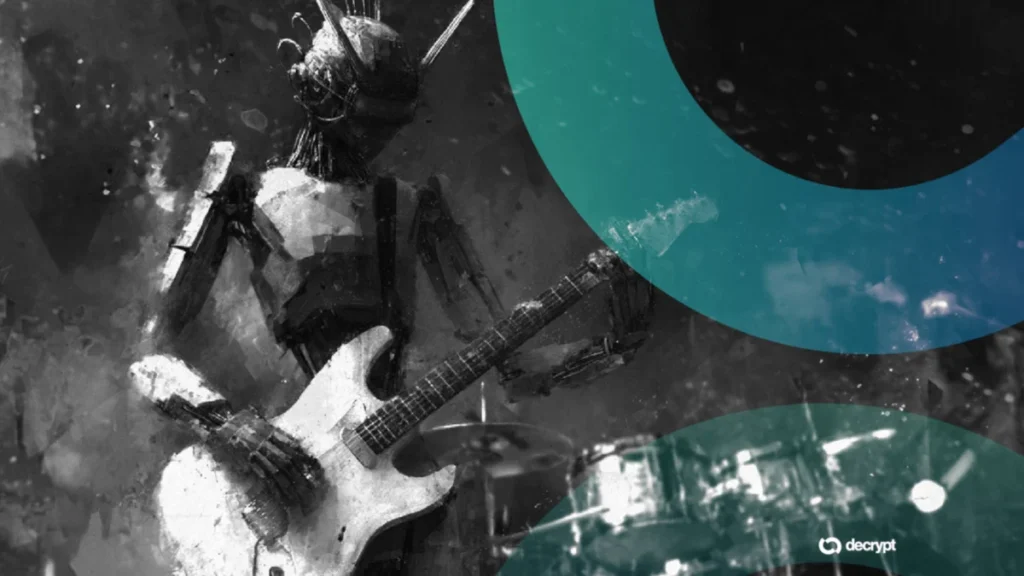
In a revelation that has sent shockwaves through the intersection of artificial intelligence and intellectual property law, a sophisticated cyberattack on the AI music platform Suno has peeled back the curtain on the industry’s most closely guarded secret: the precise composition of its training data. A hacker, claiming to utilize a piece of malware dubbed the “Shai-Hulud” worm—a nod to the monolithic sandworms of Frank Herbert’s Dune—successfully exfiltrated internal source code that maps out exactly how Suno’s generative models were fed.
The breach, first brought to light by 404 Media, provides a definitive, granular look at the data pipelines that allowed Suno to transform simple text prompts into complex, high-fidelity musical compositions. For the music industry, which has been locked in a bitter legal battle with Suno since 2024, the leaked files represent more than just a security failure; they are the “smoking gun” that corroborates allegations of systemic, unauthorized data harvesting.
The Anatomy of the Breach and the Shai-Hulud Worm
The breach occurred in late 2025, though it remained largely obscured from public view until recently. According to the perpetrator, the entry was facilitated by the Shai-Hulud worm, a malicious script designed to burrow through digital infrastructures. Once inside Suno’s internal network, the intruder gained access to proprietary scripts, scraping instructions, and logs spanning from 2023 to 2024.
These documents are not mere fragments; they are comprehensive blueprints of an ingestion engine. They detail the systematic collection of hundreds of thousands of hours of audio, categorizing the source material with clinical precision. For a company valued at $5.4 billion with an estimated user base of 100 million, these internal logs act as a damning ledger of how that value was manufactured.
Chronology of the Controversy
The path to this discovery was not sudden, but rather the culmination of years of escalating tension between tech innovators and the creative industries.
- 2024: The Recording Industry Association of America (RIAA) files a landmark lawsuit against Suno and Udio, alleging massive copyright infringement. The core of the industry’s complaint is that these platforms built their models by "ripping" protected music without consent or compensation.
- Early 2025: Legal proceedings intensify. Suno consistently maintains a "fair use" defense, arguing that its models learn from data in a way that is transformative rather than derivative.
- November 2025: Suno detects the breach. The company initiates an internal investigation, concluding that the incident was “limited” and involved primarily legacy code.
- November 2025 (Parallel): Udio, facing mounting legal pressure and perhaps observing the shifting winds of the industry, settles with Warner Music Group, signaling a pivot toward a licensed, compliant model.
- July 2026: The breach goes public. News reports detail the contents of the leaked code, revealing the specific repositories and hourly volumes of scraped audio.
- Present Day: The legal proceedings against Suno remain active in federal court, with major labels Sony and UMG pushing for damages that could reach $150,000 per infringed work.
The Data Breakdown: A Statistical Treasure Trove
The leaked files offer an unprecedented statistical breakdown of the training library. The scale of the ingestion is staggering, revealing a voracious appetite for audio across diverse platforms. According to the internal file comments, the training library included:
- 113,879 hours of YouTube Music.
- 152,162 hours of tagged YouTube tracks.
- 62,117 hours of audio from the stock music library Pond5.
- 12,287 hours of content from the streaming platform Deezer.
- 17,615 hours of data labeled “genius_hq,” sourced from Genius.
Perhaps most revealing is the documented ambition of the company: the code contained specific plans to ingest roughly 1 million hours of podcast audio via RSS feeds. One internal file, tracking YouTube Music ingestion specifically, logged over 2 million individual music clips. This confirms that Suno was not merely sampling music; it was systematically vacuuming up a substantial portion of the world’s recorded audio history to teach its models the nuances of genre, tempo, and style.
Official Responses and Corporate Defense
Suno’s response to the breach has been one of controlled minimization. In official statements, the company acknowledged the incident but insisted that it did not constitute a major data loss event. Suno maintains that the exposure was restricted to “outdated source code no longer in use” and asserted that, under their interpretation of privacy laws, there was no requirement to notify individual users.
This defensive posture, however, sits in uncomfortable tension with the reality of the leaked files. While Suno argues the breach was limited, the information contained within the leaked logs effectively dismantles the ambiguity the company had maintained regarding its data sourcing.
Previously, under California’s AB 2013 law—a mandate requiring AI companies to disclose their training practices—Suno had provided a vague acknowledgment that its training data “may include music subject to intellectual property protection.” The company characterized its corpus as “tens of millions of publicly available music audio files.” The leaked code replaces this euphemism with hard numbers and specific platform names, stripping away the thin veil of corporate transparency.
Implications for AI and the Music Industry
The implications of this breach are multifaceted, touching on cybersecurity, copyright law, and the ethics of AI development.
1. The Legal Battlefield
The RIAA’s 2024 lawsuit, which sought $150,000 per infringement incident, now has the evidentiary backing it previously lacked. While Suno continues to contest the claims under a fair use defense, the existence of a programmatic, automated, and massive-scale scraping operation documented in their own internal logs makes the fair use argument significantly harder to maintain. Courts will now have to weigh whether “transformative use” can cover the systematic mass-ingestion of protected content for the purpose of creating a direct market competitor.
2. The Shift to Licensing
The path taken by Udio—settling with major labels and transitioning to a licensed model—is increasingly viewed as the "gold standard" for survival in the generative AI space. If the legal outcome for Suno goes against them, the industry may see a total collapse of the "scraping-first" business model. We are likely moving toward a future where AI companies must pay for their training data, essentially becoming secondary music publishers or platforms that pay royalties directly to the rightsholders.
3. Data Ethics and Transparency
The breach has forced a broader conversation about the accountability of AI companies. Even if the data is "publicly available" on platforms like YouTube, the act of using it to train a commercial model that competes with the original creators is no longer an abstract ethical debate. The leaked code demonstrates that these companies have the technical capacity to document their sources, meaning that future claims of "we don’t know exactly what’s in our training set" will be treated with deep skepticism by regulators and the public alike.
4. The Vulnerability of AI Startups
Beyond the copyright issues, the incident highlights the fragility of AI infrastructure. The use of the Shai-Hulud worm suggests that even the most well-funded AI startups are susceptible to relatively traditional cyberattacks. If an intruder can gain access to the "recipe" for an AI model, they can expose not only the proprietary training data but also the internal culture and operational security standards of the company.
Conclusion: A New Era of Scrutiny
The Suno breach marks a turning point in the generative AI era. The era of "move fast and break things" in the music industry is rapidly meeting the immovable object of copyright law and digital accountability. By revealing exactly how the sausage is made, the hacker has provided the music industry with the leverage it needed to force a shift toward a more sustainable, licensed, and transparent model.
As federal courts deliberate on the future of Suno, the rest of the tech industry is watching closely. The question is no longer whether AI can generate music that sounds professional; the question is whether the companies behind that technology can survive in an environment where they are forced to respect the intellectual property they were built upon. For now, the "Shai-Hulud" incident stands as a stark reminder that in the digital age, what happens in the dark—even in the deepest layers of source code—rarely stays there.