The Friction Economy: Why Modern Payments Are Failing the Customer Experience

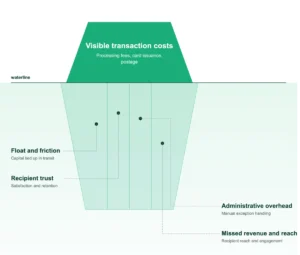
In an era where businesses can transfer capital across global borders in seconds, a paradoxical bottleneck has emerged: the consumer payment experience. While the back-end infrastructure of global finance has become increasingly digitized and efficient, the final mile—the moment a customer actually pays—remains mired in outdated, cumbersome workflows. For utilities, consumer lenders, and subscription-based service providers, this operational disconnect is creating a silent, persistent revenue leak.
The core issue, according to industry experts, is that companies are confusing "billing" with "conversion." As Shawn Curtis, General Manager of Payments at Solutions by Text (SBT), noted during the PYMNTS "Summer School" series, the industry has spent decades focusing on the mechanics of moving money while neglecting the psychological and logistical barriers that keep that money from moving in the first place.
The Disconnect: Intent vs. Action
The modern consumer is often willing to pay, fully aware of their outstanding balance, and technologically capable of executing a transaction. Yet, they frequently abandon the payment process midway. This is not a failure of customer intent; it is a failure of system architecture.
When a user is forced to navigate a maze of disparate portals, redundant passwords, and clunky mobile pages, the mental effort required to pay exceeds the customer’s threshold for convenience. This phenomenon, known as "app fatigue," has profound implications for brand loyalty. As Curtis observes, if a lender creates a "pain in the neck" experience, that friction becomes a primary reason for customer churn when it comes time to renew or seek future credit.
The Illusion of Awareness
Many organizations interpret low payment rates as an "awareness" problem. Their knee-jerk reaction is to increase the volume of digital noise: more emails, more automated phone calls, and more text-based reminders. This strategy assumes that if the customer is nagged enough, they will eventually capitulate and pay.
However, data suggests the opposite. Increased volume does not equate to increased conversion; it equates to increased annoyance. In the digital age, excessive reminders often lead to consumer opt-outs or, worse, the dismissal of legitimate payment requests as spam. "More volume is just more noise," Curtis argues. "It doesn’t actually remove friction."
The Chronology of a Failed Transaction
To understand the revenue leak, one must analyze the "journey" of a payment. The breakdown almost invariably occurs between the moment of intent (the desire to pay) and the moment of action (the execution of the transfer).
- The Notification: The business sends a payment request. If this request is disconnected from the payment interface, the first point of attrition begins.
- The Channel Switch: The customer is often prompted to leave the messaging app to open a browser, log into a portal, or download an app. Each step represents a "natural drop-off" point in the funnel.
- The Authentication Barrier: The customer is forced to perform a password reset or multi-factor authentication.
- The Data Entry: The user is asked to re-enter payment credentials they have already provided a dozen times before.
- The Abandonment: By the time the user reaches the "Submit Payment" button, the five-minute ordeal has exhausted their patience, leading them to close the browser and postpone the task—a task that, in many cases, will be forgotten until the next collection attempt.
The Rise of Text-to-Complete
The solution, according to innovators in the space, lies in collapsing the distance between the notification and the transaction. This is where text messaging (SMS) has emerged as a superior, if underutilized, tool.
Texting is inherently personal and immediate. By integrating payment functionality directly into the messaging stream, businesses can turn a "remind" into a "transact." This approach captures the consumer in the "moment of intent." If a customer receives a text about a bill, and they can settle that bill within the same thread, the friction of switching channels, logging in, and navigating portals vanishes.
However, a caveat remains: the text must lead to a "text-to-complete" experience, not a "text-to-portal" experience. If a text message simply directs the user to a cumbersome, non-mobile-optimized website, it fails to solve the underlying problem. The goal is to keep the user within a seamless, frictionless environment.
Digital Wallets: A Tool, Not a Strategy
The industry is currently enamored with digital wallets—Apple Pay, Google Pay, and others—as the "silver bullet" for payment friction. While these tools significantly accelerate the checkout process by eliminating manual card entry, they are frequently misapplied.
Curtis highlights a revealing case study: a utility company that integrated Apple Pay into its checkout flow, but kept the path to that button intact. A customer had to click through nine separate screens before they were even presented with the "Pay with Apple Pay" option.
In this scenario, the wallet acts as a shortcut for the final step, but it does nothing to fix the preceding eight steps of the journey. Digital wallets are an excellent accelerator, but they are not a substitute for a lean, streamlined strategy. Companies must rethink the entire process from the user’s perspective, not just add a "modern" button to a legacy, bloated system.
Trust: The Foundation of Conversion
A critical, often overlooked aspect of streamlining payments is the issue of consumer trust. As businesses move toward direct-link payment systems, they face a new hurdle: the prevalence of phishing and SMS fraud. Consumers have been trained to view unsolicited links with skepticism.
To address this, trust must be built "upstream." Credibility cannot be established at the moment of payment; it must be ingrained in the relationship from the outset. This involves:
- Proactive Communication: Clearly identifying the specific number or channel that will be used for payment requests during the initial sign-up process.
- Digital Contact Cards: Providing customers with saved contact information so the payment request arrives from a known, verified entity.
- Branding and Context: Ensuring that payment notifications are visually consistent with the brand, utilizing logos and clear, context-rich language that removes any doubt regarding the request’s legitimacy.
Trust is not merely a compliance or security requirement; it is a fundamental component of conversion design. If the customer does not recognize the sender or feels the link is suspicious, the speed of the transaction becomes irrelevant.
Implications for the Future of Collections
The implications of these findings are clear: businesses that fail to treat payments as an integral part of the user experience will continue to lose revenue to the "friction tax."
The Financial Impact
For large-scale utilities or lending institutions, even a 1% improvement in conversion via reduced friction represents millions of dollars in recovered revenue and lower administrative costs associated with collections. By moving away from aggressive, high-volume notification strategies toward a "frictionless flow" model, these companies can improve their bottom line while simultaneously increasing customer satisfaction.
The Shift in Organizational Strategy
The shift requires a cultural change within organizations. Traditionally, the billing department, the IT department, and the customer service department have worked in silos. However, fixing the payment journey requires a cross-functional approach where:
- Developers focus on reducing clicks and optimizing mobile flows.
- Marketing/Communications focuses on building brand trust and consistent messaging.
- Operations focuses on integrating payment capabilities directly into the communication channels that customers already use and trust.
Conclusion: The Path Forward
Payments are no longer a back-end accounting function. They are a high-stakes component of the customer’s digital interaction with a brand. As Shawn Curtis emphasized, the organizations that will win in the coming years are those that recognize that the "payment journey" is a continuous path, not a series of isolated touchpoints.
By prioritizing intent, embracing direct-action channels like SMS, and establishing authentic trust, businesses can stop the "hidden revenue leak." The technology to move money is already here; the next phase of innovation lies in moving that money with as little resistance as possible. In the modern economy, the company that makes it easiest to pay will be the company that gets paid first.