The Great Refund Confusion: IRS Seeks Clarity Amidst CP53E Notice Fallout
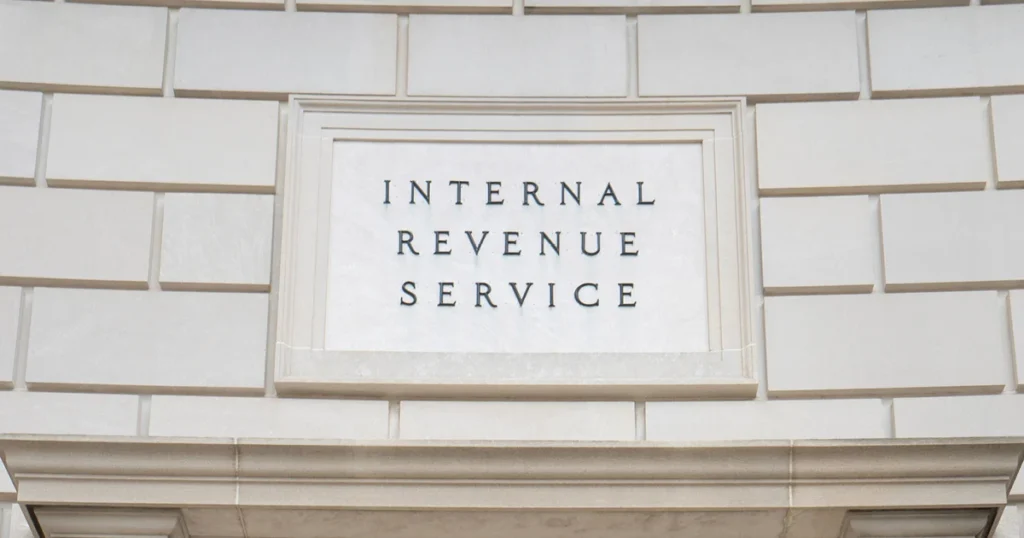
The Internal Revenue Service (IRS) is currently navigating a significant communications crisis regarding its CP53E notice program. Despite the agency maintaining that these notices were issued according to strict internal criteria, widespread reports of confusion among taxpayers and tax professionals have prompted the American Institute of CPAs (AICPA) to intervene. As the agency seeks to reconcile its data with the lived experience of millions of taxpayers, the incident serves as a case study in the challenges of modernizing government financial infrastructure.
The Core Conflict: What is a CP53E Notice?
The CP53E notice was introduced ahead of the most recent filing season as a strategic component of the IRS’s ongoing transition from physical paper checks to streamlined electronic payments. In alignment with Executive Order 14247, which mandates increased efficiency and accessibility in federal disbursements, the IRS designed the CP53E to solicit or verify bank account information for taxpayers who are owed refunds.
The notice essentially acts as a call to action: taxpayers are invited to log into their secure IRS online accounts to provide or update their direct deposit information. The logic is sound—direct deposit is faster, more secure, and significantly cheaper for the federal government to administer than mailing millions of physical checks. The notice provides a 30-day window for taxpayers to respond. If no action is taken, the IRS defaults to issuing a paper check, but only after a mandatory six-week holding period.
However, the implementation of this notice has been anything but smooth. According to the AICPA, at least 3 million of these notices were distributed during the filing season, creating an immediate and widespread sense of alarm among taxpayers who were not expecting a refund, or who had already provided the necessary banking information to the IRS.
A Chronology of Confusion
The tension between the tax community and the IRS regarding the CP53E notice has unfolded in three distinct phases.
Phase 1: The Rollout and Initial Shock
As the filing season reached its peak, tax practitioners began reporting a surge in client anxiety. Taxpayers who had filed their returns—often with clear instructions for direct deposit—were suddenly receiving urgent notices from the IRS requesting bank information. For many, this was the first time they had heard of the CP53E notice, and it arrived in a format that mimicked traditional IRS collection notices, causing unnecessary panic regarding potential audits or tax discrepancies.
Phase 2: The AICPA Intervention
By June, the volume of complaints from CPAs and their clients became impossible to ignore. The AICPA formally engaged the IRS, documenting instances where the notices were sent to taxpayers who were categorically ineligible for a refund. This included individuals who had applied their tax overpayments toward the following year’s estimated taxes, those who had reported a balance due, and those who had already successfully provided valid direct deposit information on their original filings. The AICPA’s letter to the IRS served as a formal protest, highlighting that the agency’s automated systems were clearly over-reaching and causing systemic distress.
Phase 3: The Post-Season Audit
Currently, the IRS and the AICPA are in a phase of investigation. While the IRS insists that the notices were sent only to those with a "net positive adjustment" on their accounts—meaning even a one-cent refund trigger was sufficient to generate a notice—they have acknowledged the possibility of errors. The IRS has now requested that the AICPA assist them in identifying legitimate anomalies where a taxpayer received a notice without any positive adjustment or, in cases where a refund was due, where the banking system failed to process the transaction.
The IRS Stance: "Data-Driven" Disbursements
The IRS’s defense of the CP53E program rests on the argument that its systems were functioning as designed, albeit with a threshold that many taxpayers found confusing. According to agency officials, the notices were triggered by internal account adjustments.
In a recent AICPA Town Hall, Melanie Lauridsen, the AICPA’s Vice President of Tax Policy & Advocacy, articulated the frustration shared by practitioners. "Where our members are really seeing the pain points is when they weren’t expecting that notice," Lauridsen stated.
The IRS maintains that even minor account adjustments—such as a penny owed due to a calculation correction—can trigger a system flag. From the IRS’s perspective, the notice is a mandatory service protocol intended to prevent the need for paper checks. However, the disconnect lies in the taxpayer’s expectation. If a taxpayer believes their account is settled and balanced, receiving an official notice from the IRS is rarely viewed as a helpful administrative update; it is almost universally interpreted as a red flag for a tax issue.
Implications for Taxpayers and Practitioners
The fallout from the CP53E notice has significant implications for the relationship between the tax-paying public and the IRS.
The Erosion of Trust
When a government agency sends millions of notices that are perceived as erroneous, it erodes public trust. Taxpayers often do not distinguish between a notice for a missing bank account and a notice for an audit; both cause stress, financial anxiety, and a loss of faith in the agency’s competency. The fact that the IRS provided further guidance only after the filing season had concluded only served to exacerbate the frustration of tax professionals who were left to manage the fallout on their own.
The Burden on Tax Practitioners
Tax professionals have been forced to act as the front-line mediators between the IRS and the public. During the peak of the filing season, practitioners spent countless hours explaining to clients that these notices were, in most cases, administrative artifacts rather than signs of criminal or civil tax trouble. The cost of this extra labor, while borne by the accountants, ultimately reflects poorly on the IRS’s operational efficiency.
Technology and Automation Pitfalls
The CP53E incident highlights the dangers of "black box" automation in government agencies. While the move toward digital payments is objectively positive, the lack of transparency in how these notices are triggered suggests that the IRS’s internal algorithms may be prioritizing administrative speed over taxpayer communication clarity.
Moving Forward: How to Report Discrepancies
The IRS has taken the unusual step of soliciting help from the private sector to identify potential flaws in their system. The agency is specifically looking for evidence that the CP53E notice was sent in error.
If you are a taxpayer or a tax professional who has received a notice that appears to be definitively incorrect—specifically where no refund was due, no positive adjustment was made to the account, or where a bank has already rejected a deposit—the AICPA is collecting this data to facilitate a deeper review with the IRS.
Documentation can be sent to [email protected]. The AICPA and the IRS are hoping that by analyzing these specific examples, they can refine the notice criteria for the next filing season to ensure that notices are only sent to those who truly need to take action.
Lessons Learned for Future Modernization
The CP53E debacle is a cautionary tale regarding the transition from analog to digital processes. While the goal of moving away from paper checks is a necessary evolution for the IRS, the agency must account for the psychological impact of its communications.
For future initiatives, the IRS might consider:
- Clearer Language: Using plain language to explain why a notice is being sent, and explicitly stating that the notice is not an indicator of an audit or a penalty.
- Pre-emptive Communication: Engaging with tax professional associations before mass-mailing millions of notices, allowing practitioners to prepare their clients.
- Refined Triggering Logic: Ensuring that system flags for "net positive adjustments" are calibrated to ignore insignificant amounts that cause more administrative trouble than they are worth.
As the IRS continues its multi-year effort to modernize its technology, the CP53E notice will likely be viewed as a "teething problem." However, for the millions of taxpayers who were caught in the middle of this bureaucratic confusion, the experience was a stark reminder of the challenges inherent in dealing with an increasingly automated tax system.
Ultimately, the resolution of this issue will depend on the IRS’s ability to listen to the feedback from practitioners and adjust its internal processes. Until then, the AICPA’s call for transparency and data remains the most effective path toward restoring confidence in the system. The collaborative effort to audit these notices is not just about fixing a glitch; it is about ensuring that the IRS remains a reliable and predictable partner for the American taxpayer.