The Long Road to Stability: Fed Chair Kevin Warsh Signals Persistence in Inflation Fight
By Jim Tyson
Published July 14, 2026
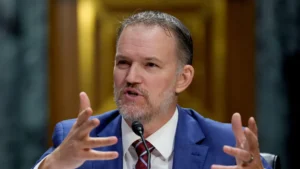
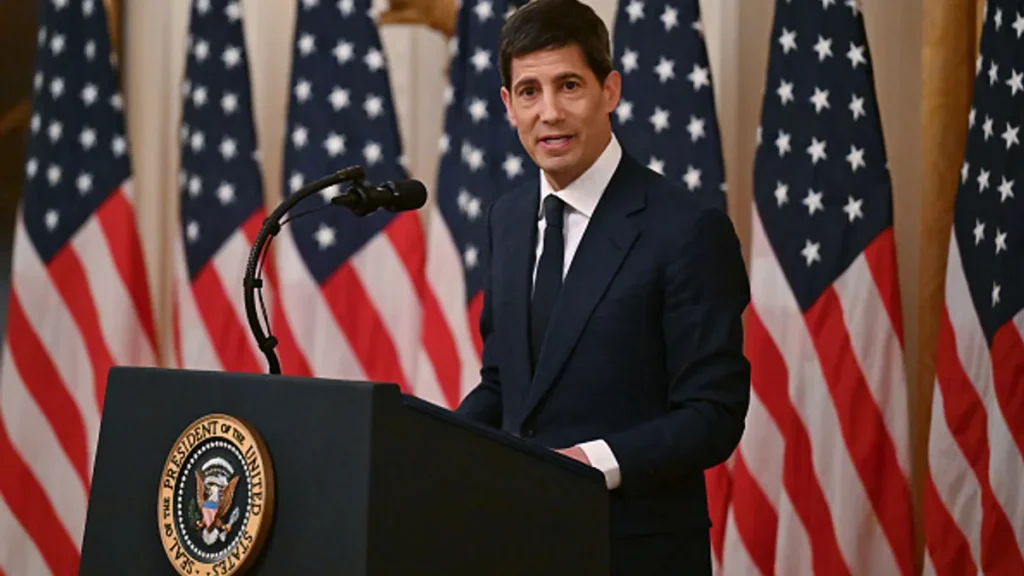
In his debut appearance before the House Financial Services Committee, Federal Reserve Chair Kevin Warsh delivered a sober assessment of the U.S. economic landscape, firmly rejecting the notion that the central bank’s campaign against inflation is nearing a successful conclusion. While recent consumer price data offered a glimmer of hope to Wall Street, Warsh’s message to lawmakers was unequivocal: the Federal Reserve remains committed to a restrictive stance until price stability is restored.
The Mandate: A Unanimous Commitment to 2%
Warsh, stepping into the spotlight as the leader of the nation’s central bank, faced a Congress eager for clarity on the future of interest rates. Addressing the panel, he underscored that the Fed’s fight against above-target inflation is far from over.
"I’m not going to show up here and say mission accomplished," Warsh stated during the hearing. "There’s plenty of work to do."
The Chair noted that following a half-decade of persistent price pressures, the Federal Open Market Committee (FOMC) has achieved a rare level of consensus. At the most recent gathering of central bank governors and regional bank presidents in June, the sentiment was clear: there is no appetite for tolerating higher-than-target inflation. According to Warsh, the commitment to bring inflation back down to the 2% target is both "unambiguous and unanimous."
A Chronology of Economic Pressure
To understand the current urgency, one must look at the recent trajectory of the U.S. economy. Since 2021, the American consumer has navigated a landscape defined by elevated price levels.
- 2021–2023: The post-pandemic recovery triggered supply chain bottlenecks and a surge in demand, leading to the highest inflation rates in four decades.
- 2024–2025: Despite multiple rate hikes, inflation remained "sticky," fueled by tight labor markets and persistent service-sector demand.
- May 2026: Kevin Warsh takes the helm at the Federal Reserve, promising a renewed focus on data-driven policy and institutional credibility.
- July 14, 2026: Warsh provides his first testimony to the House Financial Services Committee, tempering market optimism following a favorable CPI report released earlier that morning.
The current economic environment remains fragile. Warsh’s warning comes at a moment when geopolitical tensions have once again begun to bleed into the domestic economy. The recent collapse of a ceasefire in the conflict with Iran has injected new volatility into global energy markets, threatening to reverse some of the hard-won gains in the inflation battle.
Supporting Data: Oil Prices and Market Expectations
The volatility in energy prices serves as a stark reminder of the external factors that could complicate the Fed’s trajectory. Since June 30, futures for Brent crude oil—the global benchmark—have surged by approximately 17%, climbing from $72 per barrel to $85 per barrel. This sharp increase poses a direct threat to the headline inflation numbers that the Fed monitors closely.
Despite this energy-driven headwind, the most recent Consumer Price Index (CPI) report released on the morning of the hearing provided a moment of relief for investors. The data, which came in below market expectations, triggered an immediate shift in interest rate futures.
According to the CME FedWatch tool, the market’s appetite for a rate hike in the coming month has cooled significantly. On Monday, traders assigned a 41.7% probability to a quarter-percentage-point increase; by the time Warsh concluded his testimony, those odds had plummeted to 16.6%. This reflects a market betting that the Fed may hold steady, provided that the current cooling trend in price growth continues.
However, Warsh warned against the dangers of "cherry-picking" data. "While I reviewed the data that came out this morning on CPI and it was positive relative to expectations, I’m not for cherry-picking," he emphasized. By maintaining this stance, Warsh signaled that he is looking for a sustained trend rather than a single month of favorable readings before declaring victory.
The Labor Market: A Pillar of Stability
One of the most closely watched aspects of the current economic cycle has been the labor market. Historically, aggressive interest rate hikes are expected to cool demand for labor, often leading to a rise in unemployment. Yet, the current cycle has defied conventional wisdom.

"America’s labor market appears broadly stable," Warsh told the committee. He highlighted several indicators that suggest the economy is navigating the "soft landing" scenario that many analysts once deemed improbable:
- Job Creation: The rate of hiring has effectively kept pace with the growth of the workforce, preventing the market from overheating or stalling.
- Layoff Rates: Despite high interest rates, the economy has seen remarkably few large-scale layoffs, suggesting that businesses remain confident in their long-term growth prospects.
- Job Vacancies: While there has been slight variance, the overall number of openings remains consistent with a healthy, albeit rebalancing, labor market.
- Wage Growth: Nominal wages continue to show solid growth, helping households buffer the impact of high prices, though the Fed remains wary of wage-price spirals.
Official Responses and Political Implications
The House Financial Services Committee hearing was characterized by a push-pull dynamic between legislative goals and monetary discipline. Members of Congress, cognizant of the upcoming election cycle, questioned Warsh on the impact of high borrowing costs on small businesses and the housing sector.
Warsh’s responses remained focused on his primary mandate: price stability. He argued that the cost of failing to contain inflation would be far greater than the temporary discomfort caused by restrictive interest rates. By framing the inflation fight as a necessary step for long-term prosperity, Warsh sought to insulate the central bank from political pressure to lower rates prematurely.
Economists observing the testimony noted that Warsh’s approach marks a continuation of the "higher for longer" philosophy, but with an added layer of communication transparency. By explicitly stating that the work is not yet done, he effectively managed market expectations, preventing the kind of "irrational exuberance" that could lead to financial instability.
Implications: The Path Forward
The path forward for the Federal Reserve is fraught with uncertainty. Warsh’s testimony suggests three primary implications for the remainder of 2026:
1. Data-Dependent Flexibility: The Fed will likely avoid a rigid calendar of rate hikes or cuts. Instead, each FOMC meeting will be treated as an isolated decision point based on the most recent prints for inflation and employment.

2. The Energy Risk Premium: The Fed is now explicitly factoring in the geopolitical risks in the Middle East. If oil prices remain at or above $85 per barrel, the Fed may be forced to keep interest rates in restrictive territory longer than previously anticipated to prevent energy costs from embedding themselves into the broader economy.
3. Maintaining Credibility: Warsh is clearly prioritizing the central bank’s reputation. By resisting the urge to celebrate the latest CPI report, he is signaling to global markets that the Fed will not be swayed by short-term sentiment. This focus on institutional credibility is designed to anchor long-term inflation expectations, which is essential for bringing the economy back to its 2% target.
As the session concluded, it was evident that the Chair is settling into his role with a clear strategy. Warsh is positioning the Fed as a stabilizing force in an era of global volatility. For the American public, the message is one of caution: while the economy is showing resilience, the battle against inflation remains the Fed’s overriding priority, and there is no room for complacency in the months ahead.
With the next FOMC meeting looming, all eyes will remain on the data. For now, the Federal Reserve is holding its ground, waiting for the evidence that the inflation fever has finally broken for good.