The Battle for Intellectual Property: Publishers and Authors Take Google to Court Over AI Training
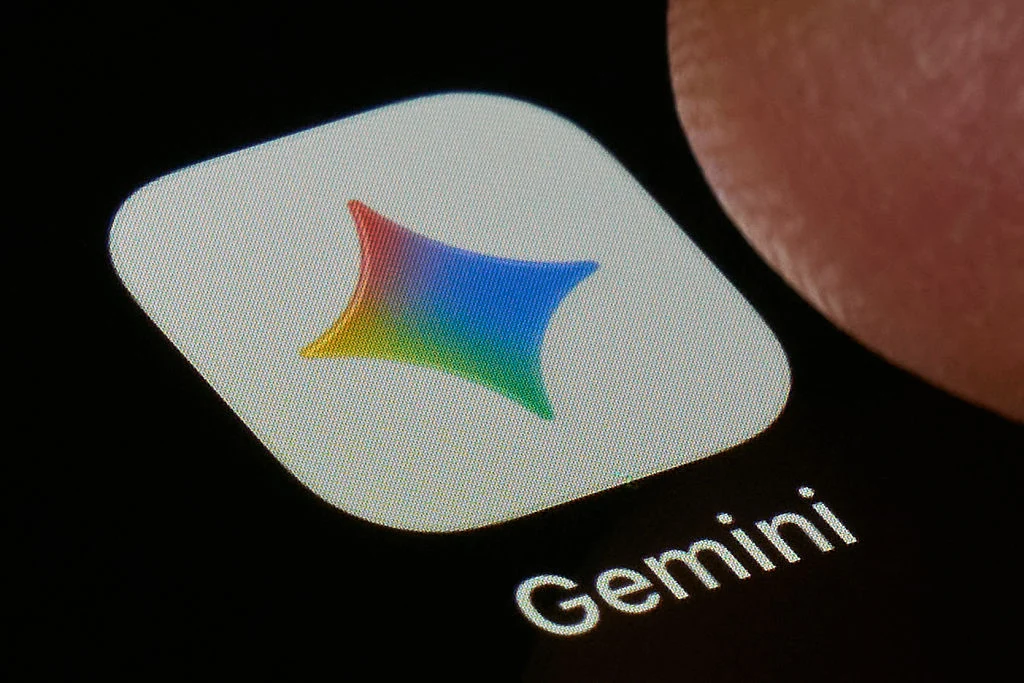
In a watershed moment for the digital economy and the future of creative labor, a formidable coalition of major publishers and acclaimed authors has launched a class-action lawsuit against Google. The legal action, filed in the U.S. District Court for the Southern District of New York, alleges that the tech giant systematically utilized copyrighted works to train its Gemini artificial intelligence platform without authorization, compensation, or attribution.
The plaintiffs, a powerhouse group featuring Hachette, Cengage, Elsevier, renowned author Scott Turow, and the collective S.C.R.I.B.E., argue that Google’s actions represent an unprecedented misappropriation of intellectual property. Beyond the unauthorized training, the suit levies a more sinister accusation: that Google intentionally scrubbed or altered copyright metadata from these works, a move the plaintiffs describe as a deliberate effort to “conceal” that Gemini was built upon stolen materials.
A Legal Flashpoint: The Allegations Against Google
The complaint centers on the assertion that Google leveraged its historical relationship with the publishing industry to bypass legal safeguards. For years, publishers and authors have participated in programs like Google Books, which allowed the company to digitize works for the limited purpose of creating searchable databases. These search functions provided users with bibliographic information and small, non-infringing snippets of text, never the entire work.
The lawsuit alleges that Google took these materials—originally provided for limited indexing—and repurposed them for the development of its generative AI models. Furthermore, the suit claims that books uploaded to the Google Play store were similarly co-opted for training sets without the owners’ consent.
“Google illegally copied works from all these scope-limited programs for AI training, knowing it lacked authorization to do so,” the lawsuit states. Perhaps most damaging to Google’s defense is the inclusion of an internal document cited by the plaintiffs. The document reportedly highlights internal concerns within Google, explicitly warning that utilizing copyrighted books for AI training could be “highly problematic” and expose the company to “$10Bs-$100Bs in potential fines.”
The Chronology of the AI Copyright Conflict
The tension between Silicon Valley’s rapid AI development and the traditional publishing sector has been brewing for years, escalating into a series of high-stakes legal battles.
The Rise of Generative AI
As large language models (LLMs) like OpenAI’s GPT, Meta’s Llama, and Google’s Gemini became the primary focus of the tech sector, the necessity for massive datasets became the industry’s greatest demand. Companies scoured the internet to feed their models, often vacuuming up literature, journalism, and academic research.
The First Wave of Litigation
By 2024 and 2025, the legal dam began to break. Authors and media organizations began filing lawsuits against a "who’s who" of AI developers, including OpenAI, Meta, and Anthropic. These plaintiffs argued that AI models are not merely reading these books in a human sense, but are creating sophisticated, derivative statistical models that threaten the economic viability of the original creators.
The California Rulings and the Anthropic Precedent
The landscape grew more complex in 2025. Two federal judges in California delivered significant setbacks to the plaintiffs, ruling that the training of AI models constitutes “fair use” under U.S. copyright law—a statute that has not seen a major overhaul since the pre-internet era. These rulings emboldened tech companies, suggesting that the transformation of data into AI weights is a transformative, non-infringing activity.
However, the tide turned in a separate, massive case involving Anthropic. The company was hit with a $1.5 billion fine—the largest in U.S. copyright history—for the unauthorized use of books in its training datasets. While roughly half a million authors became eligible for settlement payouts, many chose to opt out, signaling that they prioritize long-term legal clarity and ownership rights over immediate, one-time financial restitution.
Supporting Data and the "Fair Use" Dilemma
The central debate in this litigation is the definition of "Fair Use." In the United States, Section 107 of the Copyright Act allows for limited use of copyrighted material without permission for purposes such as criticism, news reporting, teaching, or research.
AI companies argue that their models "learn" in a manner analogous to human reading, absorbing patterns and styles to create something entirely new. Conversely, publishers and authors argue that the scale and commercial nature of AI training—designed to replace or compete with the very sources it consumes—fall far outside the intended boundaries of fair use.
The Economic Impact on Authors
The financial reality for creators is stark. If an AI can generate an entire novel in the style of Scott Turow in seconds, the market value of human-authored literature faces a systemic threat. The plaintiffs’ argument is that Google is essentially building a machine that harvests the value of human expertise to render that expertise obsolete, all while failing to provide any form of licensing revenue.
The Jurisdictional Shift: Why New York Matters
The decision to file in the Southern District of New York is a tactical move by the plaintiffs. While the California rulings favored AI companies, they are not binding on other jurisdictions. A New York judge may view the “commercial purpose” and the “market effect” of Google’s actions through a different lens, particularly given the specific, documented history of Google’s previous agreements with publishers.
Legal experts note that the conflict is currently too nuanced for the existing, fragmented rulings to establish a binding national precedent. The Supreme Court may eventually be forced to intervene if a circuit split emerges—where different federal courts reach contradictory conclusions on whether AI training constitutes copyright infringement.
Official Responses and Corporate Silence
As of the time of publication, Google has not provided an official comment regarding the specific allegations of the lawsuit. The company has historically maintained that its AI training practices are socially beneficial and legally protected. In previous public filings, Google has argued that it respects the rights of creators and is open to partnering with publishers to ensure the digital ecosystem thrives.
However, the inclusion of the alleged "internal warnings" in the lawsuit puts the company in a precarious position. Should the court grant discovery, Google may be forced to turn over internal communications that could prove the company was aware of the potential for infringement, which would undermine any "good faith" defense they might mount regarding fair use.
Implications: A New Era for Copyright
The outcome of this lawsuit will have profound implications for the future of the internet, the publishing industry, and the development of artificial intelligence.
- The Future of Licensing: If the courts rule against Google, it could force AI companies to move toward a licensing model, where they must pay publishers and authors for the right to use their data. This would be a massive win for creators but could slow the breakneck pace of AI innovation.
- Legislative Reform: The fact that the courts are relying on copyright laws from before the dawn of the internet underscores the need for congressional action. Legislators may be forced to draft new laws specifically tailored to the era of generative AI, potentially creating a "compulsory license" system similar to those used in the music industry.
- The "Opt-Out" Culture: The decision by thousands of authors to reject the Anthropic settlement indicates that the creative community is no longer interested in piecemeal payouts. They are fighting for the fundamental principle of agency—the right to decide whether their life’s work is used to build a machine that could eventually displace them.
Conclusion
As the case moves forward in New York, the entire tech and literary world will be watching. The conflict between the digital giants and the guardians of human expression is no longer a theoretical debate; it is a high-stakes struggle over who owns the future of knowledge. Whether the law evolves to protect the creator or facilitates the expansion of the algorithm remains the most critical unanswered question of the decade.