The Hidden Cost of Coverage: How New Federal Policy on Roof Insurance is Reshaping Real Estate Investment
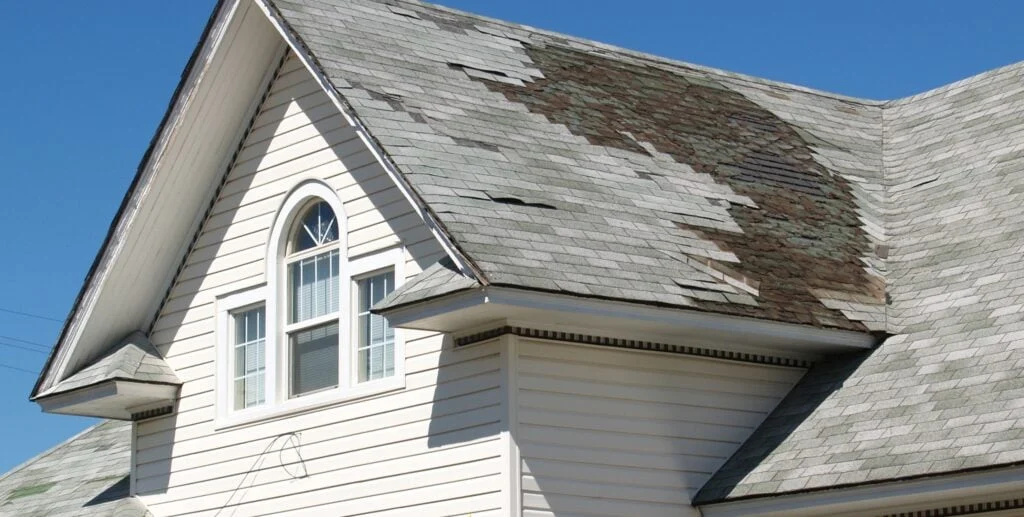
For real estate investors, the margin between a profitable year and a financial catastrophe often hinges on the fine print of their insurance policies. Recently, a subtle but seismic shift in federal policy has fundamentally altered the landscape of property protection. A new rule from the Federal Housing Finance Agency (FHFA) has effectively removed the requirement for full replacement cost coverage on roofs for properties financed by Fannie Mae and Freddie Mac, allowing for "Actual Cash Value" (ACV) policies instead. While framed as a measure to reduce costs for homeowners, for the savvy investor, this policy represents a significant transfer of financial risk from the insurer to the property owner—a shift that could turn a manageable storm repair into a five-figure liability.
The Evolution of the Policy: A Chronology of Change
The journey toward this shift began as housing affordability reached a boiling point in late 2024 and early 2025. With insurance premiums skyrocketing across the United States—driven by unprecedented weather events and inflating material costs—the FHFA faced mounting pressure to find ways to reduce the monthly burden on mortgage holders.
In March of this year, the FHFA took decisive action. By authorizing Fannie Mae and Freddie Mac to accept ACV policies for roofs, the agency provided a pathway for lenders to lower the insurance requirements for borrowers. The narrative from government officials, including FHFA director William J. Pulte, was one of deregulation and relief. Pulte characterized the move as the removal of a "disruptive and expensive" mandate, framing the policy shift as a return to "common-sense" market principles intended to help homebuyers secure the American dream by lowering the barrier to entry for mortgage qualification.
However, critics argue that this shift is less about efficiency and more about shifting the burden of an increasingly volatile climate onto the shoulders of the individual property owner. By allowing policies that account for the age and depreciation of a roof, the FHFA has effectively codified a "discount" on insurance that may leave thousands of landlords catastrophically underinsured.
The Mechanics of ACV vs. Replacement Cost
To understand the danger, one must distinguish between the two primary types of coverage. "Replacement Cost" coverage pays to repair or replace a damaged roof with materials of like kind and quality, regardless of the age of the old roof. If a storm destroys your roof, the insurer pays for the new one (minus your deductible).
In contrast, "Actual Cash Value" (ACV) is fundamentally different. It accounts for the depreciation of the asset. If your roof is 15 years old and has a 20-year lifespan, the insurer will only pay for the remaining 25% of its value. If a hail storm necessitates a $20,000 roof replacement, the ACV policy might only provide a $5,000 payout. The remaining $15,000—the "shortfall"—falls squarely on the investor.
For a landlord operating on thin margins, this gap is not just an inconvenience; it is a potential insolvency event. Lindsay Frangie, a Georgia-based branch partner at the lending firm Alcova Mortgage, put it bluntly: "If the policyholder is not prepared and they get a hailstorm or tornado, they are going to be in for the surprise of their life when they get that bill from the roofer saying, ‘Hey, your insurance is only covering $9,000, you owe another $9,000 to put a new roof on.’"
The Data: Why Insurers are Retrenching
The shift to ACV isn’t happening in a vacuum. It is a direct response to the crumbling stability of the insurance industry. According to data reported by The Wall Street Journal, the five largest home insurers in the U.S. failed to pay out on more than 44% of claims resolved last year. This is a dramatic increase from 36% just a decade ago.
This trend is not merely a result of more claims; it is the result of a hardening market. As insurers face mounting losses from extreme weather, they are becoming increasingly aggressive in their claims management. In Oklahoma, for instance, hundreds of residents are currently suing State Farm, alleging that the company uses vague policy language to deny legitimate claims. Plaintiffs in these cases describe a "secret playbook" that weaponizes the claims department to minimize payouts. When investors opt for cheaper ACV policies, they are essentially playing into this environment with a weaker hand, as these policies provide insurers with even more "legal" room to calculate lower payouts.
Implications for the Investor Portfolio
The implications for real estate investors are multifaceted, touching on everything from cash flow analysis to long-term portfolio valuation.
1. The Cash Flow Trap
Investors are perpetually hunting for ways to boost net operating income (NOI). Because ACV premiums are generally 10% to 20% lower than full replacement cost premiums, the temptation to switch is palpable. However, as Frangie noted, this is akin to putting a "Band-Aid on a bullet wound." An extra $100 in monthly cash flow is negated instantly if a storm requires a $15,000 out-of-pocket repair.
2. Operational Risk
For those managing multiple properties, the risk is compounded. If an investor holds a portfolio of ten properties and switches all of them to ACV to save on premiums, a single localized hailstorm could trigger multiple repair bills simultaneously. This represents a significant operational risk that can drain reserves and jeopardize the solvency of an entire LLC or holding company.
3. The "Drone" Surveillance Factor
Modern insurance is not just about the policy contract; it is about active monitoring. Al Brooks, vice chair of commercial banking at J.P. Morgan, warns that insurers are increasingly using drone technology to inspect properties from the sky. If an insurer sees a temporary tarp on a roof—a common "fix" for a landlord waiting for a claim—they may view the property as high-risk and move to cancel the policy entirely. The strategy of "wait and see" is effectively dead.
Expert Perspectives: A Market in Crisis
The consensus among industry experts is that insurance has replaced interest rates as the primary driver of real estate volatility. Billionaire investor Mark Cuban has been vocal about this, stating on social media that home insurance in disaster-prone areas will be the single most significant housing affordability issue over the next four years.
This sentiment is echoed by SES Risk Solutions, which notes that buyers are now reconsidering purchases entirely after reviewing insurance quotes. "Insurance is now influencing real estate decisions in ways traditionally reserved for mortgage rates," the firm stated in a recent analysis. For the professional investor, the takeaway is clear: insurance is no longer a "check-the-box" administrative task; it is a central pillar of investment strategy.
Navigating the Minefield: Strategic Recommendations
If you are a property investor looking to protect your assets in this new regulatory environment, consider these steps:
- Review Your Declarations Page: Do not rely on your agent’s summary. Obtain your full insurance policy and specifically look for "Replacement Cost" vs. "Actual Cash Value" language. If you find your roof is covered only for ACV, ask your agent for a "Guaranteed Replacement Cost" endorsement.
- Consult a Specialized Broker: Generalist insurance agents may not understand the specific needs of commercial or multi-property portfolios. Seek out a broker who specializes in real estate and can structure a portfolio-wide policy that mitigates individual property risk.
- Build Reserves for Capital Expenditures (CapEx): If you are forced into an ACV policy due to the age of your roof or market limitations, you must increase your cash reserves. Treat the potential shortfall as a known future liability rather than an unexpected expense.
- Prioritize Preventative Maintenance: Given that insurers are using aerial surveillance to identify roofs in poor condition, proactive maintenance is now an insurance strategy. Fixing a small leak immediately is far cheaper than being dropped by your carrier because a drone caught you using a tarp.
Conclusion: The Long-Term View
The FHFA’s new rule is a symptom of a larger, systemic problem: the cost of insuring property against an increasingly hostile climate is rising, and the government is signaling that the private sector must bear more of that burden.
For the short-term investor, the temptation to prioritize immediate cash flow through lower premiums is strong. However, in the high-stakes world of real estate, sustainability is the only metric that matters. Protecting your roof is not just about keeping the rain out; it is about protecting the viability of your investment. In this new era, the smartest investment you can make may not be in a new property, but in the comprehensive, high-quality insurance that ensures your current portfolio survives the next storm.