From Hospital Hallways to Real Estate Success: How One Investor Turned a Divorce Into a Portfolio
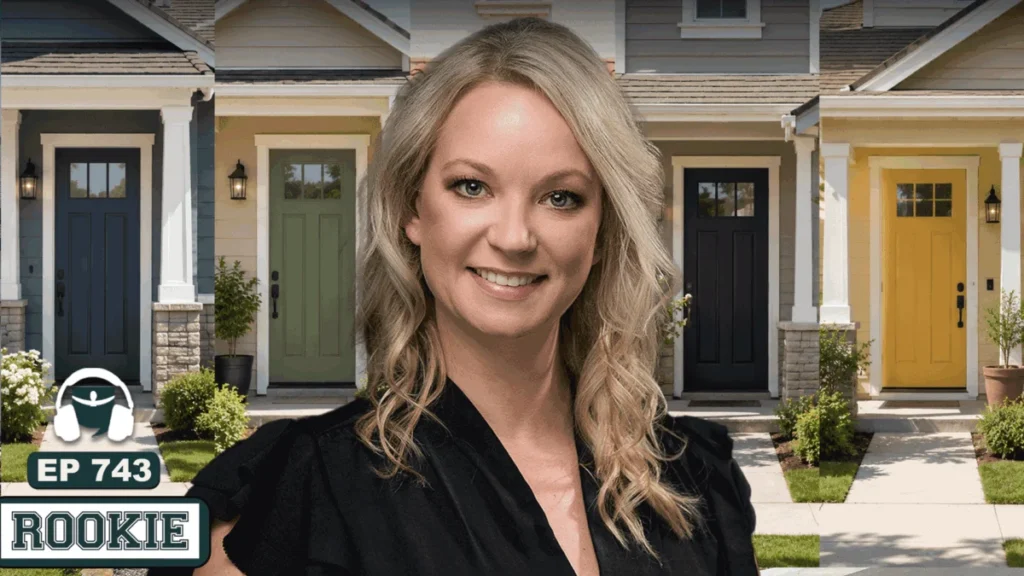
In the world of real estate investing, the narrative often focuses on sophisticated algorithms, high-stakes bidding wars, or seasoned experts with deep pockets. Yet, for Stephanie Wagner, a veteran X-ray technician, the key to building a thriving real estate portfolio wasn’t found in a complex financial model—it was found in a chance conversation while waiting for lunch at a food truck.
Wagner’s journey from a 20-year career in interventional radiology to becoming a successful landlord and licensed real estate professional serves as a masterclass in resilience, networking, and the power of taking action. Her story, recently featured on the Real Estate Rookie podcast, highlights that the most significant barrier to entry in property investment is often the mindset of the investor, not the market conditions themselves.
The Catalyst: A Life Reimagined
For nearly two decades, Stephanie Wagner defined herself by her W-2 job. While she had long harbored an interest in real estate—sparked by childhood memories of her family’s involvement in property management—her ambitions were shelved during a marriage that did not share her vision for wealth creation.
When her marriage ended, Wagner faced a critical crossroad. Rather than retreating into the common post-divorce "rut," she viewed the transition as a blank slate. "It was now or never," she reflects. "I’ve got one life to live, and I have to do a better job of living it."
This shift in perspective was not merely emotional; it was strategic. Wagner began to view her life through the lens of agency and autonomy. She recognized that while she had spent years facilitating medical procedures for others, she had neglected to perform the necessary "surgery" on her own financial future. Within six months of her divorce, she had closed on her first deal, effectively launching a career that would eventually grow to include five rental units and a professional real estate license.
Chronology of a Portfolio: From Off-Market to Ownership
Wagner’s path was not linear, nor was it paved with ease. Her first foray into the market was marked by the frustration common to many "rookie" investors: scouring the Multiple Listing Service (MLS), visiting properties that didn’t pencil out, and feeling discouraged by a hyper-competitive landscape.
The Food Truck Connection
The turning point came during a mundane moment at her hospital. While discussing the difficulty of finding viable investment properties with a coworker, a stranger overheard their conversation. The woman, having sensed Wagner’s genuine intent, revealed that she and her fiancé were preparing to list their duplex in West Dallas, Wisconsin.
What followed was an "off-market" deal—the holy grail for many investors. By bypassing the competitive public market, Wagner secured her first property with less friction and more favorable terms. This experience underscored a fundamental principle of the industry: you must vocalize your goals. If your network does not know you are looking to buy, they cannot bring opportunities to your doorstep.
Navigating the "People Side"
Her second major acquisition brought a different set of challenges. Wagner purchased a property from an estate, inheriting tenants who had lived in the units for over a decade. These tenants were on fixed incomes, creating a complex ethical and financial dilemma: how to balance the need for market-rate returns with the responsibility of being a landlord to long-term residents.
Wagner’s approach to this challenge was unorthodox. She collaborated directly with social workers and the housing authority to navigate the Section 8 (HUD) voucher process, successfully raising the rents to market levels while ensuring her tenants remained housed. This experience taught her that real estate is fundamentally a "people business."
Supporting Data and Strategic Mindset
Wagner’s portfolio now consists of five doors, including a single-family home and two duplexes. Her success is not just a result of luck, but a reflection of a disciplined, albeit learning-by-doing, mindset.
The Role of Professional Representation
A recurring theme in Wagner’s narrative is the value of a buyer’s agent, even—and perhaps especially—in off-market transactions. While some investors attempt to save on commissions by handling deals independently, Wagner argues that a professional agent acts as an essential buffer.
"Selling and buying a house can be hugely emotional," Wagner notes. "Having that buffer between people makes things easier. It takes away the legal liability and provides a professional framework to navigate inspections, negotiations, and unexpected repairs."
The "Worst Case Scenario" Framework
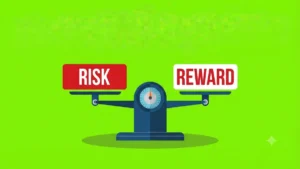
When asked how she overcame the fear of failure, Wagner points to her father’s advice: "What is the worst that happens?" Her answer was simple: "I list the property, sell it, and go back to renting." By defining the floor of her investment, she neutralized the paralyzing effect of fear. This logic is a pillar for any investor: when the downside is manageable and the upside is wealth-building, the risk-to-reward ratio shifts in the investor’s favor.
Implications for Women in Real Estate
Wagner has become a vocal advocate for women in the real estate space. She notes that many women are conditioned to believe they lack the technical skills—or the "tenacity"—required to manage physical assets.
"Five years ago, I didn’t know how to hold a reciprocating saw," she admits. "Now, I can change out light fixtures and replace vanities." Her message is clear: technical skills are learned, not innate. The primary barrier is the belief that one is not "capable."
By relying on her own financial security rather than expecting it from a partner, Wagner has achieved a level of independence that she believes is vital for all women. She encourages prospective investors to view real estate as a vehicle for autonomy—a way to build a legacy that is entirely within their own control.
Expert Insights: Comfort vs. Confidence
The Real Estate Rookie podcast hosts, Ashley Kehr and Tony J. Robinson, provide context to Wagner’s success by drawing a distinction between comfort and confidence. Many prospective investors wait for the "perfect moment" to arrive—a moment defined by comfort. However, as Wagner’s story illustrates, growth only occurs when one steps into the unknown.
Confidence is not the absence of fear; it is the result of action. Wagner’s decision to move forward despite the "dumpster fires" of early projects is what separated her from those who remain on the sidelines.
The Path Forward: Quality over Quantity
As Wagner looks to the future, her focus is shifting from simply accumulating doors to optimizing the quality of her portfolio. She is currently evaluating her long-term strategy, including a potential transition from her career in interventional radiology to full-time real estate investing.
Her advice to those currently standing in their own "food truck moment"—the moment of hesitation before the leap—is consistent:
- Be Vocal: Tell everyone you are an investor. Opportunities often hide in plain sight.
- Be Persistent: You will make mistakes. The key is to learn from them and "do it again."
- Focus on the Numbers: Real estate is a business. Whether you are dealing with a property or a tenant, ground your decisions in data and professional communication.
Stephanie Wagner’s story is a powerful reminder that the "perfect" moment to invest doesn’t exist. Instead, there is only the moment you decide that your financial future is worth the effort of taking the first step. Whether you are dealing with a life-changing event like divorce or simply looking for a new path, the lessons from her journey remain the same: take action, build your team, and never underestimate your own capacity to learn.