The New Fed Reality: Why "Higher for Longer" is Reshaping the Real Estate Landscape
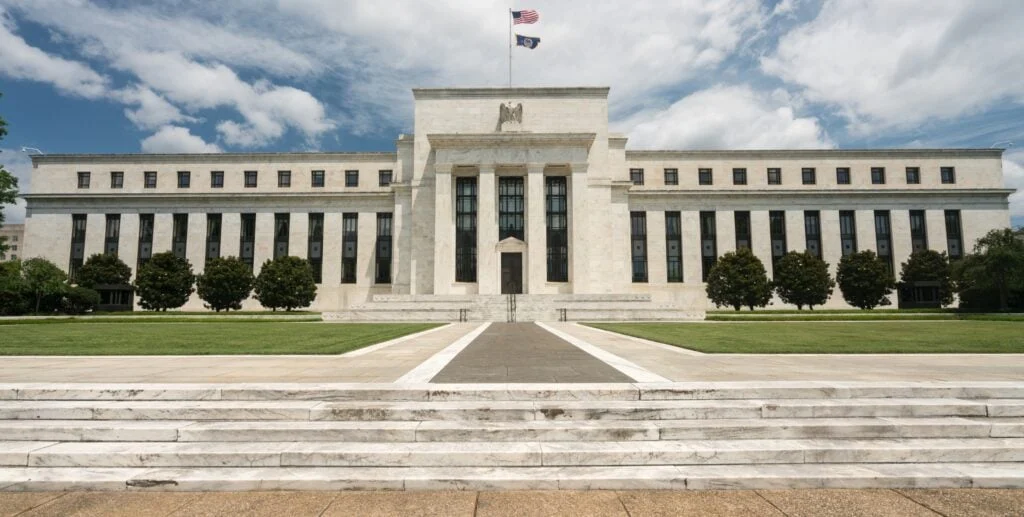
For real estate investors who spent the last few years waiting for a "pivot," the tenure of new Federal Reserve Chair Kevin Warsh has delivered a sobering, if not painful, reality check. The hope that a leadership change would herald a return to the low-interest-rate environment of the previous decade has evaporated, replaced by a firm commitment to monetary restraint that is forcing a fundamental rewrite of the real estate investment playbook.
With the ongoing geopolitical instability stemming from the Iran conflict fueling persistent inflationary pressures, the Federal Reserve finds its hands tied. Despite earlier calls for dovish policies, Chair Warsh has executed a sharp pivot, aligning himself with the hawkish consensus that price stability must take precedence over market sentiment. For the small-scale landlord and the aspiring real estate mogul, this "higher for longer" era is no longer a temporary hurdle—it is the new baseline.
The Chronology of a Policy Shift
To understand how we arrived at this impasse, one must look at the transition from Jerome Powell’s late-term policies to the current Warsh administration. Throughout his transition into the role, Warsh faced immense pressure to address the cooling housing market and the struggles of small businesses. However, upon taking the chair, he was immediately confronted by the hard data of 2026: a stubborn inflation rate buoyed by global supply chain disruptions and energy price spikes tied to international conflict.
In a dramatic about-face from his campaign-era rhetoric, Warsh signaled at his inaugural press conference that the Federal Open Market Committee (FOMC) would not be swayed by political convenience. By keeping rates steady at his first meeting and explicitly hinting at potential hikes, Warsh effectively slammed the door on the "imminent rate cut" narrative that had dominated investor optimism throughout early 2026.
Supporting Data: A Market in Transition
The current economic environment is defined by a dichotomy: while borrowing costs remain prohibitively high, the physical asset market is finally showing signs of correction.
According to Realtor.com’s May 2026 data, the national median listing price has declined for seven consecutive months, reflecting a 2.4% year-over-year drop to approximately $429,500. This shift marks the most significant downward trend in listing prices since 2017. Sellers, once emboldened by a red-hot post-pandemic market, are now grappling with a buyer pool constrained by the highest mortgage rates in a generation.
However, the cost of capital remains the primary antagonist for investors. As noted by analysts at Bank of America and Deutsche Bank, the Fed’s trajectory is now pointing toward potential hikes in September, October, and December. If these projections materialize—potentially adding 75 basis points to the federal funds rate by the end of the year—the market will experience the most aggressive tightening cycle since the initial post-pandemic inflation surge.
Official Responses and Economic Sentiment
The reaction from major financial institutions has been one of caution. Economists at Bank of America have described the Fed’s new "reaction function" as significantly more hawkish than initially anticipated. This sentiment is echoed by researchers at Redfin; Chen Zhao, head of economics research, noted that the committee’s singular focus on inflation implies that mortgage rates are unlikely to see a meaningful retreat in the near term.
The consensus among market watchers is clear: the era of "easy money" is over. Investors who built models based on the assumption of inevitable refinancing opportunities are finding their internal rates of return (IRR) collapsing under the weight of sustained high debt-service costs.
Implications for Small Landlords and Investors
For the individual investor, the current climate necessitates a total abandonment of the "date the rate, marry the house" strategy. This once-popular mantra relied on the assumption that a future refinance would lower the monthly payment. In a "higher for longer" environment, that refinance may never come.
The Cash-Rich Advantage
Investors with access to liquid capital are the primary beneficiaries of this cycle. As listing prices continue to soften due to high financing costs, those who can transact in cash possess significant leverage. They are not merely buying properties; they are buying the desperation of sellers who are increasingly unable to hold onto assets as maintenance, insurance, and tax costs continue to climb alongside interest rates.
The Rental Silver Lining
While the acquisition side of the business faces headwinds, the operational side remains robust. High interest rates are effectively trapping potential first-time homebuyers in the rental market. Data from 2-10 Home Buyers Warranty highlights that 44% of current renters now view their status as a long-term lifestyle choice rather than a temporary stepping stone, largely due to the sheer unaffordability of entering the homeownership market. For landlords, this creates a stable, high-demand tenant pool that can support the increased costs of property ownership.
Strategies for Navigating the "New Normal"
Successfully operating in this environment requires a shift from speculative growth to defensive, cash-flow-oriented investing.
1. Prioritizing Fundamentals Over Speculation
The speculative "appreciation play"—buying a property solely for its future value increase—is effectively dead in this market. Investors must prioritize properties that cash flow from day one, even at current interest rates. This requires a rigorous analysis of local tax burdens, insurance premiums, and, most importantly, the resilience of the local labor market.
2. Targeting Resilient Markets
The Midwest continues to draw attention for its lower comparable prices and stable rental demand. When interest rates are high, the "spread" between the cost of the property and the potential rent becomes the most important metric. Investors are encouraged to look for "boring" markets where the cost of living remains low enough to buffer against economic shocks.
3. Strengthening Balance Sheets
The "loan-to-value" (LTV) ratios that were acceptable in 2021 are dangerous in 2026. Investors must maintain significantly higher cash reserves. A conservative approach—where the property can remain vacant for six months without threatening the owner’s personal solvency—is no longer just a recommendation; it is a requirement for survival.
4. Negotiating the Deal
Because the pool of qualified buyers has shrunk, the power dynamic has shifted. Sellers are often more willing to entertain creative deal structures, such as seller financing or lease-option agreements, to move properties that have sat on the market for extended periods. Investors who take the time to build relationships with listing agents and distressed sellers can find "deep discount" opportunities that are invisible to the average buyer.
Final Thoughts: The Discipline of the Long Game
As Charles Dickens famously wrote, "It was the best of times, it was the worst of times." For the disciplined real estate investor, this accurately describes the current epoch. It is the worst of times for those who over-leveraged their portfolios or relied on the Fed to bail them out. Conversely, it is a period of immense opportunity for those who can remain patient, maintain liquid reserves, and focus on the cold, hard math of cash flow.
We have learned that the Federal Reserve is no longer a partner to the real estate market; it is an independent entity concerned solely with its own mandate of price stability. The expectation that rates will fall is a gamble that no serious investor should be willing to make.
If you are entering the market today, your business plan must work at 7% or 8% interest rates. If the deal does not pencil out without the hope of a refinance, it is not a deal—it is a liability. By focusing on fundamentals, choosing markets where demand outstrips supply, and maintaining a conservative financial buffer, investors can not only survive this high-rate era but emerge on the other side with a portfolio built to withstand any economic cycle. The "new normal" is not a temporary inconvenience; it is the environment in which the next generation of real estate wealth will be forged.