The New American Narrative: Zohran Mamdani and the Post-Fukuyama Era
By Slavoj Žižek
July 8, 2026
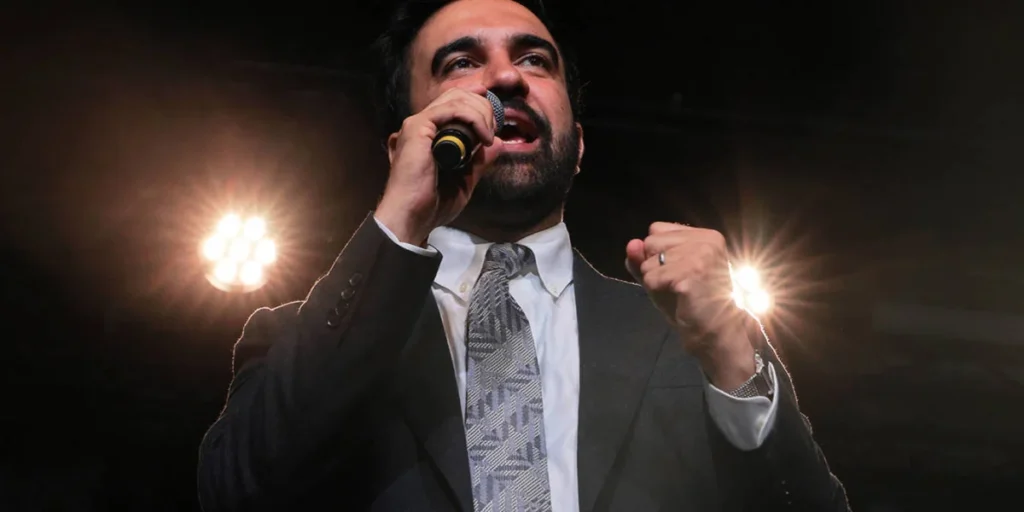
In the wake of a political landscape fractured by populist fervor and the stagnation of traditional liberalism, New York Mayor Zohran Mamdani’s Independence Day address has emerged as a watershed moment in contemporary discourse. By weaving together a vision that transcends the sterile dichotomy of right-wing grievance and performative left-wing critique, Mamdani has articulated a new, ideology-driven framework that threatens to redefine the American consensus.
To understand the weight of this moment, one must look back at the intellectual scaffolding that governed the West for the last thirty years: Francis Fukuyama’s "End of History." As we stand in 2026, the fragility of that thesis is no longer a matter of academic debate; it is the reality of our geopolitical existence.
The Collapse of the Liberal Hegemony
The 1990s were defined by a singular, seductive narrative: the triumph of Western liberal-democratic welfare-state capitalism. Francis Fukuyama, in his seminal work, proposed that we had reached the final form of human governance. The world was merely waiting for the empirical process of integration to catch up to this ideal.
However, the "End of History" proved to be a historical pause, not a conclusion. As the 21st century progressed, the contradictions inherent in this system—the widening chasm between capital and labor, the erosion of the public sphere, and the alienation of the working class—shattered the liberal consensus. The subsequent vacuum was filled by two warring ideologies: a right-wing populism rooted in nativist nostalgia and a left-wing "woke" discourse that often prioritized cultural grievances over structural economic reform.
Mayor Mamdani’s address was significant precisely because it ignored the traditional rules of this game. He did not appeal to the defensive posture of the status quo, nor did he retreat into the jargon of identity politics. Instead, he deployed ideology in its most potent, "positive" sense—as a constructive vision that demands the participation of the majority.
Chronology of a Shifting Landscape
- 1992: Francis Fukuyama publishes The End of History and the Last Man, cementing the belief in the universality of liberal democracy.
- 2008–2020: A series of global financial crises, pandemics, and social uprisings expose the cracks in the neoliberal order. The populist surge—both in the U.S. and Europe—challenges the globalist establishment.
- 2024: Zohran Mamdani is elected Mayor of New York, signaling a pivot toward a new, explicitly interventionist urban governance model.
- July 4, 2026: Mamdani delivers his Independence Day address, rejecting the "end of history" narrative in favor of a proactive, mobilization-based approach to American democracy.
Decoding the Mamdani Address: Beyond the Binary
Mamdani’s speech utilized a sophisticated rhetorical strategy. He did not condemn the American founding ideals; he reclaimed them. Where the right-wing populist seeks to preserve a mythologized past, and the radical left seeks to deconstruct the nation-state as an inherently oppressive entity, Mamdani argued that the "American Project" is a work-in-progress that requires a radical expansion of the common good.
H3: Reclaiming the Public Square
Mamdani’s focus on the "positive" use of ideology suggests that he understands something most politicians have forgotten: that people are not merely motivated by material self-interest. They are motivated by the desire to be part of something larger. By shifting the focus from "identities" to "shared infrastructure," he successfully moved the conversation away from the culture wars and toward the physical and economic reality of the city.
H3: The Failure of the "Woke" Critique
The Mayor’s critique of the left was particularly sharp. He suggested that the contemporary left has become too comfortable in its role as a permanent opposition, content to critique power without ever attempting to exercise it. By pivoting toward a strategy of broad-based coalition building—incorporating the working class, marginalized communities, and those alienated by the neoliberal establishment—Mamdani has bypassed the limitations of the "siloed" activist model.
Supporting Data: The Socio-Economic Context
The efficacy of Mamdani’s vision is backed by the economic realities of 2026. Data from the New York City Economic Development Council indicates that the post-pandemic recovery has been highly uneven. While the financial sector has seen record returns, the service and infrastructure sectors have struggled with chronic underinvestment.
- Wealth Disparity: The Gini coefficient for New York City has reached a 40-year high, creating a fertile ground for the type of redistributive rhetoric Mamdani employs.
- Infrastructure Deficit: With over 60% of the city’s public transit and water infrastructure requiring urgent upgrades, the "pragmatic idealism" Mamdani advocates—linking infrastructure to employment and civic pride—resonates with a disillusioned electorate.
- Political Polarization: Recent polling shows that 68% of New Yorkers are "tired of the endless cultural debates" and are prioritizing "tangible, local government performance" over national ideological purity tests.
Official Responses and Political Repercussions
The reaction to Mamdani’s address has been as diverse as the city itself.
- The Establishment View: Traditional Democratic party figures have expressed skepticism, fearing that Mamdani’s rhetoric leans too heavily into populist themes. Former party strategists warn that mobilizing the "majority" requires a more centrist coalition, not a re-imagination of the state.
- The Populist Right: Critics on the right have accused the Mayor of engaging in a "Trojan Horse" strategy, arguing that his vision for the public sector is simply a thinly veiled attempt at centralized socialist control.
- The Grassroots Response: Perhaps most tellingly, community organizers and labor unions have begun to rally behind the "New Independence" framework, seeing in it a genuine attempt to address systemic inequalities without the baggage of moralizing politics.
Implications for the American Future
What does Mamdani’s address mean for the future of the United States? It suggests that we are entering a post-ideological, yet hyper-political era. The "End of History" is officially over; we are back in the messy, dangerous, and creative arena of historical struggle.
H3: The Rebirth of the Nation-State
The most profound implication is the return of the nation-state as the primary engine of social progress. For decades, we were told that the state should be minimized, that the market was the only legitimate arbiter of value. Mamdani is suggesting a return to the state as the architect of society. This is not a return to the mid-20th-century model, but an attempt to use the state to solve 21st-century problems: climate change, digital inequality, and the erosion of local community.
H3: The Challenge of Ideological Mobilization
The danger, of course, is that ideology—even in the "positive" sense—can be turned toward exclusionary ends. However, Mamdani’s insistence on a "universal" approach to civic life offers a potential safeguard. By defining the "American" not through blood or soil, but through participation in the shared maintenance of the city, he is attempting to create a new, inclusive definition of citizenship.
Conclusion: A New Beginning?
As we move forward, the question remains: Can this vision survive the grinding machinery of political bureaucracy? The temptation to revert to the safe, narrow categories of the past is immense. Yet, the energy surrounding Mamdani’s Independence Day address suggests that there is a deep, unmet hunger for a politics that does more than manage our decline.
If Mamdani succeeds, he will have provided a blueprint for how the West can move beyond the stagnant, circular debates of the last thirty years. He has dared to suggest that the future is not something we arrive at, but something we build. In doing so, he has not just addressed the citizens of New York; he has challenged the assumptions of the entire Western world.
The history of the 21st century is no longer a predetermined march toward a liberal-democratic finish line. It is a blank page, and for the first time in a generation, someone is writing on it with a pen that doesn’t belong to the past.