The Future of Retirement: Understanding the Shift from Social Security to "Trump Accounts"

Social Security has long served as the bedrock of American retirement, designed as a social safety net to protect citizens against the loss of income due to retirement, disability, or the death of a primary earner. However, as the program approaches a precarious fiscal crossroads, the federal government is introducing a new financial instrument that may fundamentally alter how Americans prepare for their golden years. With the official launch of "Trump Accounts" in July 2026, a long-standing debate over the privatization of retirement security has moved from theoretical policy circles to the forefront of American households.
The Looming Funding Crisis: A Program in Transition
The Social Security Administration (SSA) has issued stark projections: the program is on a collision course with a funding shortfall by late 2032. This impending crisis is primarily driven by demographic shifts, specifically the retirement of the massive Baby Boomer generation, which has resulted in a shrinking ratio of younger workers paying into the system compared to the retirees drawing from it.
While the program successfully navigated a period of potential insolvency in 1983 through a landmark bipartisan overhaul, critics and analysts alike suggest that the current landscape is markedly different. Recent years have seen the SSA face significant budgetary constraints, resulting in reduced staffing levels and the closure of various regional offices. While administration officials describe these changes as necessary "efficiency measures," critics view them as a deliberate effort to hollow out the agency’s capacity to serve the public.
The Genesis of Trump Accounts
The "Trump Accounts," a cornerstone of the 2025 tax legislation, were initially introduced as government-seeded vehicles intended to help families build generational wealth by saving for higher education, housing, and other qualifying expenses. However, the narrative surrounding these accounts shifted significantly during the recent Milken Institute Global Conference.
Senator Ted Cruz (R-Texas), the primary legislative architect of the initiative, offered a candid assessment of the program’s broader intent. "Here’s the dirty little secret," Cruz told the audience. "Trump accounts are Social Security personal accounts."
This admission reignited a decades-old debate. Since the failed privatization efforts of the George W. Bush administration in 2005, conservatives have sought to shift the burden of retirement from a government-managed, "pay-as-you-go" system to a model based on individual investment accounts. Previous attempts were thwarted by the massive costs associated with transitioning the system and the inherent risks of exposing retirees to market volatility. Senator Cruz’s strategy, however, is to start at the cradle, allowing compound interest to work over a multi-decade timeline.
Chronology of the Retirement Pivot
- 1983: The Social Security Amendments act as a bipartisan fix, raising the retirement age and taxes to keep the system solvent.
- 2005: President George W. Bush pushes for the privatization of Social Security; the effort stalls due to high transition costs.
- 2025: The Trump Tax Bill is signed into law, establishing the framework for federally seeded child savings accounts.
- May 2026: Senator Ted Cruz clarifies the long-term goal of the accounts during the Milken Institute Global Conference.
- July 4, 2026: Trump Accounts officially launch, allowing for initial government seed deposits of $1,000 per child.
- 2032: The projected date for the Social Security funding shortfall, at which point benefits could face automatic reductions.
Supporting Data and Market Risks
The core argument in favor of Trump Accounts is the power of compounding. Proponents suggest that if a child receives consistent contributions from birth, their account could grow to $170,000 by age 18 and potentially reach $700,000 by age 35, eventually snowballing into millions by retirement age.
However, economists warn that this "market-based" optimism fails to account for the volatility inherent in financial markets. According to the U.S. Congress Joint Economic Committee, Social Security currently provides approximately 79% of the income for the poorest 20% of elderly Americans. Without the guaranteed, inflation-adjusted monthly checks provided by the current system, lower-income retirees would be significantly more vulnerable to market downturns. Half of all women aged 65 and older would fall below the poverty line if the guarantee of Social Security were removed or significantly diminished.
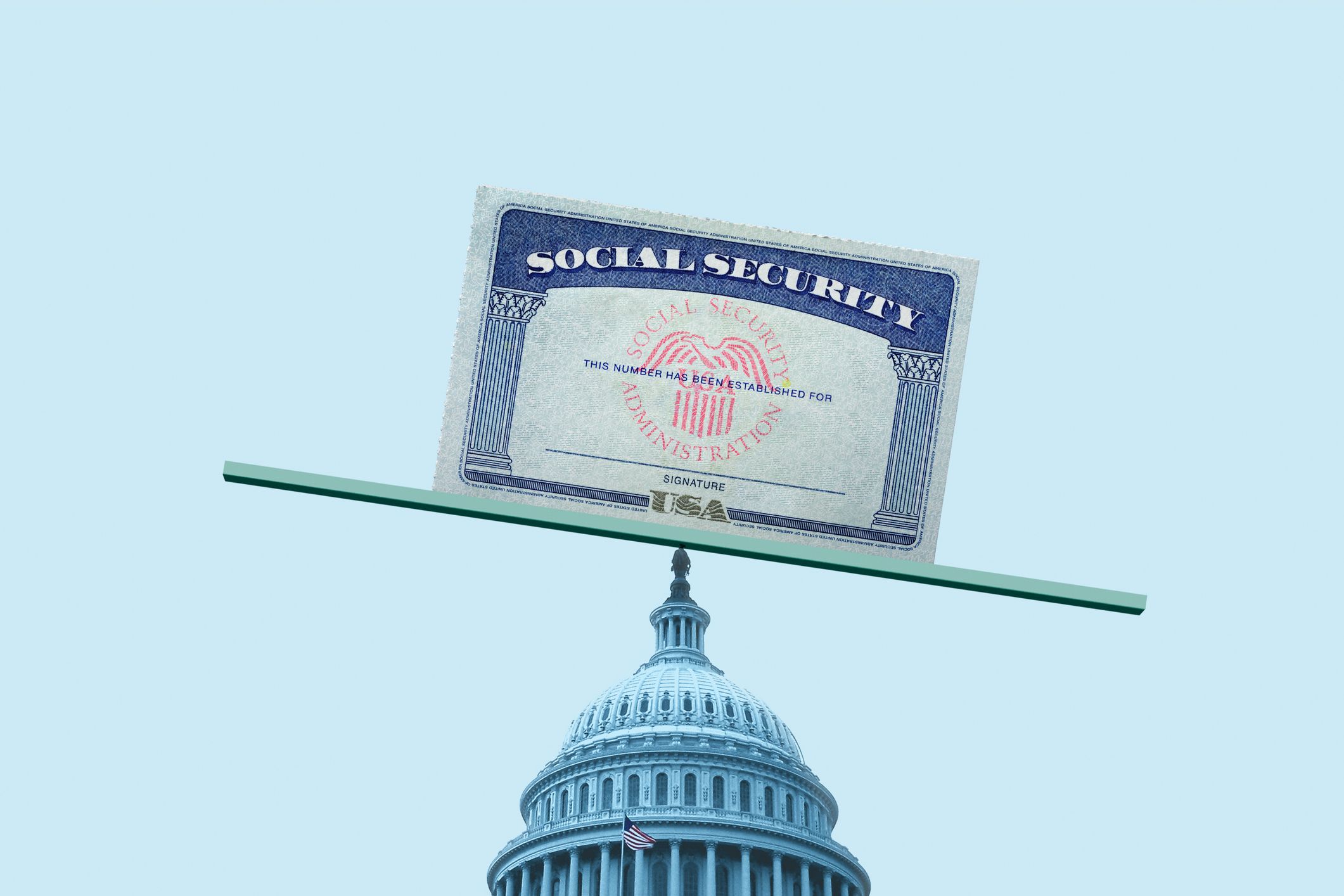
Furthermore, the "transition problem" remains a massive fiscal hurdle. Current payroll taxes fund current retirees. If younger workers were to divert those taxes into private accounts, the federal government would face an immediate revenue gap estimated between $1 trillion and $3 trillion. To bridge this, the government would likely need to borrow heavily, potentially impacting the national debt and the stability of the dollar.
Official Responses and Clarifications
Following the intense public reaction to Senator Cruz’s comments, administration officials sought to clarify the relationship between the new accounts and the existing Social Security program. Scott Bessent, in a statement released via social media, emphasized that the Trump Accounts are intended to "supplement, rather than replace" existing Social Security benefits.
The administration’s position is that the accounts provide a parallel path to wealth building. By establishing "TrumpIRA.gov" for adult workers without employer-sponsored plans, the government is aiming to fill the "retirement gap." The IRS has also moved to simplify these vehicles, creating a "safe harbor" that allows relatives to contribute up to $5,000 annually without the need to file complex gift tax returns, effectively incentivizing families to jumpstart these private portfolios.
The Tax Implications: A Fundamental Shift
The move toward private accounts changes not just how wealth is accumulated, but how it is taxed. Traditional Social Security benefits are subject to income tax thresholds, but they do not carry a tax "basis." In contrast, Trump Accounts follow rules similar to traditional IRAs.
| Feature | Social Security Benefits | Trump Account (Proposed) |
|---|---|---|
| Taxable Amount | 50% to 85% taxable | Up to 100% taxable |
| Basis Rules | N/A | After-tax contributions are tax-free; growth is taxable |
| Early Access | Age 62 (reduced) | Age 18 (for qualified expenses) |
| Mandatory Dist. | None | Subject to RMDs at age 73/75 |
This structural difference means that while Social Security provides a predictable, lifelong stream of income, Trump Accounts function as investment portfolios. Distributions from these accounts will be subject to Required Minimum Distributions (RMDs), and the tax burden will depend entirely on how the account was funded and the growth it experienced over time.
Implications for Future Generations
The most pressing question for the average American remains: What happens if Congress fails to reform the system before 2032? According to the Social Security Board of Trustees, the system will not simply "go bankrupt." Instead, it will trigger an automatic reduction in benefits to approximately 78 cents on the dollar.
For a retiree currently receiving an average benefit, a 22% reduction would represent a loss of several hundred dollars per month—a catastrophic drop for the 1 in 5 Americans who rely on the program for nearly all their income. The impact is perhaps most critical for late-career Gen Xers, who are currently between 46 and 61 years old. AARP polling indicates that 41% of this demographic plans to rely on Social Security as their primary source of income. For them, there is little time to pivot to a private, market-based retirement strategy.
As the nation approaches 2032, the emergence of the Trump Account represents a paradigm shift. While the total elimination of Social Security appears politically unlikely, the introduction of government-backed private accounts signals a transition toward a hybrid model. The future of American retirement security is increasingly moving away from the "guaranteed" model of the 20th century and toward a "market-driven" model for the 21st. For families, the task is no longer just to participate in the system, but to navigate a landscape where federal safety nets and individual market risks are increasingly intertwined.