The New Economic Reality: Navigating the Federal Reserve’s Hawkish Pivot and Emerging Real Estate Opportunities
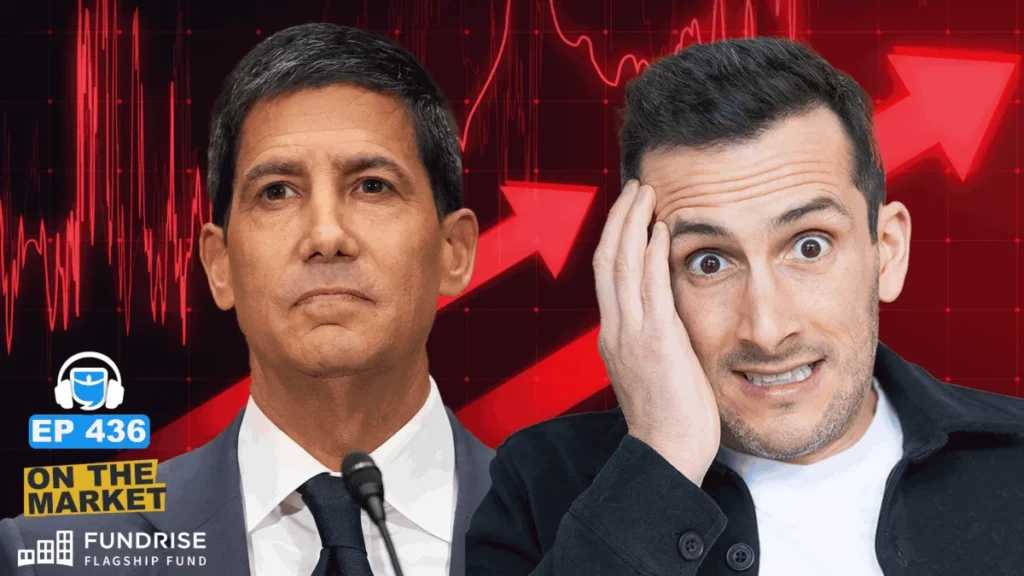
In an era defined by economic volatility, the latest signals from the Federal Reserve have sent shockwaves through the financial sector and the real estate market. During a recent episode of the On the Market podcast, host Dave Meyer, joined by industry experts James Dainard and Kathy Fettke, unpacked a landscape that few analysts would have predicted at the start of the year: a potential return to rate hikes rather than the expected easing of monetary policy.
As prediction markets shift their focus toward a September 2026 timeline for interest rate adjustments, investors are being forced to recalibrate their strategies in response to persistent inflation, a booming AI-driven office sector, and a surge in home equity line of credit (HELOC) utilization.
The Fed’s Hawkish Turn: Why Rate Cuts Are Off the Table
The prevailing narrative at the beginning of 2026 was one of optimism. With inflation hovering near the 2% target and the labor market showing resilience, many analysts anticipated that the Federal Reserve would implement one or two rate cuts by mid-year. However, the economic data has since diverged sharply from those projections.
Chronology of a Shifting Outlook
- January – February 2026: Inflation metrics reached the low 2% range, fostering widespread belief that the Fed would pivot toward a more accommodative stance.
- March – April 2026: Geopolitical tensions, particularly the escalation of conflict involving Iran, triggered a spike in energy costs. Consequently, year-over-year inflation accelerated to 4.2% by May.
- June 2026: In its most recent meeting, the Federal Reserve opted to hold rates steady. Crucially, the accompanying commentary signaled a departure from the "transitory" inflation narrative, with officials suggesting that rate hikes—not cuts—may be necessary to regain control of the economy.
Official Responses and the "Dot Plot"
While the committee did not formally vote to hike rates, internal projections—often referred to as the "dot plot"—indicated that a significant majority of Fed officials favor a tightening approach. Kathy Fettke highlighted a notable shift in rhetoric from the Fed: the abandonment of the specific 2% inflation target in favor of broader, more ambiguous language regarding "price stability." This suggests that the central bank may be preparing the market to accept a higher, long-term inflation baseline.
Furthermore, the appointment of Kevin Warsch to the Fed has been a point of intrigue. Rather than acting as a "dovish puppet" for the executive branch, Warsch has signaled a preference for data-driven decision-making, choosing not to participate in speculative forecasting. This approach, while unsettling for markets that crave certainty, is viewed by many as a necessary step to restore the Fed’s credibility in a high-inflation environment.
Supporting Data: Inflation, Labor, and Supply Chains
The argument for sustained higher rates is bolstered by a trifecta of economic pressures: energy costs, supply chain bottlenecks, and an unexpectedly tight labor market.
The Energy-Inflation Link
Oil prices, which surged toward $110 a barrel earlier this year, remain a primary driver of inflation. While energy prices have shown signs of cooling—dipping near $80 a barrel recently—the structural damage to supply chains remains. Industry experts note that the "bullwhip effect" of COVID-19 and geopolitical instability means that supply chains do not "snap back" instantly. Fertilizer costs and agricultural inputs ensure that food inflation will likely remain elevated for the duration of the current crop season.
The Paradox of the Labor Market
The labor market presents a contradictory picture. While official unemployment data remains strong, reports from the ground—particularly in construction and service industries—suggest a different reality. James Dainard observed a significant influx of qualified labor looking for work in Seattle, a sharp departure from the labor shortages reported just a year ago. This suggests that the economy may be seeing an increase in "underemployment," where workers are available but hours or wages are being curtailed.
Implications for Real Estate Investors
For those operating in the real estate space, this environment of "higher for longer" interest rates necessitates a shift in operational tactics.
Real Estate as an Inflation Hedge
Kathy Fettke emphasizes that despite the discomfort of high borrowing costs, real estate remains one of the most effective hedges against inflation. "Houses and buildings are made of materials that inflate," she notes. Historically, as the cost of labor and raw materials rises, the replacement cost of existing structures climbs, naturally driving up the value of existing real estate assets. For long-term investors, the hard asset provides a layer of protection that cash and bonds cannot offer.
The AI Office Boom: A Second Wave
A fascinating development discussed by the panel is the "AI Office Boom," reminiscent of the early 2000s dot-com era. Unlike the previous bubble, however, current office leasing is being driven by companies with robust, income-generating fundamentals.
- New York City and San Francisco are leading the charge, but Austin, Texas, has emerged as a powerhouse, boasting a 34% increase in office-based jobs compared to 2019 levels.
- The implication for investors is clear: while office space is often viewed with skepticism, the "AI-driven" subsector is attracting high-quality tenants, making it a potential growth area for those willing to look past the general market malaise.
The HELOC and Equity Strategy
The rising popularity of HELOCs has sparked debate regarding financial health. Data from Housing Wire indicates that $47 billion in equity was tapped in early 2026, marking a significant increase.
- The "Lock-in" Effect: Many homeowners are choosing to access their home equity rather than sell, as they are unwilling to forfeit their existing, low-interest-rate mortgages.
- Capital Reinvestment: Rather than signaling financial distress, much of this capital is being funneled back into property renovations, effectively modernizing the existing housing stock during a period of low inventory.
Strategic Recommendations for Investors
In the face of economic uncertainty, the experts recommend a disciplined approach to portfolio management.
1. Audit and Optimize
James Dainard suggests that investors perform a rigorous audit of their business and personal expenses. Cutting "fat" from budgets to increase margins is essential in an inflationary environment where household costs are rising. A subscription and expense audit is a low-effort, high-impact way to improve cash flow.
2. Update the "Buy Box"
When market sentiment is paralyzed by fear, opportunity arises. However, investors must be more selective than ever. Avoid the "average deal." In a high-interest rate environment, the math must be sound. Investors are advised to "punch holes" in their pro-formas; if a project still shows positive margins after rigorous stress-testing, it warrants consideration.
3. Seek Distressed Opportunities
While foreclosure rates remain historically low, they are trending upward—a 26% year-over-year increase. Savvy investors are monitoring these trends to identify opportunities in secondary debt or by assisting homeowners with assumable FHA loans. As Dainard notes, his most profitable venture in the 2008 cycle involved purchasing secondary debt on properties that were nearing auction, a strategy that requires deep market knowledge but can yield significant returns.
Conclusion: The "New Normal"
The consensus among experts is that the "easy money" era is firmly in the rearview mirror. The Federal Reserve is signaling a commitment to price stability over rapid economic stimulation, and the market is adjusting accordingly.
For the real estate investor, this means the current landscape is not necessarily a precursor to a total market collapse, but rather a correction that favors the disciplined. By focusing on fundamental demand—such as the AI-driven influx in cities like Austin—and maintaining a conservative leverage strategy, investors can navigate the current turbulence. As the economy works its way through these inflationary pressures, those who remain liquid and ready to act when others are "frozen" by analysis paralysis are the most likely to emerge as the primary beneficiaries of the next economic cycle.