Senate Banking Committee Confronts Banking Industry Over “Predatory” Fee Structures and Interest Rate Policies
WASHINGTON, D.C. – A high-stakes Senate Banking Committee hearing held this past Tuesday exposed a deep, bipartisan divide regarding the financial health of American households. As lawmakers probed the "affordability agenda," the conversation rapidly shifted from broad economic trends to the granular, often controversial practices of the banking industry, specifically targeting the mechanics of overdraft fees and credit card interest rate policies.
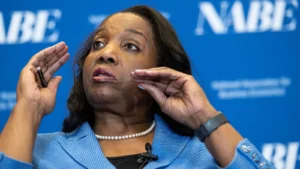
The hearing served as a pressure cooker for industry leaders, represented by Lindsey Johnson, CEO of the Consumer Bankers Association (CBA), who faced intense scrutiny from both sides of the aisle. The testimony underscored a growing frustration among legislators who argue that modern banking practices have morphed from traditional service-oriented models into aggressive profit-generation strategies that disproportionately impact working-class Americans.
The Mechanics of Exclusion: The Overdraft Fee Controversy
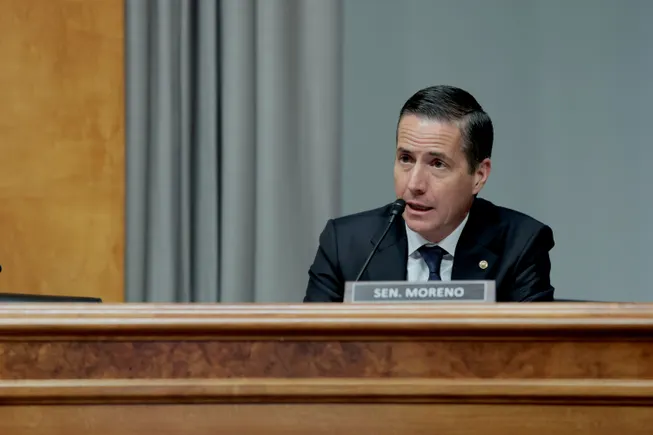
The centerpiece of the debate was the pervasive, and often punitive, nature of overdraft fees. Senator Bernie Moreno (R-OH) emerged as a vocal critic of current banking ledger practices, challenging Johnson directly on the sequence in which banks process transactions.
The "Ledger Trap"
Moreno highlighted a systemic issue in which banks process customer withdrawals before accounting for incoming deposits. This "order of operations" frequently triggers an overdraft event, even when a customer has sufficient funds to cover their daily expenses.
“Most banks, for example, in Ohio, that receive deposits—those deposits don’t credit the person’s account until after withdrawals happen, and a lot of that results in overdraft fees,” Moreno stated. He framed the practice as fundamentally unfair, suggesting that banks are intentionally utilizing back-end processing technology to engineer "gotcha" moments.
When Johnson attempted to defend the practice by citing the complexities of banking technology and back-end infrastructure, Moreno cut her off. His directive was blunt: "Just do it the right way, though. It’s just bad practice. Just don’t do bad things." He warned that if the industry does not voluntarily rectify these ledger disparities, Congress would be forced to intervene with legislative mandates.
The Cost to the Consumer
Senator Chris Van Hollen (D-MD) bolstered the argument against these fees with stark data. According to estimates from the National Consumer Law Center (NCLC), American consumers paid roughly $12 billion in overdraft fees last year.
Van Hollen illustrated the absurdity of the current system by citing the "cup of coffee" scenario: a consumer purchasing a $3 coffee might inadvertently trigger a $35 overdraft fee, a penalty that carries an effective annual interest rate of nearly 16%.
Chronology of Regulatory Failure
The debate over overdraft fees is not new, but it reached a fever pitch in 2025 following the reversal of aggressive regulatory attempts by the Consumer Financial Protection Bureau (CFPB).
- 2024: The CFPB proposed a landmark rule aimed at capping overdraft fees at $5, arguing that the fees had evolved from a "courtesy" into a primary revenue stream for financial institutions.
- May 2025: President Donald Trump signed a legislative resolution that effectively overturned the CFPB’s cap, restoring the status quo and allowing banks to continue setting their own fee structures.
- Present Day: Industry experts, including Julie Margetta Morgan, president of The Century Foundation, argue that the reversal of this rule has cost American consumers approximately $5 billion in the short time since the legislation was overturned.
The NCLC reports that overdraft revenues at the top 20 U.S. banks jumped 4.2% in 2025 compared to 2023, with some institutions seeing even steeper increases. Margetta Morgan emphasized that this has turned a service meant to provide temporary liquidity into a predatory "profit center."
The Ideological Divide: Consumer Protection vs. Risk Management
While Moreno and Van Hollen pushed for reform, the committee remained split. Senator Thom Tillis (R-NC) offered a sharp rebuttal to the narrative of "predatory" banking, arguing that overdraft fees serve a necessary function in managing risk.
"You’re helping people from themselves," Tillis argued, suggesting that the responsibility for avoiding overdrafts rests with the consumer’s financial literacy. He noted that many banks provide "grace periods" or one-time waivers, but argued that if a customer cannot manage their account balance, the bank is entitled to charge for the risk of extending credit.
The Credit Card Interest Rate Standoff
The hearing also addressed the failure of banks to adhere to the White House’s public pressure regarding credit card interest rates. In January, President Trump called for a 10% cap on credit card interest rates, a move designed to alleviate the crushing debt burden on millions of Americans.
Senator Elizabeth Warren (D-MA), the committee’s ranking member, grilled Johnson on the industry’s response to this call. When Warren asked for the name of a single bank that had moved to a 10% cap, Johnson could not provide one.
"Not a single [bank] has followed through on what President Trump told them to do," Warren remarked. She estimated that Americans have paid roughly $57 billion more in credit card interest than they would have if the 10% cap had been implemented on January 20.
Supporting Data and Industry Defense
The banking industry, represented by Johnson, maintains that government-imposed caps on interest rates and fees would have catastrophic consequences for credit accessibility.
The "Risk-Based" Argument
Johnson argued that credit card interest rates are not arbitrary profit margins but are essential to "risk-based pricing." She contended that if the government were to mandate a 10% cap, banks would be forced to drastically restrict access to credit for the most vulnerable populations.
- Market Impact: Johnson estimated that 75% to 80% of current credit card holders would lose access to credit if such a cap were enacted.
- Subprime Concerns: Senator Tillis supported this view, citing the 2021 Illinois experience, where a 36% rate cap led to a 44% decline in loans to subprime borrowers. "You know how this movie is going to end," Tillis said. "It’s not going to end any differently."
The "Zero Percent" Trap
Moreno also criticized banks for their marketing of 0% interest rate introductory offers, which often lure consumers into debt before transitioning to high, compounding interest rates. He characterized this as one of the most significant factors currently "crushing" working Americans.
"Don’t do things like that, and certainly don’t take a victory lap for offering those types of things," Moreno told the CBA executive.
Implications for Future Policy
The hearing suggests that the financial services sector is entering a period of significant volatility in its relationship with federal regulators. While the current administration overturned the CFPB’s overdraft rule, the pressure from Capitol Hill—even from members of the president’s own party—indicates that the "affordability agenda" will not be sidelined.
Potential Legislative Outcomes
- Transparency Mandates: There is growing support for legislation that would force banks to provide more transparency regarding transaction ordering and the specific criteria that trigger overdrafts.
- State-Level Reform: With federal action stalled, consumer advocacy groups like the NCLC are shifting their focus to state-level reform, encouraging local legislatures to pass caps on fees and interest rates, similar to the Illinois model.
- Continued Oversight: The aggressive questioning of bank lobbyists by senators from both parties signals that the "honeymoon" period for banks following the repeal of the CFPB rule may be over.
Conclusion
As the Senate Banking Committee continues its work, the fundamental question remains unresolved: Is the banking industry a utility that should be subject to strict service-oriented regulations, or a competitive marketplace that thrives on risk-based pricing?
The testimony provided Tuesday suggests that while banks are currently winning the battle in the regulatory courts, they are losing the battle for public perception. As long as American consumers continue to see their ledger balances dwindle due to processing delays and high-interest debt, the pressure on Congress to "do the right thing" will likely only intensify, creating a potential legislative storm for the banking sector in the coming year.