The Semiquincentennial Mirror: Why 2026 Feels Uncomfortably Like 1976

As the United States prepares to unfurl the bunting for its 250th anniversary this July, the nation is caught in a moment of profound historical irony. The planned festivities—tall ships docking in New York Harbor, fireworks illuminating the National Mall, and politicians preparing grandiloquent speeches about the resilience of the American experiment—mask a reality that is hauntingly familiar to anyone who lived through the nation’s Bicentennial celebration in 1976.
While we celebrate a quarter-millennium of history, we find ourselves grappling with a "triad of trouble" that has seemingly been frozen in amber for five decades: sticky, persistent inflation; volatile energy markets that keep the cost of a gallon of gas at a premium; and a structural, ticking-clock crisis within the Social Security system. The Semiquincentennial is not merely a celebration of the past; it is a forced confrontation with the unresolved homework of the 1970s.
The Core Facts: A Half-Century Standoff
The economic challenges of 2026 are not new; they are the matured versions of the systemic issues that plagued the late 20th century. In 1976, the U.S. was reeling from the post-Vietnam malaise and the initial shocks of the OPEC oil embargo. Today, the nation faces a different, yet equally vexing, set of circumstances.
The primary difference is the demographic context. In 1976, the American workforce was robust and relatively young, capable of absorbing the costs of entitlement programs. Today, the U.S. is a nation of aging demographics. With roughly 62 million Americans aged 65 and older—representing nearly 18% of the total population—the math governing our social safety nets has shifted from a manageable policy challenge to a mathematical inevitability that is rapidly approaching the edge of a cliff.
Chronology of a Slow-Motion Crisis
To understand the current impasse, one must look at the timeline of the "fix" that was never actually finished.
- 1972: Congress passes a well-intentioned but flawed statutory formula for Cost of Living Adjustments (COLA). Known as "double indexing," the mechanism failed to account for the impact of inflation on benefits, inadvertently creating a massive drain on the Social Security Trust Fund.
- 1977: Recognizing the looming bankruptcy of the fund, Congress enacted a "minor patch." It was a stop-gap measure that kicked the can down the road rather than addressing the structural demographic imbalance.
- 1983: The landmark Greenspan Commission report led to the Social Security Amendments of 1983. This legislation was designed to be the definitive rescue. It raised the retirement age, introduced the taxation of benefits, and delayed COLA increases. The explicit goal was to purchase 40 to 50 years of solvency.
- 2026: The borrowed time has expired. As the nation hits the 250-year mark, the Social Security trust fund is projected to face insolvency by 2032. The "40-year fix" has reached its expiration date exactly when the population it serves is at its largest.
Supporting Data: The Demographic Weight
The data paints a sobering picture of how the scale of the challenge has evolved. In 1976, the number of Americans aged 65 and older was approximately 22.95 million, or roughly 10.4% of the population. By 1983, that figure had climbed to 27.4 million (11.5%).
Today, we are looking at 62 million seniors. The "dependency ratio"—the number of workers paying into the system versus the number of beneficiaries taking out—has deteriorated significantly. In the 1970s, the system was sustained by a wide base of contributors. Now, the pyramid has inverted, and the legislative tools used in 1983 are no longer sufficient to bridge the widening fiscal gap.
Furthermore, public confidence is at an all-time low. A 2026 survey by PlanGap revealed that 70% of Americans aged 45 to 60 believe the government will be unable to solve the funding crisis without slashing benefits. While 83% of that same cohort acknowledge that Social Security will be a major component of their retirement income, 68% are actively fearful that they will not receive the benefits they have been promised.
The Inflationary Ghost: From Stagflation to Stickiness
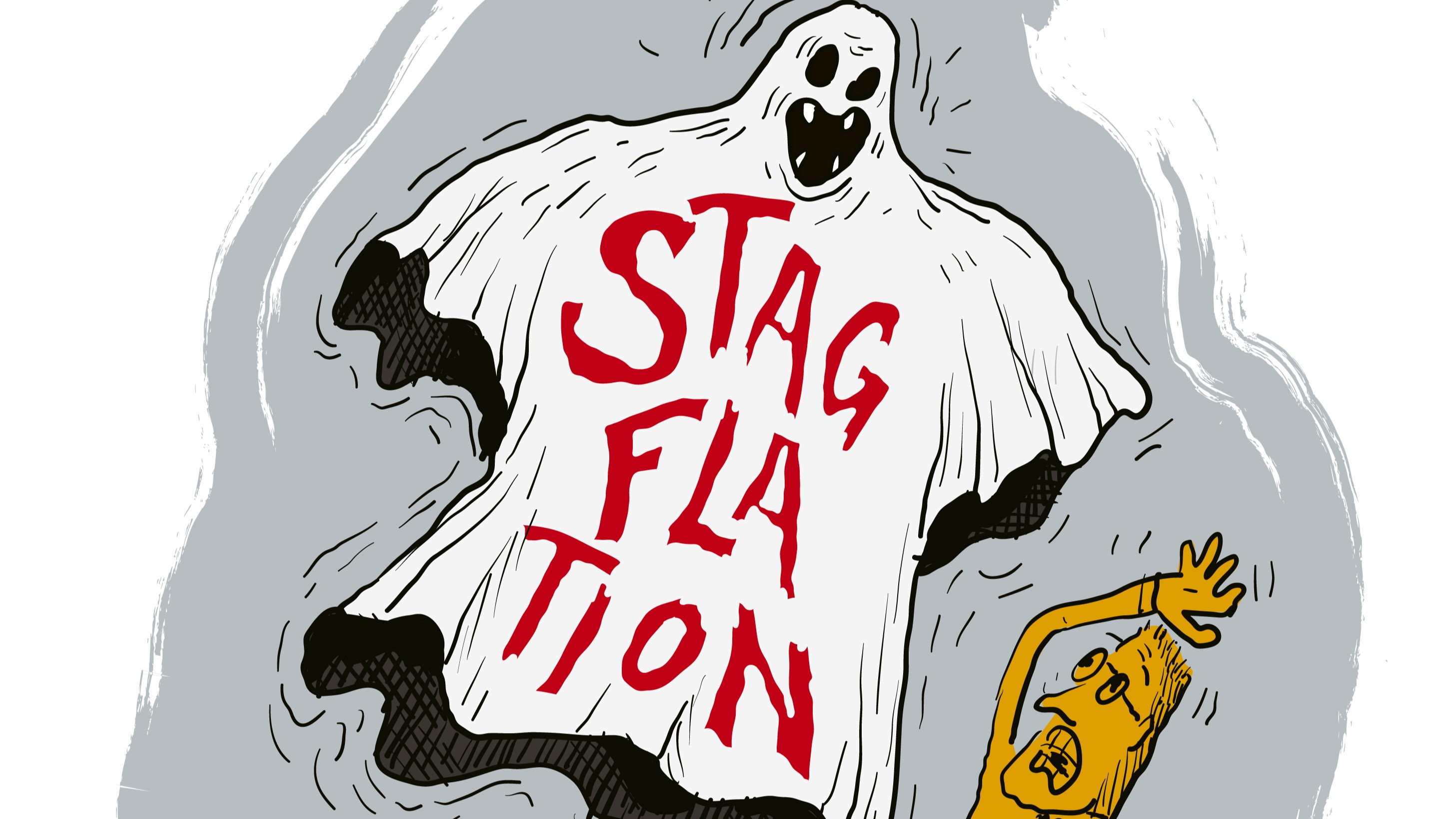
The specter of "stagflation"—the toxic combination of stagnant growth and high inflation—defined the Bicentennial era. In 1976, inflation had cooled to 5.8% from its 1974 peak of 11.1%. However, the relief was temporary. By 1980, the rate had skyrocketed to 13.5%.
The modern economy has undergone a similar, if less extreme, trajectory. The COVID-19 pandemic-era inflation surge peaked at 8.0% in 2022, a staggering departure from the 2010–2020 average of 1.77%. While current inflation has moderated to around 4.2% as of this May, the "sticky" nature of these price increases means that the average American household is feeling the cumulative weight of years of elevated costs.
Economists argue that even if inflation rates fall to the Federal Reserve’s target, the "baked-in" price increases—what the public experiences at the grocery store and the pharmacy—do not vanish. The affordability crisis is not a temporary fluctuation; it is a structural change in the cost of living that is outpacing wage growth.
Energy Vulnerability: The $4 Benchmark
The 1973 OPEC oil embargo taught the United States a painful lesson about its reliance on foreign energy. By 1976, the gas lines had disappeared, but the vulnerability remained. The era of cheap energy had effectively ended, and energy prices became a political wildcard.
Fifty years later, the geopolitical landscape remains as volatile as ever. Whether it is friction in the Middle East, supply chain disruptions, or the transition to green energy, the American consumer remains at the mercy of global supply shocks. Despite domestic production increases, the national average price of gasoline consistently testing the $4 barrier serves as a reminder that political rhetoric cannot insulate the local pump from global unrest. The expectation of a return to "pre-war" or "pre-crisis" energy prices is, according to most energy analysts, a fantasy.
Official Responses and Political Stasis
The silence from Washington regarding these structural issues is deafening. In the 1970s, there was at least a bipartisan acknowledgment that the system was broken, leading to the formation of the Greenspan Commission. Today, however, the political climate is far more polarized.
The official government response to the looming 2032 insolvency of Social Security has been limited to partisan posturing. While the Bipartisan Policy Center and other think tanks continue to churn out white papers and "bipartisan solutions," the legislative appetite for addressing the third rail of American politics—entitlement reform—is virtually non-existent. Politicians on both sides of the aisle are trapped between the demographic reality of an aging voting bloc and the fiscal reality of an empty treasury.
Implications: The Price of Inaction
The implications of this historical repetition are severe. Unlike the 1970s, when the nation had the economic flexibility to pivot and correct course, the 2026 United States is carrying a record-high national debt, making the cost of borrowing to patch these holes significantly higher.
If the government continues to rely on short-term patches rather than structural reform, the inevitable result will be a combination of higher taxes, reduced benefits, and potentially a further erosion of public trust in federal institutions. The "American experiment" is reaching a juncture where the social contract itself is being tested.
As we look toward the 250th anniversary, the most "exceptional" thing the nation could do would be to finally close the chapter on the 1970s. Solving the "leftover homework" of the Bicentennial would do more to secure the future of the republic than any parade or fireworks display ever could. The Semiquincentennial is a rare opportunity for a reset; the question remains whether our current leaders possess the foresight of the 1983 Commission or if they are doomed to repeat the cycle of neglect that defined the 1970s.
History, it seems, is not merely repeating itself—it is asking us why we haven’t learned the lessons of the past. As the calendar turns toward the milestone of 250 years, the true test of American leadership will not be how they celebrate our history, but how they finally resolve the burdens we have allowed to linger for half a century.