The Power of Cash: Analyzing the VictoryShares Free Cash Flow ETF (VFLO)

In the ever-evolving landscape of equity investing, the search for quality, stability, and sustainable growth often leads savvy investors back to the bedrock of corporate finance: free cash flow. This week, Todd Rosenbluth, Head of Research at VettaFi, joined host Chuck Jaffe on the "Money Life" podcast to spotlight the VictoryShares Free Cash Flow ETF (VFLO), an investment vehicle designed to capitalize on companies that do more than just generate earnings—they generate hard, deployable cash.
As market volatility remains a persistent feature of the post-pandemic economic environment, the conversation surrounding VFLO serves as a timely masterclass in factor-based investing. For investors looking to pivot away from speculative growth toward companies with tangible financial discipline, the logic behind the VFLO strategy offers a compelling blueprint.
The Main Facts: Defining the VFLO Strategy
The VictoryShares Free Cash Flow ETF is not merely another broad-market index fund. It is a strategically managed portfolio that utilizes a specific "quality" filter to identify companies with superior free cash flow yields.
At its core, VFLO targets U.S.-listed large-cap and mid-cap companies that demonstrate the ability to convert earnings into actual cash. Unlike traditional P/E (price-to-earnings) ratios, which can be obscured by accounting adjustments and non-cash expenses, the free cash flow metric provides a transparent look at the capital left over after a company has paid for its operating expenses and capital expenditures.
The fund is designed for investors who believe that cash is the ultimate measure of corporate health. By focusing on companies that generate significant free cash flow, VFLO aims to provide exposure to firms that are better positioned to pay dividends, buy back shares, reduce debt, or reinvest in organic growth—even during periods of economic contraction.
Chronology: The Evolution of Cash Flow Investing
To understand the relevance of VFLO today, one must examine the shift in investor sentiment over the past decade.
The Era of "Growth at All Costs" (2010–2021)
For much of the last decade, the market was dominated by low interest rates, encouraging investors to prioritize top-line revenue growth over profitability. Cash flow was often sidelined in favor of "the next big thing," leading to inflated valuations for companies that had yet to turn a profit.
The Macroeconomic Pivot (2022–Present)
The surge in inflation and the subsequent tightening of monetary policy by the Federal Reserve fundamentally altered the risk-reward calculus. As the cost of capital rose, the market began to punish "cash-burning" entities. This pivot created a vacuum for investment strategies that prioritize financial durability.
The Launch and Rise of VFLO
Victory Capital introduced VFLO to provide a systematic, rules-based approach to this "quality" mandate. Since its inception, the ETF has gained traction by capturing the attention of institutional and retail investors who are seeking a buffer against market uncertainty. The recent feature on the "ETF of the Week" podcast highlights how the strategy has transitioned from a niche interest to a core component of many modern portfolios.
Supporting Data: Why Free Cash Flow Matters
The analytical rigor behind VFLO is supported by decades of financial data suggesting that high free cash flow yields are a leading indicator of long-term outperformance.
The Metric That Doesn’t Lie
Earnings can be manipulated through aggressive accounting practices, such as changes in depreciation methods or revenue recognition timing. Free cash flow, however, is much harder to "fudge." It represents the actual currency available to management.
Volatility Dampening
Data consistently shows that companies with high free cash flow yields tend to exhibit lower beta than the broader market. During market downturns, these companies often hold their value better because they possess the balance sheet strength to weather the storm without resorting to emergency financing.
Dividend Sustainability
For income-oriented investors, the data is even more persuasive. A company’s ability to sustain or increase its dividend is directly tied to its free cash flow. VFLO’s focus on this metric naturally filters for companies that have the "safety margin" required to reward shareholders, even when quarterly earnings might fluctuate.
Official Insights: The Perspective of Todd Rosenbluth
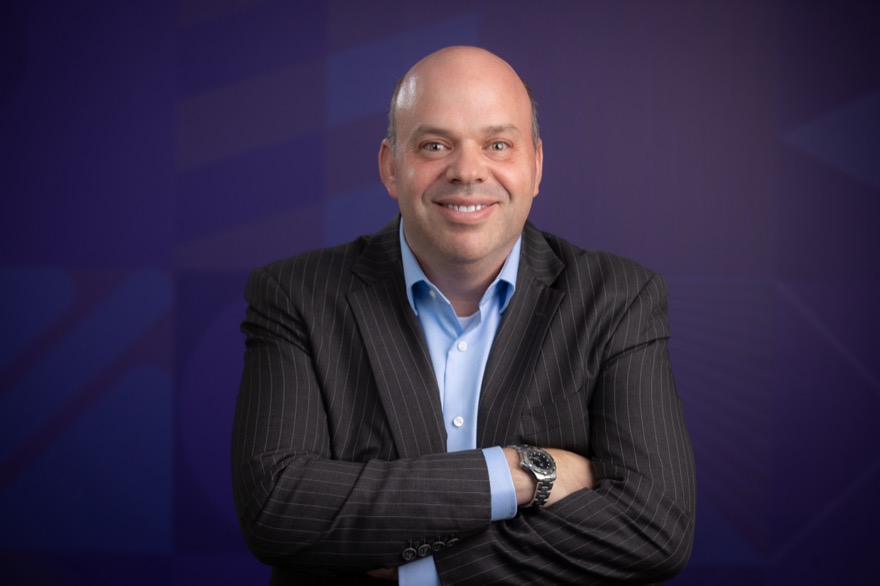
In his discussion with Chuck Jaffe, Todd Rosenbluth emphasized that the appeal of VFLO lies in its simplicity and discipline. Rosenbluth, a veteran in the ETF research space, noted that investors are increasingly tired of the "black box" nature of some active strategies.
"When you look at VFLO," Rosenbluth explained, "you are looking at a strategy that doesn’t guess. It relies on the raw reality of the balance sheet. In an environment where the ‘growth’ story has become increasingly expensive, finding companies that are actually minting money is the smartest way to play the equity market."
Rosenbluth further highlighted that while many funds claim to be "quality-focused," VFLO’s methodology is distinct in its narrow focus on the cash-generation ratio relative to enterprise value. This ensures that the portfolio remains lean and focused on companies that are operationally efficient.
Implications for the Modern Investor
The implications of adopting a cash-flow-centric strategy are significant for both short-term traders and long-term accumulators.
Implications for Portfolio Construction
For the average investor, VFLO serves as a "quality anchor." While investors might still hold high-growth tech stocks or speculative sectors, VFLO provides a counterbalance. It introduces a structural discipline that ensures that a portion of the portfolio is inherently tethered to fundamental profitability.
Risk Management
The primary implication of shifting toward free cash flow is a reduction in "fundamental risk." By avoiding companies with negative cash flow, investors effectively insulate themselves from firms that are highly sensitive to interest rate hikes or credit market freezes.
The Role of Active vs. Passive
VFLO represents a hybrid approach—a systematic strategy that behaves like a rules-based index but acts with the precision of an active manager. This has profound implications for cost-conscious investors who want the benefits of expert-driven selection without the high expense ratios often associated with traditional active mutual funds.
Conclusion: Looking Ahead
As the financial landscape continues to grapple with the "new normal" of higher interest rates and economic uncertainty, the spotlight on VFLO is likely to intensify. The "ETF of the Week" discussion serves as a reminder that in the world of finance, while market sentiment can be fleeting, cash is permanent.
Investors seeking to refine their equity exposure would do well to study the mechanics of VFLO. By prioritizing companies that are masters of their own financial destiny—those that generate cash rather than merely consuming it—investors can build portfolios that are not only more resilient but also better positioned for sustainable, long-term wealth creation.
For those interested in diving deeper into the nuances of this strategy, the Equity ETF Content Hub remains an essential resource. Whether you are a professional advisor or a self-directed investor, understanding the role of cash flow in the current market cycle is no longer optional—it is a prerequisite for success.
For more news, information, and analysis, visit the Equity ETF Content Hub. To listen to the full episode of "Money Life" with Chuck Jaffe and Todd Rosenbluth, visit the podcast platform of your choice.
Disclaimer: This article is for informational purposes only and does not constitute financial advice. Investors should consult with a qualified financial advisor and review the prospectus of any ETF before investing.